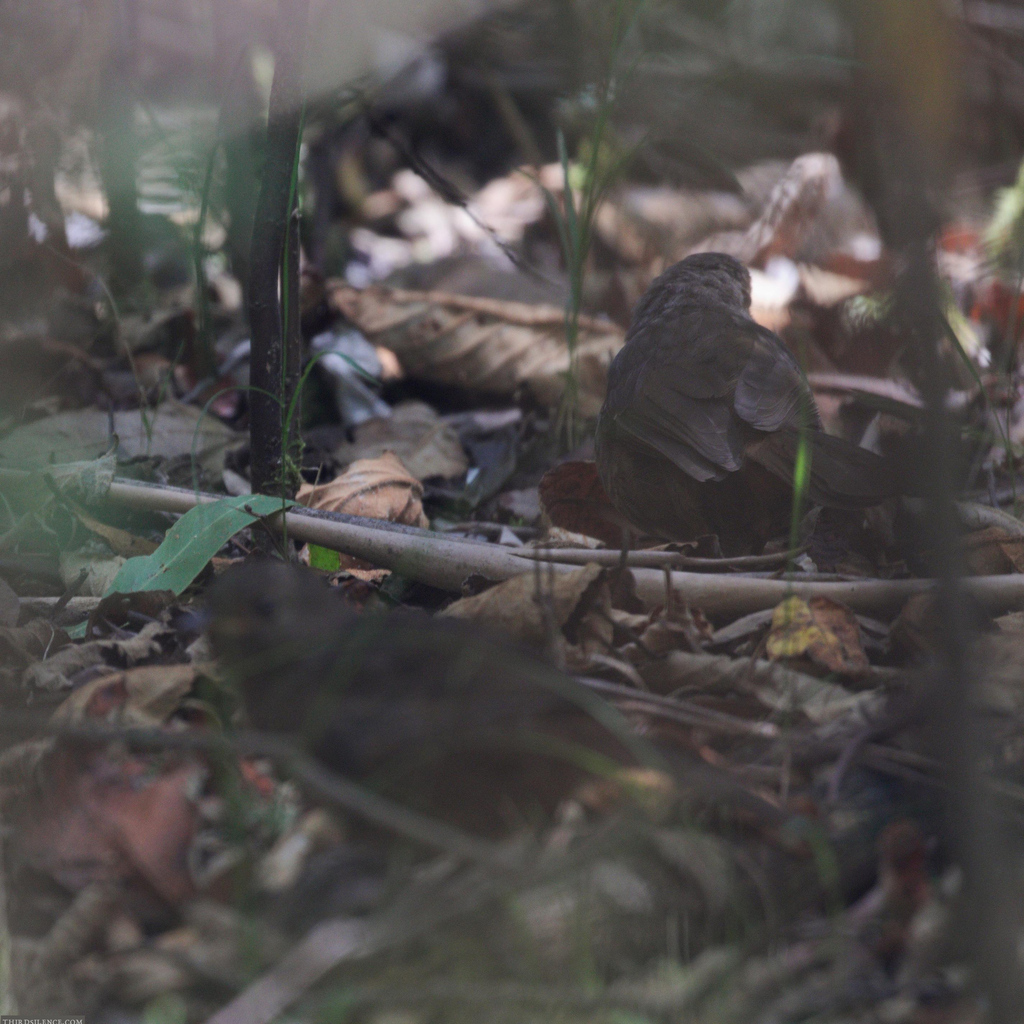
Pilotbird
Photo © Third Silence
Photo © Third Silence — CC BY-SA 4.0 — Source: iNaturalist #196015738The pilotbird (Pycnoptilus floccosus) is a species of passerine bird in the family Acanthizidae. It is monotypic within the genus Pycnoptilus. The species is endemic to south-eastern Australia. == Taxonomy == The species was first described by English ornithologist John Gould in 1851. The generic name Pycnoptilus derives from the Ancient Greek pyknos 'thick' and ptilon 'feather'. Its specific epithet floccosus is Late Latin for 'flocked with wool'. There are two subspecies: the nominate subspecies Pycnoptilus floccosus floccosus lives in alpine areas; and P. f. sandfordi lives in lowland forest. == Description == The pilotbird is a large, plump species of acanthizid, measuring around 18 centimetres (7.1 in) in length and weighing 27 grams (0.95 oz). The plumage of the underparts is reddish-brown with scalloping on the chest and the centre of the belly speckled dull white. The upperparts are chocolate-brown. The bill is short and finely pointed. Its tail is broad and semi-erect, and flicked up and down when feeding. == Distribution and habitat == The pilotbird is found from the Wollemi National Park and Blue Mountains National Park in New South Wales through to the Dandenong Ranges, near Melbourne in Victoria. Its natural habitat is temperate wet sclerophyll…
Kinglake National Park
Australia
+164 birds+11 mammals
Where the volcanic plains of central Victoria rise into forested ridges, Kinglake National Park encompasses roughly 844 square kilometres of diverse habitat that represents one of…
VIEW NATIONAL PARKRoyal National Park
Sydney, Australia
+296 birds+46 mammals
Where sandstone ridges plunge toward the Tasman Sea, Royal National Park unfolds across 343 square kilometres of southeastern Australian coastal wilderness. The park's defining character emerges…
VIEW NATIONAL PARKMorton National Park
Australia
+253 birds+57 mammals
Across nearly 4,800 square kilometers of New South Wales's Southern Tablelands, rugged sandstone plateaus rise above sheltered valleys where cool-climate eucalypt woodland meets grassy heath and…
VIEW NATIONAL PARKHeathcote National Park
Sydney, Australia
+119 birds+16 mammals
Sandstone ridges and eucalypt woodlands rise from the Cumberland Plain southwest of Sydney, where Heathcote National Park unfolds across 82 square kilometres of bushland shaped by…
VIEW NATIONAL PARKWilsons Promontory National Park
Australia
+210 birds+21 mammals
Where granite headlands plunge toward Bass Strait, Wilson's Promontory National Park sprawls across nearly 1,300 square kilometers of southeastern Victoria's most rugged coastal wilderness. The park's…
VIEW NATIONAL PARKBlue Mountains National Park
Australia
+220 birds+43 mammals
Dramatic sandstone cliffs rise in tiers across this mountainous plateau west of Sydney, their rust-coloured faces weathered into amphitheatres and gorges where eucalyptus forest clings to…
VIEW NATIONAL PARKKosciuszko National Park
Australia
+211 birds+52 mammals
Where the Great Dividing Range reaches its highest peaks in southeastern Australia, Kosciuszko National Park encompasses a landscape of windswept plateaus, rocky ridges, and deep river…
VIEW NATIONAL PARKBudawang National Park
Australia
+80 birds+17 mammals
Rugged sandstone ridges rise dramatically across the New South Wales Southern Tablelands, their weathered faces sculpted by millennia of wind and water into a landscape of…
VIEW NATIONAL PARKBen Boyd National Park
Eden, Australia
+255 birds+47 mammals
Where the temperate forests of the far south coast meet towering sea cliffs, Ben Boyd National Park unveils one of New South Wales' most dramatic coastal…
VIEW NATIONAL PARKAlpine National Park
Australia
+64 birds+2 mammals
High in Victoria's southeastern ranges, where cool temperate forests grip steep mountainsides and alpine grasslands stretch across windswept plateaus, Alpine National Park protects one of southeastern…
VIEW NATIONAL PARKMount Buffalo National Park
Myrtleford, Australia
+124 birds+7 mammals
Granite peaks rise abruptly from the volcanic plains of northeastern Victoria, their exposed rock faces and windswept ridges defining Mount Buffalo National Park's rugged character. The…
VIEW NATIONAL PARKNo community photos yet. Log in to add the first one.
No community observations of this species yet.