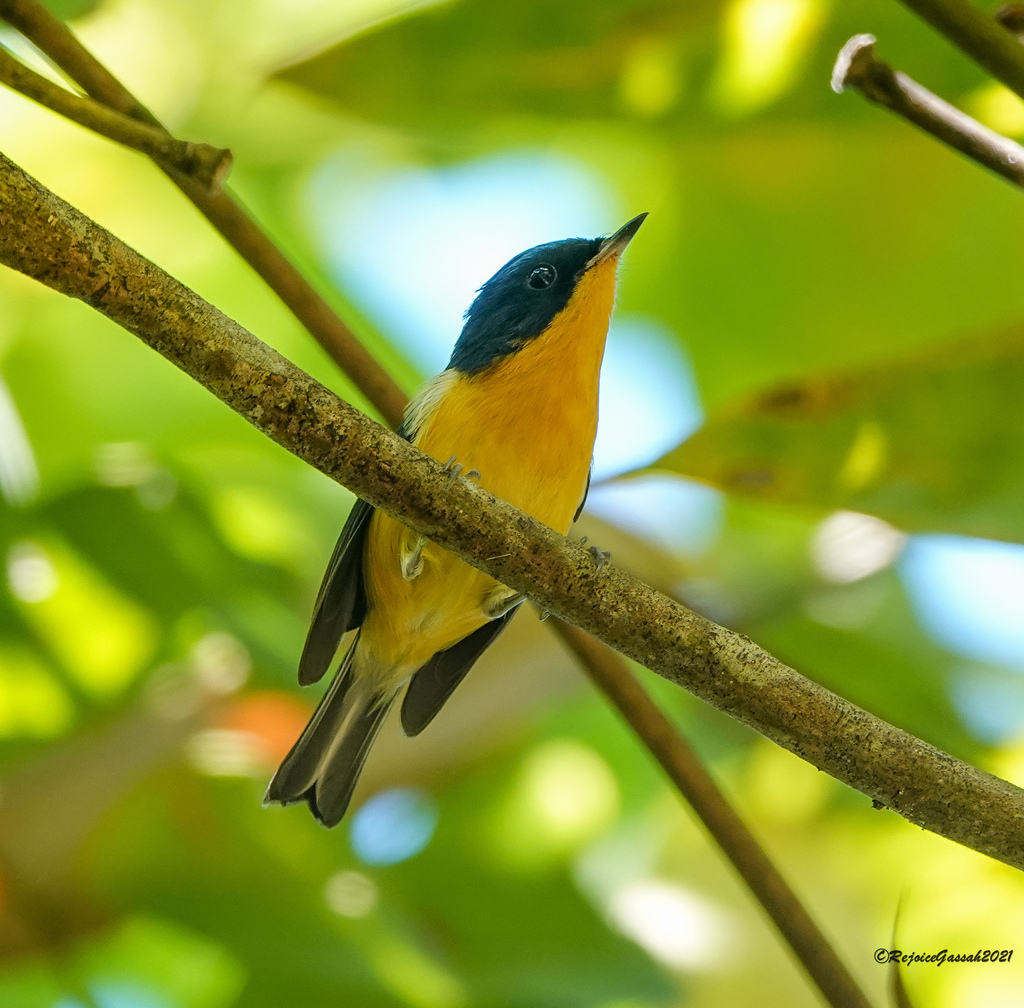
Pygmy Flycatcher
Photo © Rejoice Gassah
Photo © Rejoice Gassah — CC BY 4.0 — Source: iNaturalist #104805569The pygmy flycatcher (Ficedula hodgsoni), also known as the pygmy blue-flycatcher, is a bird species of the family Muscicapidae. == Distribution and habitat == It is native to Eastern Himalaya, western and southeastern Indochina, the Malay Peninsula, Bukit Barisan and montane Borneo. Its natural habitat is subtropical or tropical moist montane forests. == Gallery ==
Khangchendzonga National Park
Sakkyong, India
+290 birds+1 mammals
Where the eastern Himalayas surge toward their crowning peaks, Khangchendzonga National Park embraces a landscape of almost overwhelming vertical drama. Rising from subtropical river valleys into…
VIEW NATIONAL PARKKaziranga National Park
Kohora, India
+422 birds+26 mammals
Dawn breaks over the floodplains of the Brahmaputra, where tall grasslands stretch endlessly beneath monsoon-heavy skies. This sprawling wilderness of northeastern Assam is a mosaic of…
VIEW NATIONAL PARKTaman Negara National Park
Kampong Samas, Malaysia
+393 birds+48 mammals
Where ancient rainforest meets limestone peaks, one of Southeast Asia's oldest protected wilderness preserves sprawls across 4,343 square kilometers of primordial landscape. Dipterocarp giants tower overhead,…
VIEW NATIONAL PARKGunung Mulu National Park
Long Seridan, Malaysia
+280 birds+39 mammals
Where granite monoliths pierce the rainforest canopy of Sarawak, an ancient limestone karst landscape reveals one of Southeast Asia's most biodiverse strongholds. Soaring peaks cloaked in…
VIEW NATIONAL PARKKerinci Seblat National Park
Kerinci, Indonesia
+228 birds+16 mammals
Across nearly 67,000 square kilometres of Sumatra's spine, a mountainous realm of equatorial rainforest rises from steaming lowlands to volcanic peaks shrouded in cloud. Kerinci Seblat…
VIEW NATIONAL PARKGaoligong Mountain National Nature Reserve
Nujiang Lisu Autonomous Prefecture, China
+443 birds+13 mammals
VIEW NATURE RESERVENo community photos yet. Log in to add the first one.
No community observations of this species yet.