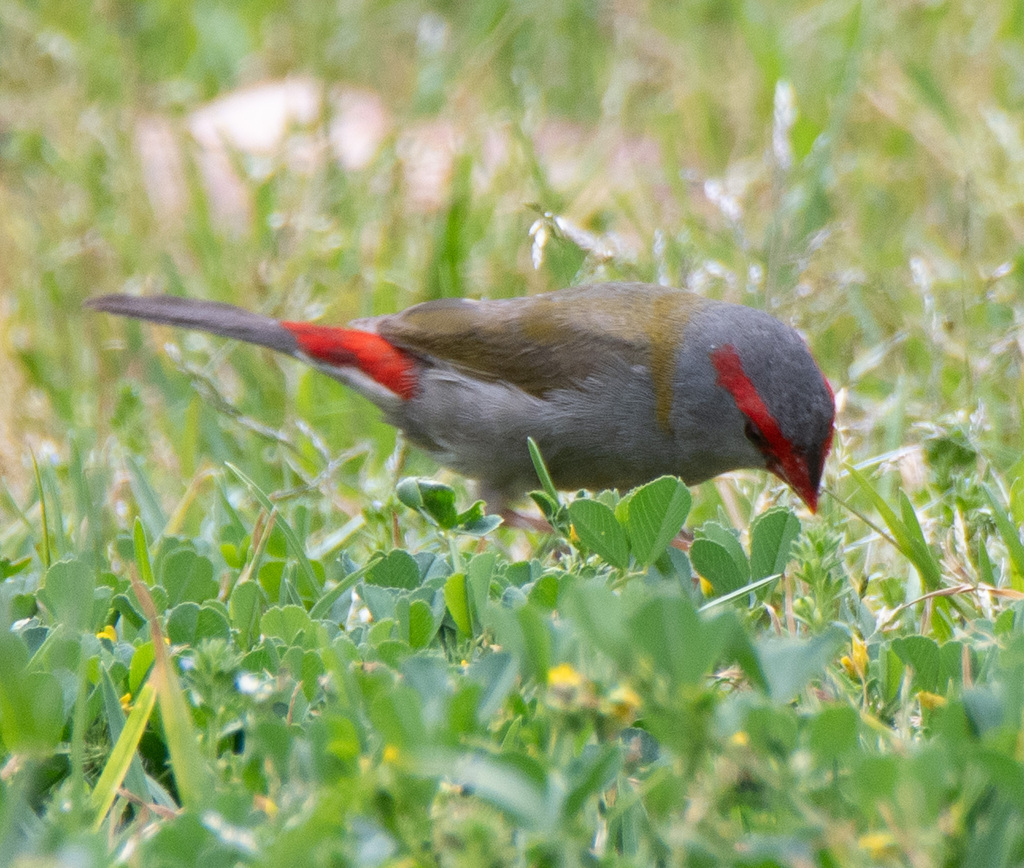
Red-browed Finch
Photo © Jonno Downes
Photo © Jonno Downes — CC BY 4.0 — Source: iNaturalist #245702542Identification
The red-browed finch is a small, distinctively marked finch measuring 11–12 cm in length. Adults are immediately recognizable by their bright red stripe above the eye and equally striking bright red rump, which stand out against an otherwise grey body. The wing coverts and collar are olive-toned, adding subtle warmth to the plumage. Juveniles are noticeably different from adults, lacking both the red brow marks and the olive colouration on the collar and wing coverts, making them appear duller overall.
Range & Habitat
Native to the east coast of Australia, the red-browed finch is particularly common in southeastern regions, with populations ranging from Brisbane to Melbourne. The species is widespread across inland New South Wales and Victoria, and subspecies N. t. minor is common between Cooktown and Townsville in the north. Introduced populations now exist near Perth and in the Darling Ranges of Western Australia, and the species has also established feral populations in French Polynesia.
Red-browed finches favour semi-open woodland habitats, particularly forest edges where brushy scrub meets cleared areas, especially near creeks. They are equally at home in temperate forest and dry savannah, and may also be found in dry forest and mangrove habitats in tropical regions. The species requires adequate shrub density for cover and foraging, and tends to decline or disappear from areas that have been cleared, grazed, or affected by drought.
Behaviour & Diet
Highly sociable birds, red-browed finches are typically seen in small flocks of 10 to 20 individuals. These flocks are either sedentary or nomadic within their local area, and prefer the transitional zones between forest and open ground. The birds make characteristic short, piping high-pitched cheeps, and when alarmed, the entire flock will disperse while calling before quickly re-congregating nearby.
Red-browed finches are seed specialists, living primarily on grass and sedge seeds, though they readily consume non-native seeds when available. They are even bold enough to enter large-mesh aviaries in suburban areas to access seed supplies. For breeding, they construct large domed nests woven from grass and small twigs, typically positioned 2–3 metres above the ground in dense shrubs. Nesting is communal, with both parents sharing all duties from nest construction through feeding the young. Clutches of four to six white eggs are laid two or three times annually between October and April, with juveniles becoming fully independent within 28 days.
Best Time & Places to See It
The red-browed finch is listed as of least concern and remains common throughout much of its range, making it a reliable species to encounter. The best locations are in southeastern Australia from Brisbane to Melbourne, particularly in semi-open woodland and forest edges with nearby creeks and good shrub cover. In the north, the subspecies N. t. minor is common in areas between Cooktown and Townsville. Visiting during the breeding season from October to April offers opportunities to observe family groups and fledglings, though the birds remain present year-round in their range.
Photography Tips
The red-browed finch's vibrant plumage makes it rewarding to photograph, particularly the striking red brow and rump. Position yourself near shrubby edges of forests or areas adjacent to creeks where flocks congregate. Early morning often provides the best light and activity levels. Because these birds are highly sociable and occur in flocks, patience may reward you with images of multiple birds interacting. The small size of these finches requires a telephoto lens or close approach; use fast shutter speeds to freeze their active movements. Avoid sudden movements when disturbed flocks disperse, as this provides dynamic photo opportunities, though waiting for them to re-congregate nearby yields calmer compositions.
Bald Rock National Park
Barrington Tops National Park
Belair National Park
Ben Boyd National Park
Blue Mountains National Park
Bouddi National Park
Bribie Island National Park
Budawang National Park
Budj Bim National Park
Nothing matches these filters.
No community photos yet. Log in to add the first one.
No community observations of this species yet.