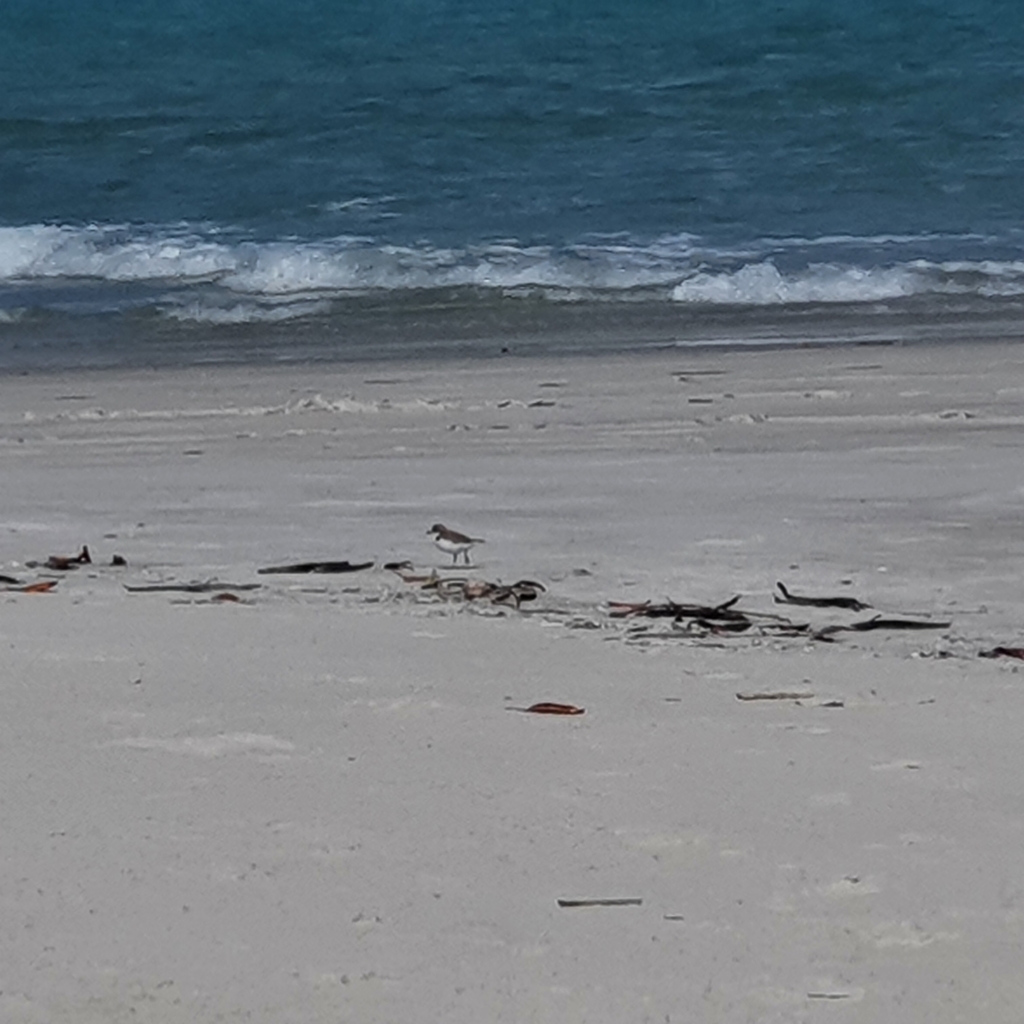
Red-capped Plover
Photo © ronavery
Photo © ronavery — CC BY 4.0 — Source: iNaturalist #112309955Identification
The red-capped plover is a diminutive shorebird measuring just 14–16 cm in length, with a wingspan of 27–34 cm and weighing a mere 35–40 g. It is instantly recognisable by its distinctive plumage: a white forehead and clean white underparts contrast sharply with grey-brown upperparts. The signature feature is the rufous or reddish-brown crown and hindneck of breeding males, which becomes noticeably paler and duller in females and non-breeding birds. In flight, watch for dark brown flight feathers and coverts accentuated by a striking white wingbar. Breeding plumage displays bold black margins along the crown and nape, which are absent in the duller non-breeding dress.
Range & Habitat
This species is widespread throughout Australia, making it a familiar sight across the continent. It is occasionally recorded as a vagrant to New Zealand, where it bred in small numbers between 1950 and 1980. Red-capped plovers are highly adaptable, occupying both coastal and inland environments. Expect to find them on beaches, sandflats, and mudflats, in estuaries and bays, and around inland saline wetlands. They also favour inland wetland areas where bare ground is available, demonstrating their preference for open, sparsely vegetated terrain.
Behaviour & Diet
Red-capped plovers are seasonal breeders along Australia's coasts, but inland populations breed opportunistically in response to unpredictable rainfall events. They nest on the ground in simple scrapes with little to no lining, typically situated close to wetlands. A clutch consists of two pale yellowish-brown eggs speckled with black spots. The female undertakes most of the 30-day incubation period. Chicks are precocial—born open-eyed, mobile, and developmentally advanced—and leave the nest shortly after hatching. These plovers feed primarily on small invertebrates, particularly molluscs, crustaceans, and worms, which they glean from wet substrates.
Best Time & Places to See It
Red-capped plovers are year-round residents across much of Australia, though seasonal movements occur with breeding and non-breeding cycles. Coastal wetlands, estuaries, and beaches throughout the continent offer reliable viewing opportunities. Inland saline lakes and claypans become productive sites following rainfall events, when breeding activity intensifies. Early morning and late afternoon often yield the best viewing conditions, as these plovers are most active during cooler parts of the day.
Photography Tips
The red-capped plover's small size and open-habitat preference make it a rewarding but challenging subject. Use a telephoto lens (at least 500mm) to capture frame-filling images without disturbing the birds. The stark contrast between white underparts and darker upperparts requires careful metering; expose for the plumage to avoid blown highlights. Photograph breeding males in full regalia during the breeding season for maximum colour impact. Shoot from low angles at dawn or dusk to backlight the white wingbar in flight and create atmospheric images of these delicate shorebirds against coastal or wetland backdrops.
Gheebulum Kunungai National Park
Innes National Park
Lincoln National Park
Wilsons Promontory National Park
Nothing matches these filters.
No community photos yet. Log in to add the first one.
No community observations of this species yet.