Identification
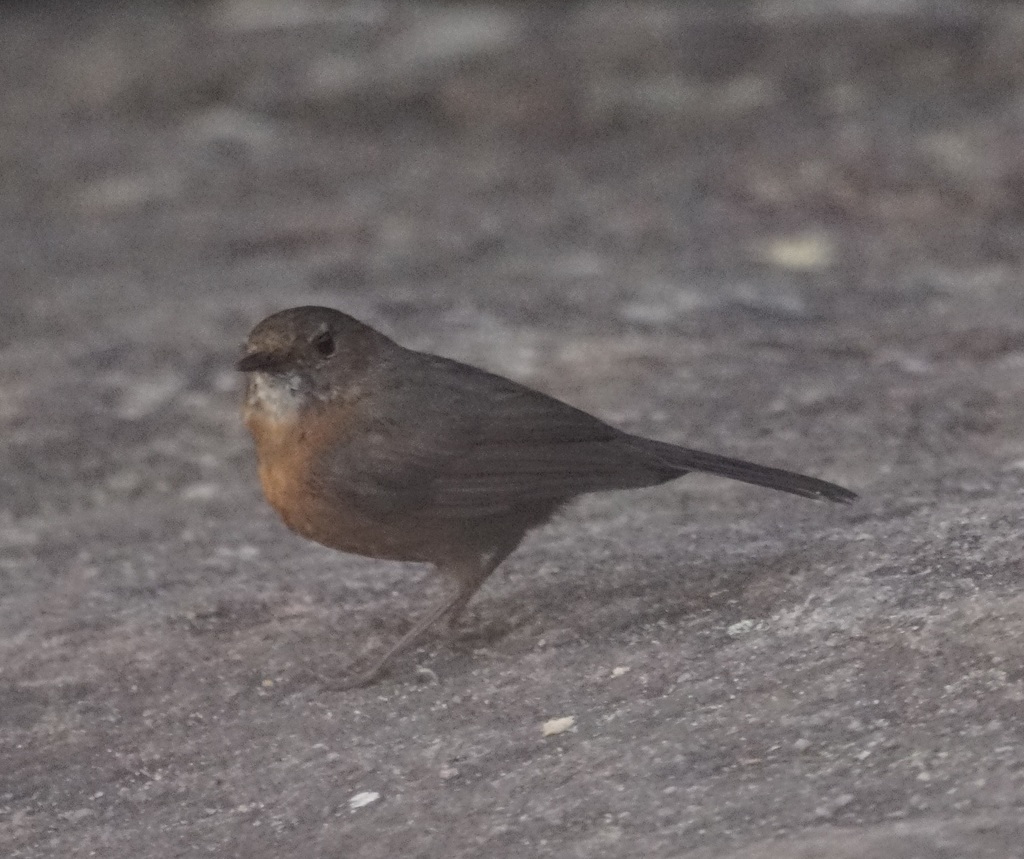
The rockwarbler is a small songbird measuring 14 cm in length and weighing around 14 g, making it a compact inhabitant of its rocky habitat. It displays predominantly dark grey-brown plumage with darker wings, cinnamon-tinged face and forehead, more red-brown underparts, and a distinctive whitish throat. The tail is black, and both males and females share similar plumage, while juveniles appear duller and paler with a reddish throat tint and greyer chin. It can be distinguished from the similar pilotbird by its smaller size and head, prominent white throat patch, and square tail.
The species is highly vocal, with a main breeding call of repeated shrill chis-sick notes, supplemented by tid-ed-dee vocalizations. Their contact call is rasping and smooth, while the alarm call is a single note. Rockwarblers are accomplished mimics, readily replicating the calls of scrubwrens, white-eared honeyeaters, grey butcherbirds, eastern spinebills, rufous whistlers, and other species they encounter.
Range & Habitat
The rockwarbler is the only bird species endemic to mainland New South Wales, with its range restricted to central eastern New South Wales within a 240 km radius of Sydney. It favours woodland and gullies with exposed sandstone or limestone rocks, particularly near water sources. This specialized habitat requirement has made the species vulnerable to human-modified landscapes, though most of its range is now protected within national parks, which has insulated the population from further habitat loss. The species is generally non-migratory, though individuals may move in very dry conditions.
Behaviour & Diet
Rockwarblers typically live alone, in pairs, or in small family groups of up to five members. They are characteristically seen hopping erratically over rocks while flicking their tail side-to-side. Though not strong long-distance fliers, they are swift and agile, maintaining low flights close to the ground. Their behaviour is notably acrobatic—they nimbly move vertically up rock faces, probe rock crevices, and investigate leaf litter with inquisitive precision.
The species is primarily insectivorous, with preferred prey including ants, wasps, beetles, and butterfly and moth larvae. They forage mostly on the ground or in lower vegetation branches, occasionally hovering briefly to capture prey. Rockwarblers supplement their diet with seeds such as panic grass and wheat. They are notably opportunistic, readily accepting food scraps offered by humans, including bread crumbs and butter.
Best Time & Places to See It
The breeding season from August to January is the most rewarding period for observation, as birds are more vocal and active during territory maintenance and nesting. Visitors should focus on woodland gullies with exposed sandstone or limestone formations within the central eastern New South Wales region. National parks protecting the species' range offer the most reliable viewing opportunities. Early morning is typically the best time for locating birds through their distinctive vocalizations and activity patterns.
Photography Tips
The rockwarbler's small size and preference for rocky terrain and dense vegetation present genuine challenges for photographers. Position yourself near sandstone outcrops and gullies during early morning light when birds are most active. Their characteristic tail-flicking and erratic hopping behaviour provide distinctive posture opportunities; patience and a longer lens (at least 200mm equivalent) are essential given their tendency to work close to rocky surfaces and low vegetation. The contrast between their dark plumage and lighter throat patch can be effectively captured against rock backgrounds, and their acrobatic movements on vertical rock faces offer dynamic compositional possibilities for patient photographers willing to spend time in suitable habitat.
Sydney Harbour National Park
Sydney, Australia
+203 birds+26 mammals
Where Sydney Harbour's sheltered waters meet the sandstone headlands of New South Wales, a mosaic of coastal heathland, eucalyptus woodland and rocky shores creates one of…
VIEW NATIONAL PARKRoyal National Park
Sydney, Australia
+296 birds+46 mammals
Where sandstone ridges plunge toward the Tasman Sea, Royal National Park unfolds across 343 square kilometres of southeastern Australian coastal wilderness. The park's defining character emerges…
VIEW NATIONAL PARKMorton National Park
Australia
+253 birds+57 mammals
Across nearly 4,800 square kilometers of New South Wales's Southern Tablelands, rugged sandstone plateaus rise above sheltered valleys where cool-climate eucalypt woodland meets grassy heath and…
VIEW NATIONAL PARKHeathcote National Park
Sydney, Australia
+119 birds+16 mammals
Sandstone ridges and eucalypt woodlands rise from the Cumberland Plain southwest of Sydney, where Heathcote National Park unfolds across 82 square kilometres of bushland shaped by…
VIEW NATIONAL PARKBlue Mountains National Park
Australia
+220 birds+43 mammals
Dramatic sandstone cliffs rise in tiers across this mountainous plateau west of Sydney, their rust-coloured faces weathered into amphitheatres and gorges where eucalyptus forest clings to…
VIEW NATIONAL PARKKu-ring-gai Chase National Park
Sydney, Australia
+216 birds+39 mammals
Where Hawkesbury sandstone cliffs plunge toward sheltered bays and creeks, Ku-ring-gai Chase National Park unfolds across rugged terrain just north of Sydney, a mosaic of eucalyptus…
VIEW NATIONAL PARKBudawang National Park
Australia
+80 birds+17 mammals
Rugged sandstone ridges rise dramatically across the New South Wales Southern Tablelands, their weathered faces sculpted by millennia of wind and water into a landscape of…
VIEW NATIONAL PARKNo community photos yet. Log in to add the first one.
No community observations of this species yet.