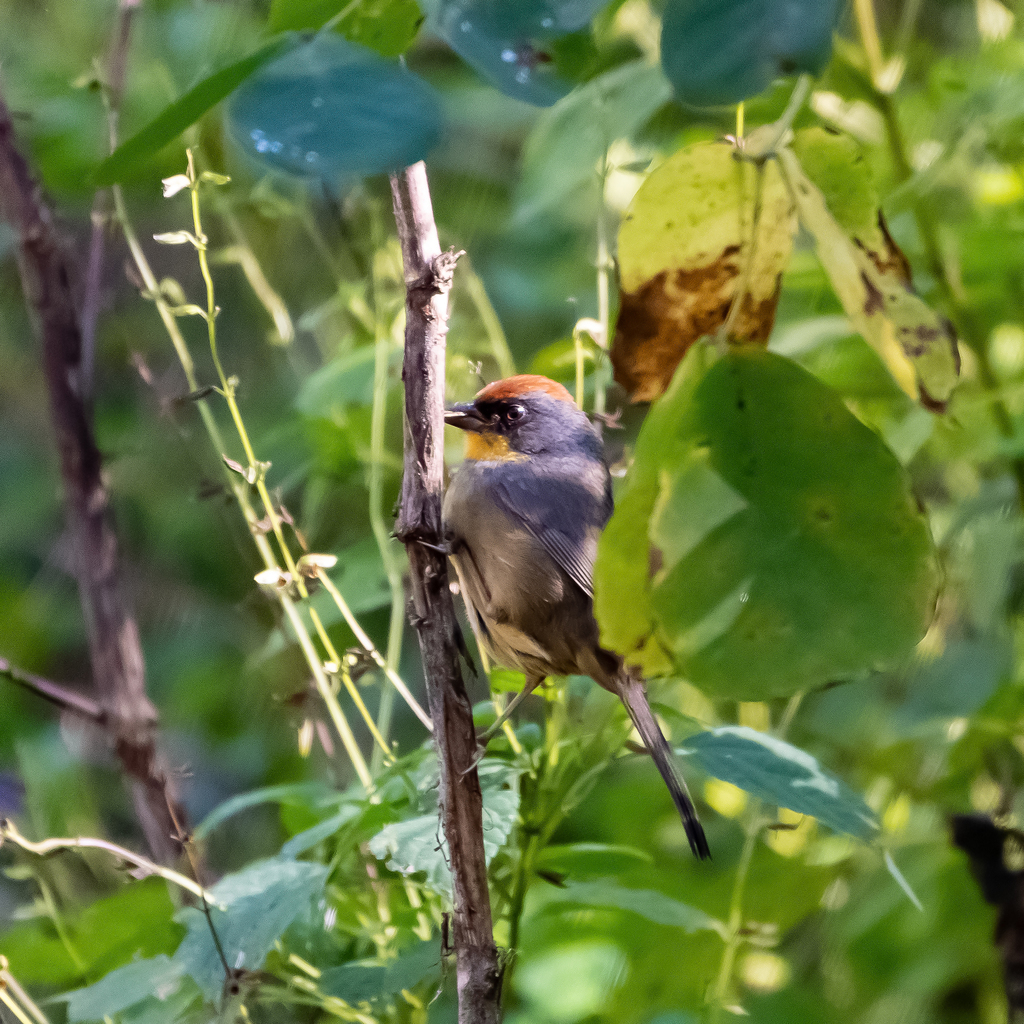
Rufous-capped Brushfinch
Photo © danygl
Photo © danygl — CC BY 4.0 — Source: iNaturalist #56599048Identification
The rufous-capped brushfinch is a small sparrow, measuring 14.5 to 16.5 cm in length. Its most distinctive feature is the bright rufous crown that gives the species its common name. The face is dark charcoal, contrasting sharply with a gray nape and yellow throat. The upperparts, wings, and tail are olive-green, while the underparts are mostly yellowish with olive tones on the sides of the breast and a strong cinnamon tinge on the flanks and undertail coverts. Both sexes have identical plumage. The bird has a brown to dark red-brown iris and a blackish bill. Juveniles lack the rufous crown, displaying pale wing bars instead, and have paler underparts than adults. The two subspecies differ slightly: A. p. dilutus is larger and overall paler than the nominate form.
Range & Habitat
This species is endemic to Mexico, found exclusively in the highlands of the northern and central regions. The nominate subspecies inhabits two separate populations: one ranging from Sinaloa south to Michoacán and east to western Veracruz, and another in the southern highlands of Guerrero, Oaxaca, and southern Puebla. The more northerly subspecies A. p. dilutus has populations in the northwest (southwestern Chihuahua and Durango) and in the east (from southeastern Coahuila and Nuevo León south through western Tamaulipas into San Luis Potosí). The rufous-capped brushfinch primarily inhabits pine-oak forests, also favoring the edges of montane evergreen forests and montane scrublands at elevations between 750 and 3,500 meters.
Behaviour & Diet
This is a sedentary year-round resident that does not migrate. The species feeds on insects and seeds, foraging in pairs or family groups, typically on the ground where it carefully turns over leaf litter, and at low heights in surrounding vegetation. It occasionally joins army ant swarms to feed on disturbed prey. The rufous-capped brushfinch breeds between April and August, constructing a cup-shaped nest made mostly from dry grass, typically placed in a dense shrub about 0.6 meters above ground. The clutch consists of two eggs, though details about incubation, fledging periods, and parental care remain undocumented.
Best Time & Places to See It
This species is considered common to fairly common in appropriate habitat throughout its range. The breeding season from April to August is an excellent time to locate birds, as they are more vocal and active during this period. The bird's sedentary nature means populations remain present year-round in their respective highland territories. Look for it in pine-oak forests and along the edges of montane evergreen forests and scrublands at mid to high elevations across the Mexican highlands.
Photography Tips
The rufous-capped brushfinch's striking rufous crown and contrasting dark face make it visually distinctive and rewarding to photograph. The bird forages on the ground and in low vegetation, offering opportunities for relatively close approach. Early morning during the breeding season provides the best chance to observe and photograph them, as they are more vocal and active then. Use patience and slow movements when approaching foraging birds, as they often work through leaf litter within short distances. The species' preference for dense shrubs and undergrowth means working with the available light in forest habitats; a fast lens and high ISO may be necessary in shadier microhabitats.
No community photos yet. Log in to add the first one.
No community observations of this species yet.