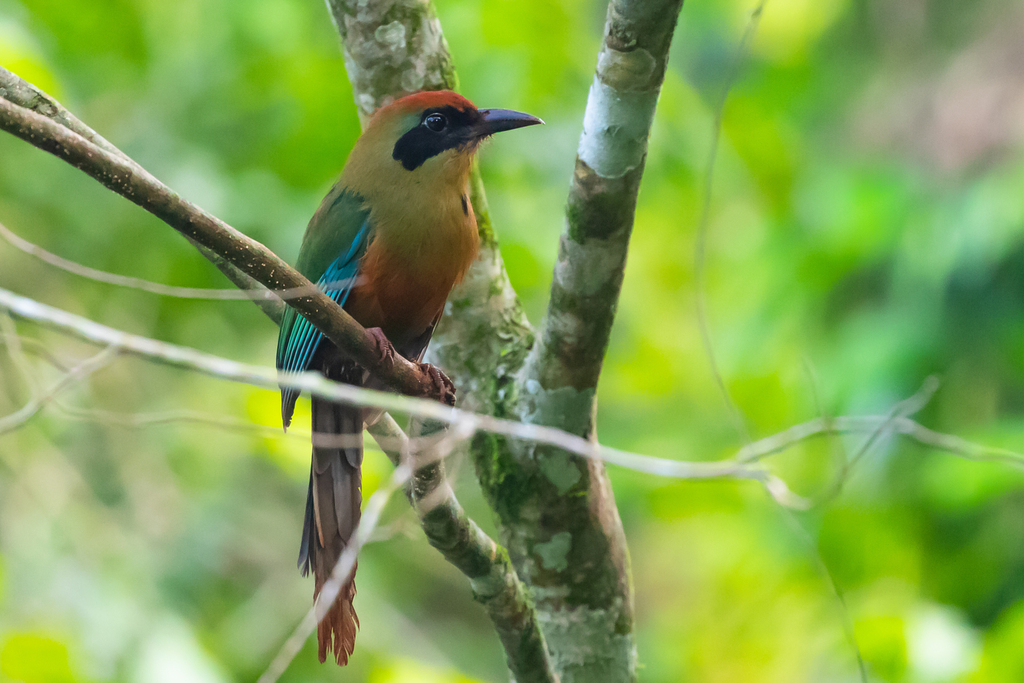
Rufous-capped Motmot
Photo © Johannes S.
Photo © Johannes S. — CC BY 4.0 — Source: iNaturalist photo #597948953Identification
The rufous-capped motmot is a striking 42 cm bird with distinctive plumage that makes it unmistakable in the field. Adults are predominantly green above with olive-green underparts, but the head is where this species truly stands out: the crown and nape are rich rufous, framed by a bold black "mask" bordered in turquoise. A black spot adorns the chest, a rufous band crosses the belly, and the lower belly is blue-green. Juveniles show similar patterns but with duller coloration overall. At 140–151 grams, it is a medium-sized motmot and the only member of its genus found in South America.
Range & Habitat
This species is endemic to southeastern South America, occurring across southeastern Brazil, eastern Paraguay, and far northeastern Argentina. The rufous-capped motmot favors primary and gallery forests, with gallery forests along watercourses being particularly important habitat. It is adaptable to elevation, ranging from near sea level up to 1,200 meters, allowing birdwatchers in this region multiple opportunities to encounter it across varying terrain and forest types.
Behaviour & Diet
The rufous-capped motmot is an opportunistic forager with a cosmopolitan diet. It hunts insects and their larvae, spiders, and snails, while also taking small reptiles, mammals, and birds. Fruits supplement its diet to a lesser degree. Notably, this species has been observed following army ants to capture prey items they disturb, and it sometimes joins mixed-species feeding flocks. Breeding birds nest in burrows excavated in earth banks—either digging their own or commandeering abandoned burrows from armadillos or other animals. These burrows can exceed 1 meter in length. Pairs lay two or three eggs, likely in September and October, with both sexes participating in chick feeding. The species is most vocal at dawn and dusk, producing a distinctive series of 'hoo-oo-oo-oo-oo' notes reminiscent of owl calls.
Best Time & Places to See It
Early morning and dusk offer the best chances to locate rufous-capped motmots, when they are most vocal and active. Visitors should explore primary and gallery forests throughout southeastern Brazil, eastern Paraguay, and northeastern Argentina. Protected areas within this range offer reliable viewing opportunities while supporting conservation of this species.
Photography Tips
The rufous-capped motmot's vivid plumage—particularly the turquoise-bordered mask and rufous crown—photograph beautifully in soft morning or evening light. Position yourself along forest watercourses and gallery forests where the species forages. Early morning sessions during peak vocalization periods will increase your chances of observing and photographing this spectacular bird before it retreats to quieter midday behavior.
Araucárias National Park
Brasília National Park
Campos Gerais National Park
Carlos Botelho State Park
Chapada dos Veadeiros National Park
Iguaçu National Park
Iguazú National Park
Ilha do Cardoso State Park
Ilha Grande National Park
Nothing matches these filters.
No community photos yet. Log in to add the first one.
No community observations of this species yet.