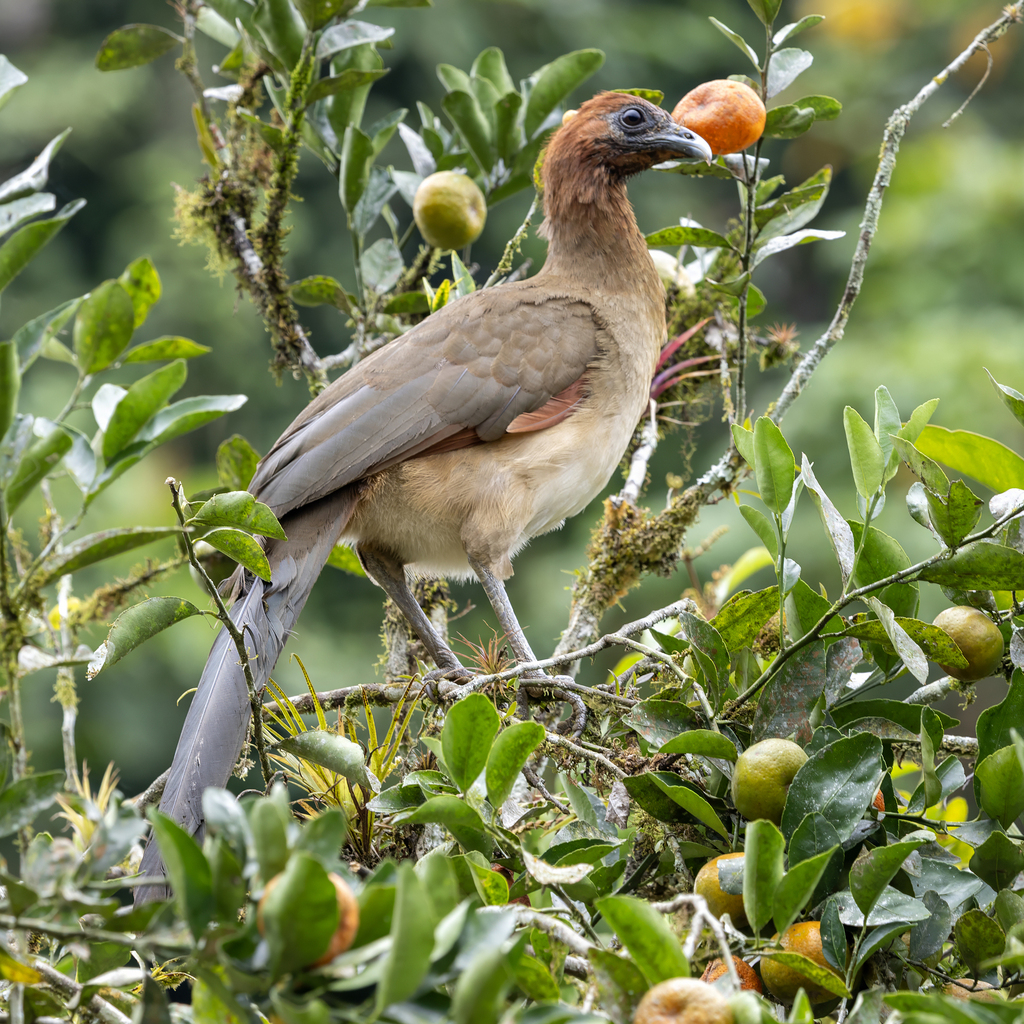
Rufous-headed Chachalaca
Photo © Dan Vickers
Photo © Dan Vickers — CC BY 4.0 — Source: iNaturalist #309798230Identification
The rufous-headed chachalaca is a medium-sized bird measuring 56 to 66 cm in length, with a distinctive appearance that makes it recognizable in its range. The plumage is characterized by a striking rufous head and neck that contrasts with a gray-brown back. The tail is particularly notable, with dark gray central feathers and outer feathers that are gray near the body but chestnut on their outer halves. The primary flight feathers are bright chestnut, adding to the bird's warm coloration. The lower breast and belly are creamy white, providing further contrast. Distinctive features for identification include its brown eye surrounded by bare bluish-gray skin and pale blue legs, which are visible when the bird is perched or moving through vegetation.
Range & Habitat
This species is found in northwestern South America, with a limited and fragmented distribution across extreme southwestern Colombia, extreme northwestern Peru, and several small to medium-sized areas in western Ecuador. The rufous-headed chachalaca inhabits dry but not arid deciduous forest and cloudforest, primarily in the coastal zone and Andean foothills. There are unconfirmed reports of its presence in savannah and brushy habitats. The bird's elevation range typically extends from sea level to 1,390 m, though it has been recorded at elevations as high as 1,850 m, and its calls have been heard near 2,500 m.
Behaviour & Diet
The rufous-headed chachalaca is a social bird that typically forages in small groups of two to seven individuals. Its known diet consists of fruit, though it may also consume leaves. The species is notably vocal, particularly from before dawn into the early morning hours, making it more often heard than seen. Its principal calls are described as raucous and repeated, including variations such as "kwak-ar-ar-ar," "cha-cha-kaw," or the shriller "kra-kra-kra," typically initiated by males. Pairs also produce several other vocalizations, including soft cooing or clucking, a harsh "cow," and fast, repeated "kawuck" sounds. The breeding season appears to align with the January to May rainy season, and captive birds have been observed laying clutches of three eggs.
Best Time & Places to See It
To observe the rufous-headed chachalaca, early morning hours before dawn and into early morning are ideal, as this is when the bird is most vocal and active. Focus your search on deciduous forest and cloudforest habitats in the coastal zones and Andean foothills of Colombia, Ecuador, and Peru. The bird's small, fragmented range requires visiting specific areas within these countries. January to May, corresponding with the rainy season, may offer the best opportunities for observation due to increased breeding activity and vocalization.
Photography Tips
Photographers should use the bird's vocal activity to locate it, positioning themselves in suitable forest habitat during early morning hours. The chestnut flight feathers and rufous head provide striking photographic subjects, particularly when the bird is in flight or perched where light can highlight these warm tones. The pale blue legs and bluish-gray facial skin offer additional identifying details worth capturing. Given the bird's small group foraging behavior, patience and careful positioning will increase the likelihood of obtaining clear shots without disturbing the birds.
Cerros de Amotape National Park
District of San Jacinto, Ecuador
+246 birds+1 mammals
Arid mountains rise abruptly from Peru's northwestern frontier, their slopes clothed in xerophytic scrubland and seasonal deciduous forest that transforms these Andean foothills into one of…
VIEW NATIONAL PARKPodocarpus National Park
Zamora, Ecuador
+496 birds+6 mammals
Where the Andes descend toward the Amazon basin, Podocarpus National Park sprawls across nearly 2,800 square kilometres of the most biodiverse terrain in Ecuador's southern highlands.…
VIEW NATIONAL PARKNo community photos yet. Log in to add the first one.
No community observations of this species yet.