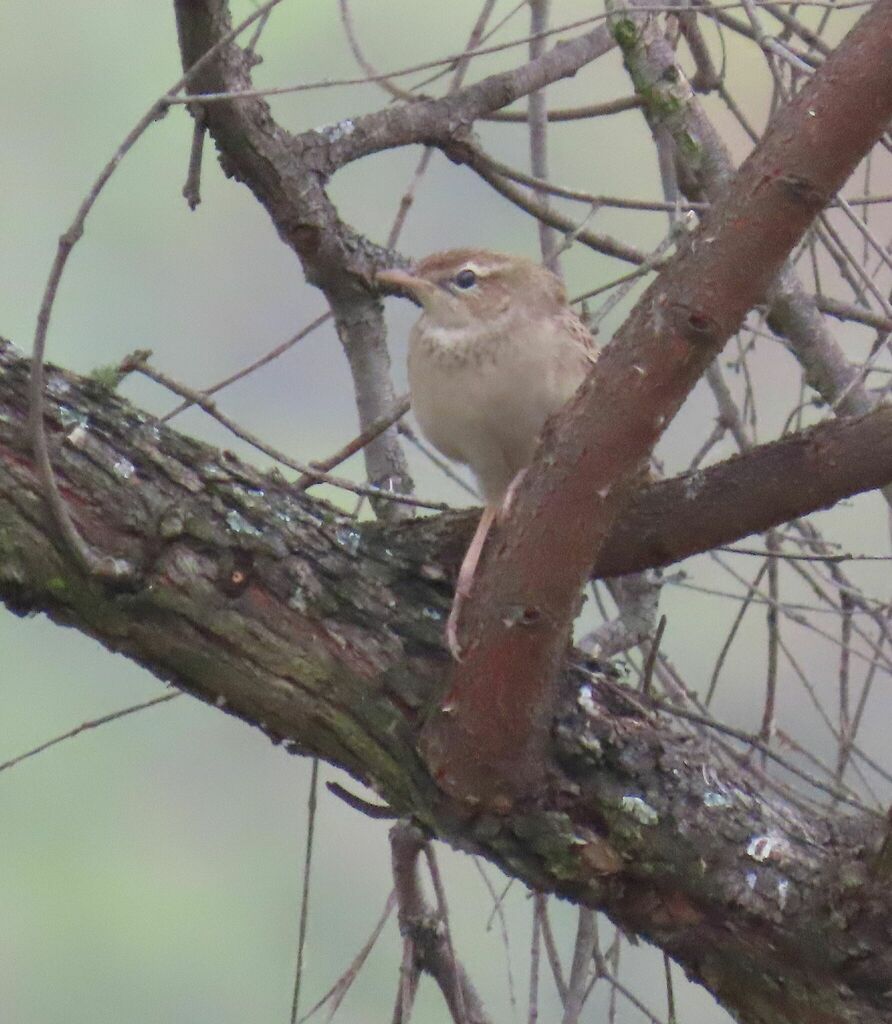
Rufous Songlark
Photo © ian_mcallan
Photo © ian_mcallan — CC BY 4.0 — Source: iNaturalist #253580645Identification
The rufous songlark is a medium-sized brown songbird with subtle streaking throughout its plumage. Males reach about 19 cm in length, while females are notably smaller at around 16 cm. The species is characterized by a dark line through the eye, a pale eyebrow stripe, pale underparts, and a distinctive rufous upper tail and rump. Described as "drab and vaguely larklike," it is slightly larger than a house sparrow and can be distinguished from the similar brown songlark by its smaller size and, in females, the presence of a rufous rump that brown songlark females lack.
Range & Habitat
The rufous songlark is endemic to Australia and common across mainland regions, particularly in New South Wales, Queensland, and Western Australia. It is uncommon in the far northern Top End and rare in Tasmania. The species is a partial migrant, spending the colder months in the north and traveling south during Australian summer to breed. This migratory pattern means the bird is typically observed only during warmer months in southern regions where human population density is higher.
Behaviour & Diet
This grassbird hunts close to the ground for insects and small arthropods. It inhabits grasslands, grassy open woodlands, agricultural areas, and mulga scrub. Outside the breeding season, rufous songlarks form small flocks of up to twenty individuals. During breeding, males are highly vocal and conspicuous, producing a lively, unmistakable song almost continuously. The distinctive "twitchy tweedle" call has become iconic enough to be featured on recordings of Australian birdsong. Males perform characteristic display flights with an arched back between trees. Females build deep grass nests in sheltered low vegetation and independently incubate eggs and raise fledglings.
Best Time & Places to See It
The best time to observe rufous songlarks is during the warmer months when they are present in southern regions. They are most commonly encountered in Queensland, New South Wales, and Western Australia in open grasslands and grassy woodlands. The males' continuous, conspicuous song during the breeding season makes them easier to locate despite their drab appearance.
Photography Tips
Photograph this species in open grassland habitats where it hunts close to ground level. The pale eyebrow, eye-line, and rufous rump are key field marks to capture. During breeding season, watch for males performing display flights between trees with an arched back—these offer dynamic photo opportunities. Early morning is typically best for capturing singing males at their most vocal and active.
Barrington Tops National Park
Blue Mountains National Park
Boodjamulla National Park
Bribie Island National Park
Budj Bim National Park
Cape Range National Park
Carnarvon National Park
Chiltern-Mt Pilot National Park
Coffin Bay National Park
Nothing matches these filters.
No community photos yet. Log in to add the first one.
No community observations of this species yet.