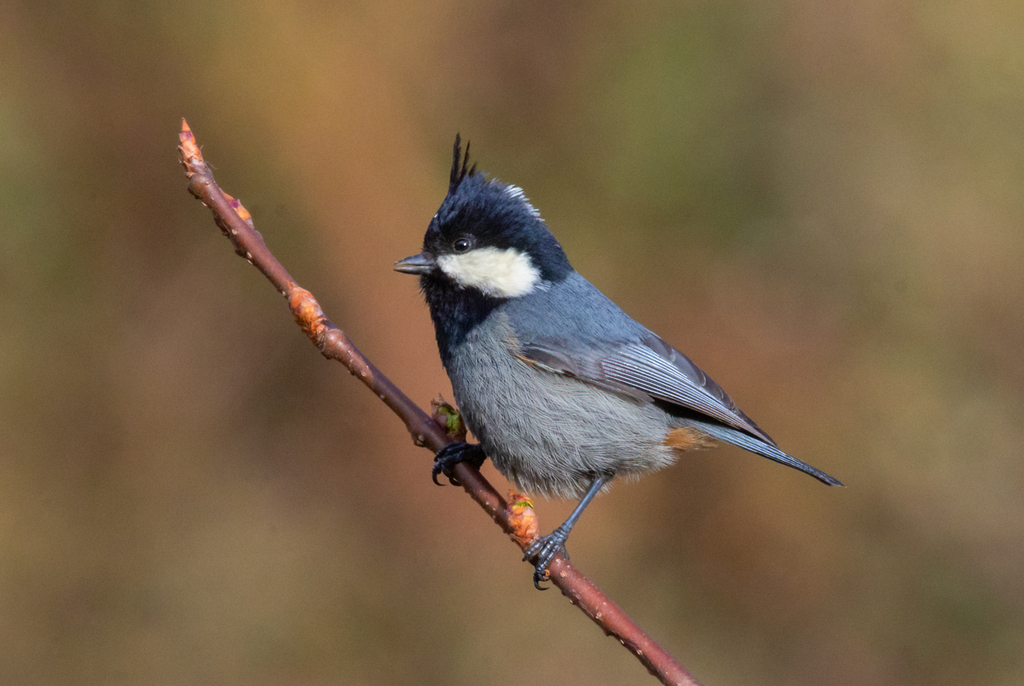
Rufous-vented Tit
Photo © egorbirder
Photo © egorbirder — CC BY 4.0 — Source: iNaturalist photo #449929986Identification
The rufous-vented tit is a small Asian songbird belonging to the Paridae family. It is distinguished by its rufous (reddish-brown) coloration on the lower belly and undertail coverts, which gives the species its common name. Like other tits, it is compact and active, with the characteristic proportions of the family, though specific plumage details vary slightly among its four recognized subspecies.
Range & Habitat
This species is native to the Himalayas and occurs across a very large range spanning parts of Bhutan, China, Pakistan, India, Myanmar, and Nepal. The four subspecies are distributed along the southern rim of the Himalayas from northwest to northeast India, with populations in Bhutan, southwest China, and localized areas in Myanmar. The rufous-vented tit inhabits boreal and temperate forests, showing a preference for high-altitude environments. In Bhutan, for instance, it is a rather common year-round resident in moist fir forests (Abies densa) between approximately 3,000 and 4,000 meters above sea level.
Behaviour & Diet
As a member of the tit family, the rufous-vented tit is an active and energetic songbird. Like other Paridae members, it is likely an opportunistic forager, though detailed dietary and behavioural information specific to this species is limited in general literature. The species is widespread throughout its range and by no means rare within suitable habitats.
Best Time & Places to See It
The rufous-vented tit is a year-round resident throughout its range, making it observable in all seasons. The best locations for encountering this species are the forested slopes of the Himalayas, particularly in Bhutan where it is relatively common. Birders and wildlife travellers visiting high-altitude temperate and boreal forests in the region between 3,000 and 4,000 meters elevation have excellent chances of observing this tit.
Photography Tips
Photographing this small, active bird requires patience and quick reflexes, as tits are constantly in motion while foraging. Focus on capturing the distinctive rufous ventral plumage, which is the key identification feature. Early morning light in forest clearings or along forest edges often provides the best photographic opportunities, when the birds are most active and lighting is optimal. A telephoto lens and fast shutter speed are essential for freezing the rapid movements of this energetic species.
Baima Snow Mountain National Nature Reserve
Gangotri National Park
Gaoligong Mountain National Nature Reserve
Giant Panda National Park
Huanglong Scenic and Historic Interest Area
Jiuzhai Valley
Khangchendzonga National Park
Khaptad National Park
Langtang National Park
Nothing matches these filters.
No community photos yet. Log in to add the first one.
No community observations of this species yet.