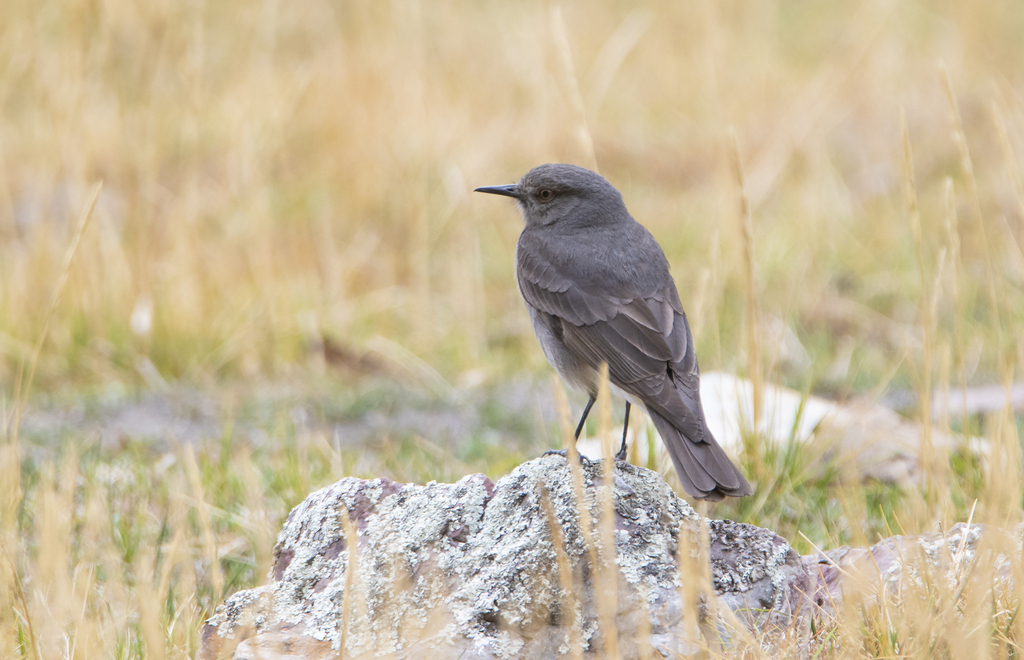
Rufous-webbed Bush Tyrant
Photo © David F. Belmonte
Photo © David F. Belmonte — CC BY 4.0 — Source: iNaturalist photo #236820096The rufous-webbed bush tyrant (Cnemarchus rufipennis) is a species of bird in the family Tyrannidae, the tyrant flycatchers. It is found in Argentina, Bolivia, Chile, and Peru. == Taxonomy and systematics == The rufous-webbed bush tyrant was formally described in 1874 as Muscisaxicola rufipennis. It was later transferred to genus Cnemarchus that Robert Ridgway had erected in 1905. In the 1970s some authors moved it to genus Myiotheretes. A 1988 paper gave evidence that the species belonged in a new genus Polioxomis. However, a 2009 study hinted and 2020 studies confirmed that it belonged in Cnemarchus. Taxonomic systems began making the change in 2021. However, as of December 2024 BirdLife International's Handbook of the Birds of the World retained the species in Polioxomis. According to most systems, the rufous-webbed bush tyrant shares genus Cnemarchus with the red-rumped bush tyrant (C. erythropygius). It has two subspecies, the nominate C. r. rufipennis (Taczanowski, 1874) and C. r. bolivianus (Fjeldså, 1990). == Description == The rufous-webbed bush tyrant is 18 to 21.5 cm (7.1 to 8.5 in) long. The sexes have the same plumage. Adults of the nominate subspecies have a pale gray or whitish supercilium and a black line through the eye.…
Huascarán National Park
Independencia, Peru
+201 birds+5 mammals
Where granite peaks pierce the Andean sky above 6,000 metres, Huascarán National Park sprawls across more than 11,500 square kilometres of Peru's Cordillera Blanca, a landscape…
VIEW NATIONAL PARKLauca National Park
Putre, Chile
+139 birds+17 mammals
Where the Andes rise toward the altiplano in Chile's far north, Lauca National Park sprawls across more than 3,000 square kilometres of some of South America's…
VIEW NATIONAL PARKLos Cardones National Park
Argentina
+193 birds+6 mammals
Where the Andes descend into northwestern Argentina, Los Cardones National Park sprawls across nearly 1,200 square kilometres of one of South America's most distinctive high-altitude desert…
VIEW NATIONAL PARKNo community photos yet. Log in to add the first one.
No community observations of this species yet.