Scripps’s Murrelet
Photo © Nicole
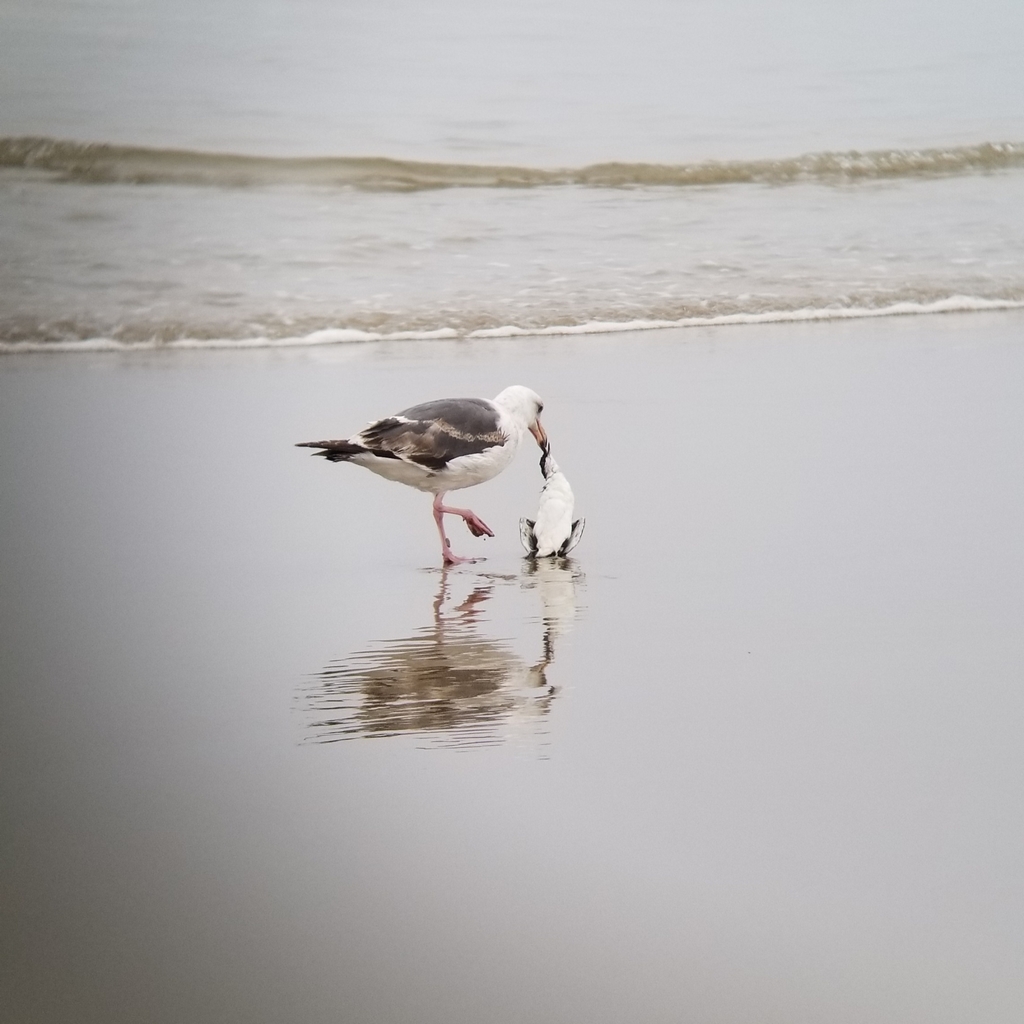
Photo © Nicole — CC BY 4.0 — Source: iNaturalist #82936014Scripps's murrelet (Synthliboramphus scrippsi) is a small seabird found in the California Current system in the Pacific Ocean. This auk breeds on islands off California and Mexico. It is threatened by predators introduced to its breeding colonies and by oil spills. This species and the Guadalupe murrelet were considered conspecific and were known collectively as Xantus's murrelet until 2012. The two species are now considered distinct based on a lack of evidence of interbreeding at a shared nesting colony on the San Benito Islands, differences in facial pattern and bill shape, and differences in vocalizations and genetics. == Description and range == This species is a small black and white auk with a small head and thin sharp bill. It resembles the closely related Craveri's murrelet, with which it shares the distinction of being the most southerly living of all the auk species. It breeds on islands in the Channel Islands of California, the largest colonies being on the Coronado Islands [1] and on Santa Barbara Island, and also several islands off Baja California, including Isla Guadalupe. After the breeding season it disperses north at sea, usually to offshore waters, as far as British Columbia. == Behavior == Scripps's murrelet…
El Vizcaíno
Laguna San Ignacio, Mexico
+317 birds+29 mammals
Where the Baja California peninsula thins into a tapestry of salt lagoons and coastal desert, one of Mexico's most biodiverse reserves sprawls across half a million…
VIEW BIOSPHERE RESERVEChannel Islands National Park
Santa Barbara County, United States
+330 birds+15 mammals
A chain of eight volcanic islands rises from the cold Pacific waters off the California coast, their rugged sea cliffs and windswept terrain shaped by millions…
VIEW NATIONAL PARKFarallon National Wildlife Refuge
San Francisco, United States
+384 birds+16 mammals
Windswept granite peaks rising abruptly from the Pacific, the Farallon Islands form a wildlife sanctuary of extraordinary seabird abundance and ecological significance just twenty-seven miles west…
VIEW WILDLIFE SANCTUARYNo community photos yet. Log in to add the first one.
No community observations of this species yet.