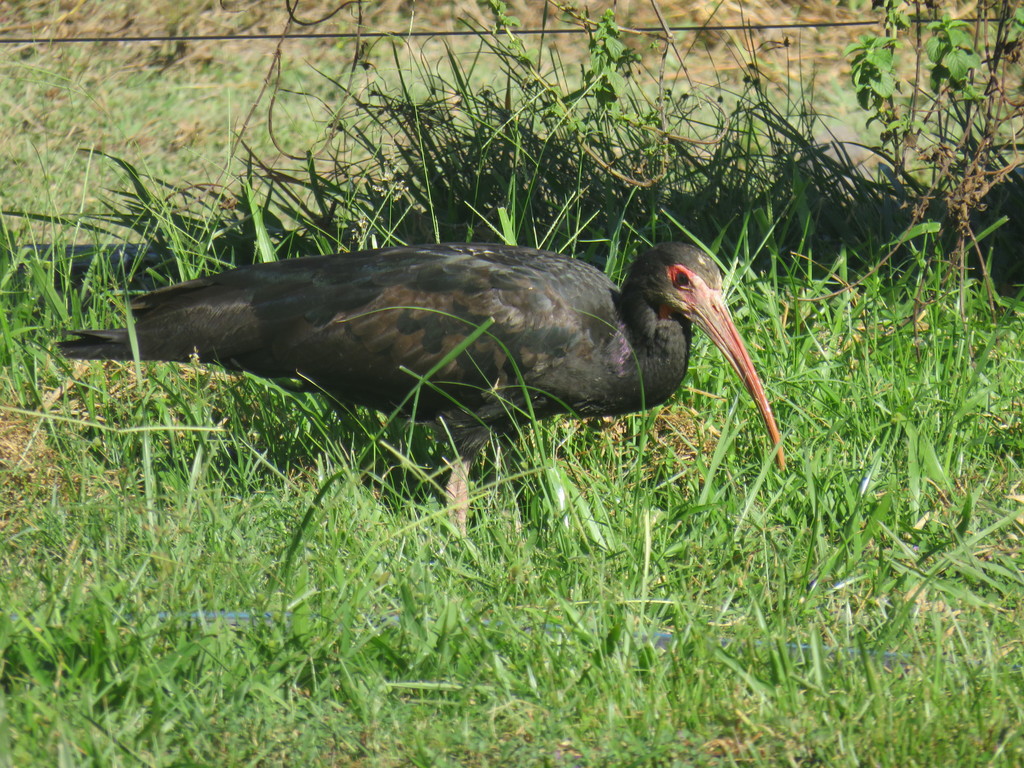
Sharp-tailed Ibis
Photo © Andrés Ramírez-Barrera
Photo © Andrés Ramírez-Barrera — CC BY 4.0 — Source: iNaturalist photo #109212371The sharp-tailed ibis (Cercibis oxycerca) is a species of ibis native to open wet savannas in parts of northern South America. == Taxonomy and systematics == The sharp-tailed ibis is monotypic, being the only representative of the genus Cercibis. Much remains unknown about this ibis's evolutionary history; however, phylogenetic analyses based on skull morphology and function suggest that it is closely related to the spoonbills. == Description == This large ibis measures 75–86 cm in length, with males being slightly larger than females. In adult males, the flat wing measures 390–415mm lengthways, and the culmen measures 156–168mm from the base of the bill. In adult females, the wing is 376–413mm long and the culmen 144–197mm. The species is distinguished by its notably long tail, the longest among all extant ibis species; measuring 250–301mm in males and 256–272mm in females. The tail projects beyond the tips of the folded wings when the ibis stands; and beyond the trailing legs in flight. The plumage is predominantly black with greenish glossing; and with purplish tinges on the upper back, hindneck, wings and tail. The forehead and cheek region are occasionally greyish brown. Juveniles appear similar to adults, but their plumage lacks a metallic…
Natural el Cocuy National Park
Güicán, Colombia
+313 birds+3 mammals
Where the Andes rise to their highest peaks in Colombia's eastern cordillera, El Cocuy National Park sprawls across more than 6,600 square kilometers of some of…
VIEW NATIONAL PARKNatural Sierra de la Macarena National Park
Vista Hermosa, Colombia
+566 birds+15 mammals
Across nearly 20,000 square kilometres of Colombia's Meta Department, the terrain rises from lowland savanna into Andean foothills through a mosaic of gallery forests, palm-fringed wetlands,…
VIEW NATIONAL PARKNo community photos yet. Log in to add the first one.
No community observations of this species yet.