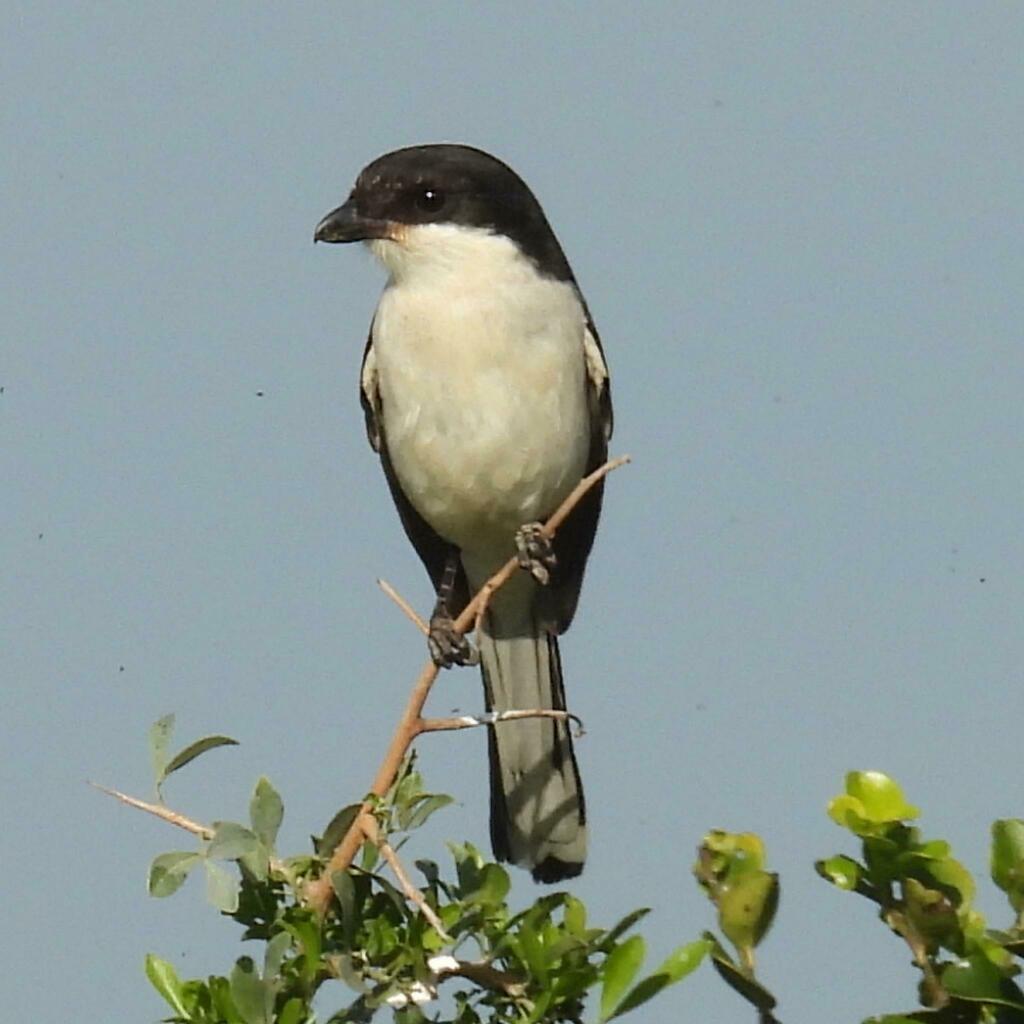
Southern Fiscal
Photo © Henry de Lange
Photo © Henry de Lange — CC BY 4.0 — Source: iNaturalist #258536024Identification
The southern fiscal is a fairly distinctive 21–23 cm passerine with striking black and white plumage. Its upperparts are black, extending from the crown down to the tail, while the underparts are white. A characteristic white "V" marks the back, and the relatively long black tail displays white outer feathers and white tips. The bill, eyes, and legs are all black. Males and females are quite similar, though females show rufous coloring on the lower flanks.
Vocally, this shrike produces jumbled, shrike-like swizzling sounds with various imitations, along with a harsh alarm call. Despite their harsh notes, southern fiscals occasionally produce a surprisingly sweet, quiet song, though this typically serves territorial or pair-bonding functions rather than purely aesthetic purposes.
Range & Habitat
The southern fiscal is found throughout most of southern Africa, with five recognized subspecies occupying ranges from southwestern Angola and Namibia through South Africa, Eswatini, Lesotho, Botswana, Zimbabwe, Zambia, Mozambique, and into Tanzania and Malawi. The species inhabits diverse open and semi-open environments including grasslands with fencing, acacia thornveld, and woodland, but avoids dense habitats that would hinder its hunting effectiveness.
This adaptable shrike shows remarkable physiological flexibility in cold environments, undergoing seasonal adjustments in body temperature, oxygen consumption, and water loss to conserve energy. At higher altitudes and during winter months, these birds exhibit reduced metabolic rates and body temperatures compared to lowland populations.
Behaviour & Diet
Southern fiscals are typically solitary hunters, perching openly on shrubs and exposed vantage points while scanning for prey. They hunt insects and small rodents, and are known as major predators of the plain tiger butterfly in eastern Africa. The bird's territorial size directly correlates with the availability of hunting perches—areas with more perches support smaller territories and higher bird densities.
This species demonstrates flexible hunting strategies that respond to seasonal demands. During summer, fiscals hunt from dawn to dusk, while winter hunting concentrates during daylight hours, allowing the birds to increase attack and capture rates and target larger prey. Hunting intensity and prey size both increase with altitude, reflecting adaptive responses to environmental pressures.
Best Time & Places to See It
Southern fiscals are year-round residents throughout their range and can be encountered in appropriate habitats at any season. Look for them in open grasslands, thornveld, and woodland areas where they perch conspicuously on shrubs, fences, and other elevated vantage points. Their habit of hunting from exposed perches makes them relatively easy to locate, particularly in areas with scattered acacia trees and good sight lines.
Photography Tips
The southern fiscal's striking black and white contrast and relatively bold behavior make it an excellent photographic subject. Position yourself to capture the distinctive white "V" on the back and the contrasting plumage. Early morning and late afternoon light will beautifully illuminate the white underparts against the black upperparts. Patient photographers should focus on perched birds, as their hunting behavior from exposed positions provides excellent opportunities for sharp, well-lit images without dense vegetation interference.
Aberdare National Park
Addo Elephant National Park
Agulhas National Park
Arusha National Park
Bontebok National Park
Bwabwata National Park
Camdeboo National Park
Cederberg Wilderness Area
Chobe National Park
Nothing matches these filters.
No community photos yet. Log in to add the first one.
No community observations of this species yet.