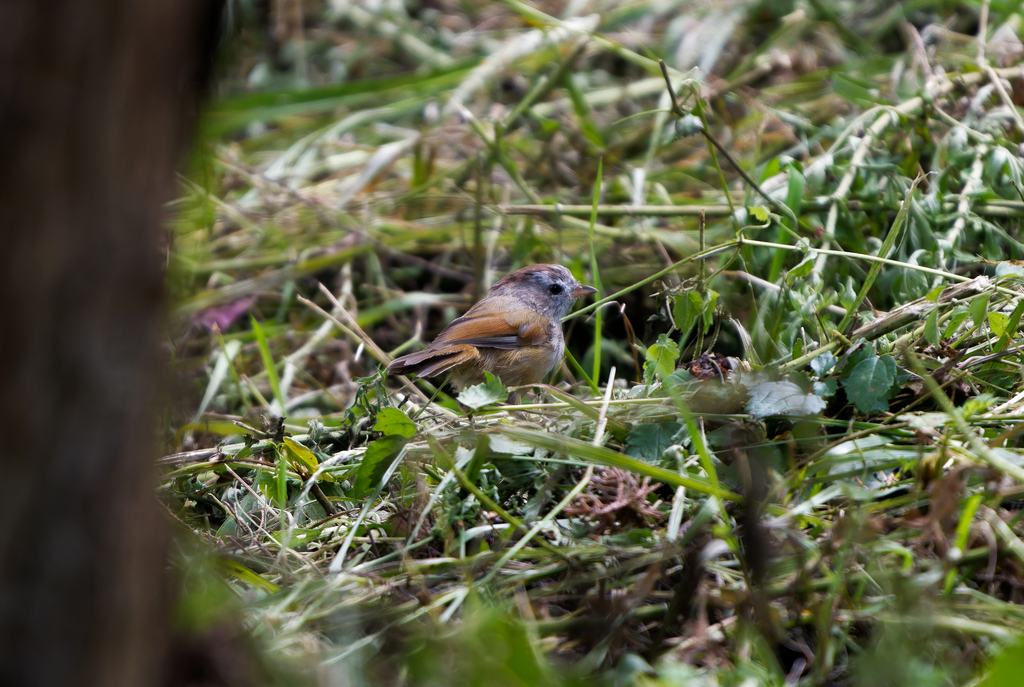
Spectacled Fulvetta
Photo © observe-syz
Photo © observe-syz — CC0 1.0 — Source: iNaturalist #309198456The spectacled fulvetta (Fulvetta ruficapilla) is a bird species in the family Paradoxornithidae. Like the other typical fulvettas, it was long included in the Timaliidae genus Alcippe or in the Sylviidae. It is found in China. Its natural habitat is temperate forests. == Mating and Breeding == They breed from March to June. They lay clutches of 2-3 white eggs, which they incubate for 13-14 days in nests made of tree bark, withered stems, hair, thin plastic threads, and plastic sheets. Both parents participate in incubation. The hatchlings nest for 12-14 days. Parents take turns taking care of hatchlings.
Giant Panda National Park
Mianyang, China
+447 birds+47 mammals
Where the eastern slopes of China's Sichuan plateau descend into cloud-wrapped valleys, one of Asia's most biodiverse landscapes unfolds across more than 350,000 square kilometres. This…
VIEW NATIONAL PARKJiuzhai Valley
Jiuzhaigou County, China
+226 birds+7 mammals
Where crystalline alpine streams cascade through limestone gorges and karst terrain rises in dramatic vertical walls, Jiuzhai Valley unfolds across nearly 1,300 square kilometers of southwestern…
VIEW NATURAL MONUMENTHuanglong Scenic and Historic Interest Area
Ngawa Tibetan and Qiang Autonomous Prefecture, China
+194 birds+7 mammals
Across the high plateau of northwestern Sichuan, a geological wonder unfolds where limestone terraces and mineral-rich springs have sculpted one of China's most distinctive natural monuments.…
VIEW NATURAL MONUMENTWolong National Nature Reserve
Wenchuan County, China
+333 birds+17 mammals
Where the Qingyi River cuts through the eastern flanks of the Minshan Range, a temperate montane forest cloaks steep valleys in dense canopy that thins dramatically…
VIEW NATURE RESERVEGaoligong Mountain National Nature Reserve
Nujiang Lisu Autonomous Prefecture, China
+443 birds+13 mammals
VIEW NATURE RESERVENo community photos yet. Log in to add the first one.
No community observations of this species yet.