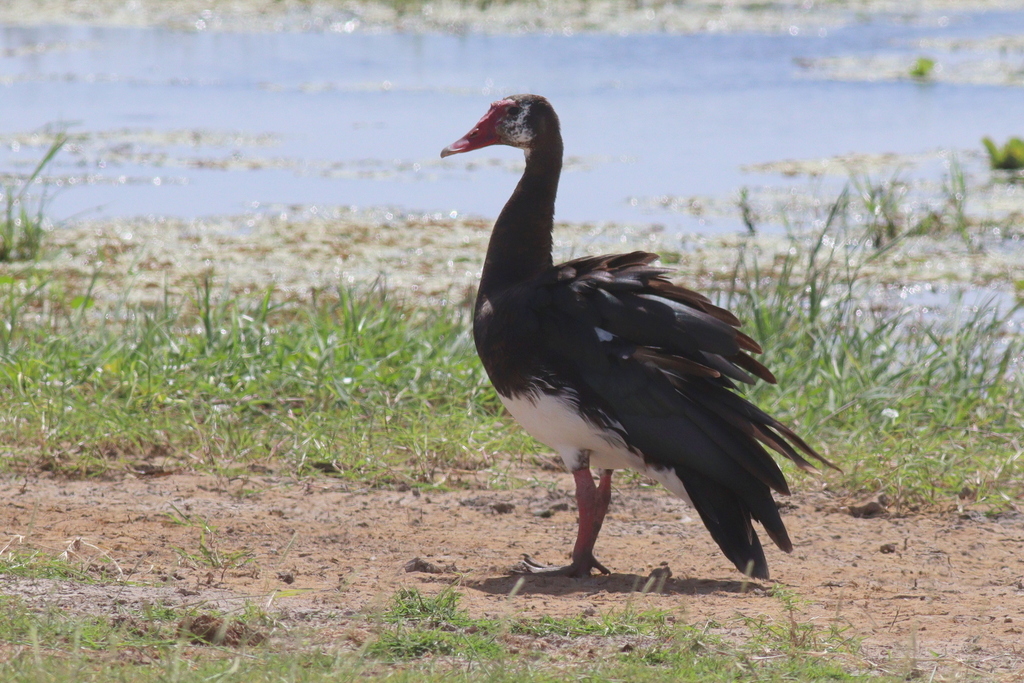
Spur-winged Goose
Photo © Jan Ebr & Ivana Ebrová
Photo © Jan Ebr & Ivana Ebrová — CC BY 4.0 — Source: iNaturalist photo #190420739Identification
The spur-winged goose is among the world's largest geese, with adults measuring 75–115 cm in length and weighing an average of 4–6.8 kg, though some individuals may exceed 10 kg. Males are noticeably larger than females. With a wingspan ranging from 150 to 200 cm, these are impressive waterfowl in flight. The plumage is predominantly black with a distinctive white face and large white wing patches, while the long legs are pinkish red. Males are larger than females and possess a more extensive red facial patch extending back from the red bill, along with a prominent knob at the base of the upper mandible.
This is generally a quiet species; typically only males produce calls—a soft bubbling "cherwit" sound when taking wing or alarmed. During breeding displays or alarm situations, both sexes may utter other inconspicuous calls. The spur-winged goose is more closely allied to shelducks than to "true geese" such as those in the Branta and Anser genera, and has been classified into its own subfamily, Plectropterinae, due to unique anatomical adaptations.
Range & Habitat
The spur-winged goose is a Sub-Saharan African waterbird found across the continent's wetlands. The species typically occurs in open grasslands with lakes, seasonal pools, rivers, swamps and river deltas. Large inland rivers and lakes are perhaps most commonly inhabited. While the species generally avoids saline lakes and arid zones, it can occur at elevations up to 3,000 m in eastern Africa, demonstrating considerable adaptability to varied freshwater wetland environments.
Behaviour & Diet
Spur-winged geese are gregarious birds, typically gathering in small flocks containing up to 50 individuals, though larger congregations occur during post-breeding moulting periods. These geese feed primarily by grazing, consuming the vegetative parts and seeds of grasses, sedges, and aquatic plants, along with agricultural grains, fruits such as figs, and tuberous crops. They may occasionally supplement their diet with small fish or insects. During the middle of the day, they rest by water rather than feeding.
The breeding season varies across their range: from August to December in northern areas, January to June in eastern Africa, and August to May in southern Africa. During breeding, these birds are highly aggressive toward other waterfowl, including their own species, with males especially prone to attacking one another. They possess sharp spurs on the bend of their wings, which they use violently during such conflicts. Nests are typically large and concealed in vegetation near water, though they also utilize tree holes, rock cavities, abandoned nests of other species, termite mounds, and aardvark burrows. Tree nests are generally positioned 20–100 cm high in trees 3–4 m tall.
Best Time & Places to See It
The spur-winged goose is a common bird of African wetlands and occurs around various African rivers, lakes and swamps throughout the continent. Dispersal may occur in pursuit of feeding opportunities outside the breeding season, making seasonal timing variable depending on your location within Sub-Saharan Africa. The species prefers quiet, undisturbed stretches of riverbank and wetlands, particularly for breeding sites. A 1977 survey of western African wetlands from Senegal to Chad documented substantial populations, with particularly large numbers found in the Niger basin.
Photography Tips
The spur-winged goose's large size, striking black and white plumage, and impressive wingspan make it a rewarding photographic subject. The white face and wing patches provide strong contrast against the black body, creating visually striking images. Early morning visits to quiet wetlands may provide the best opportunities for undisturbed photography. During the middle of the day, when birds are resting by water, positioning yourself near these resting sites offers chances to capture them at rest or in flight as they move between feeding and resting areas. The pinkish-red legs and facial markings, particularly prominent in males, deserve close attention in detail shots.
Bwindi Impenetrable National Park
Lake Mburo National Park
Mabamba Swamp
Murchison Falls National Park
Queen Elizabeth National Park
Aberdare National Park
Abijata-Shalla Lakes National Park
Addo Elephant National Park
Agulhas National Park
Nothing matches these filters.
No community photos yet. Log in to add the first one.
No community observations of this species yet.