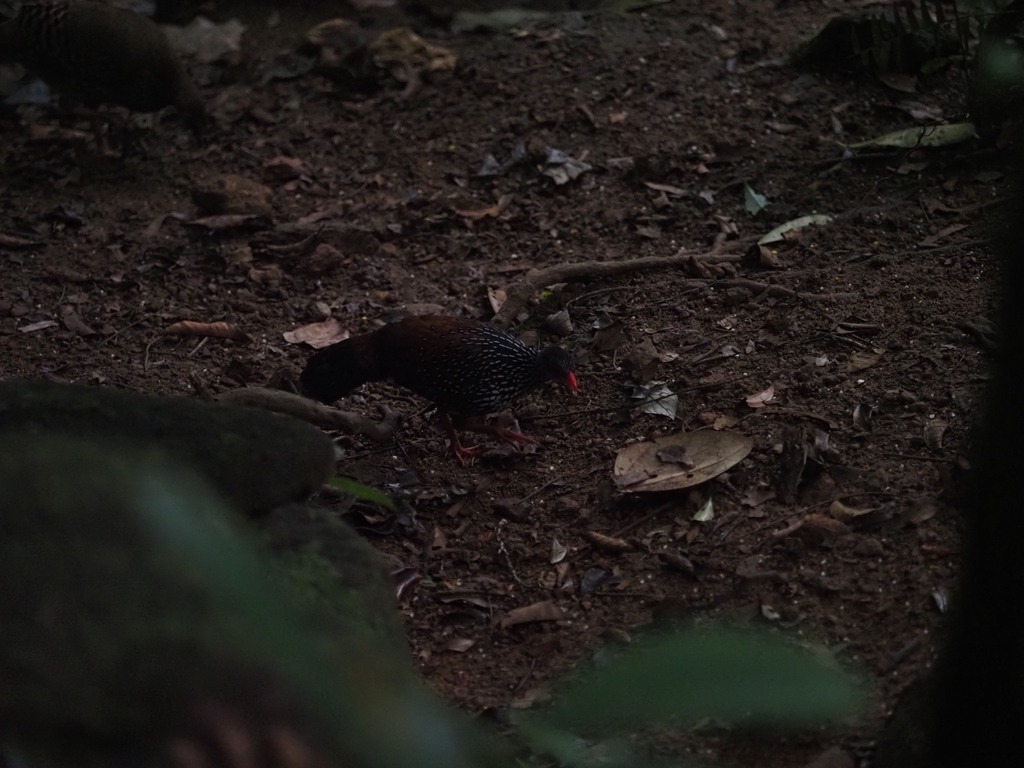
Sri Lanka Spurfowl
Photo © Tero Linjama
Photo © Tero Linjama — CC0 1.0 — Source: iNaturalist #261100177The Sri Lanka spurfowl (Galloperdix bicalcarata) is a member of the pheasant family which is endemic to the dense rainforests of Sri Lanka. In Sri Lanka, this bird is known as haban kukula - හබන් කුකුලා in Sinhala. It is a very secretive bird, and despite its size is difficult to see as it slips through dense undergrowth. Often the only indication of its presence is its distinctive ringing call, consisting of series of three-syllabled whistles. Kitulgala and Sinharaja are sites where there is a chance of seeing this bird. This spurfowl is one of three species of bird in the genus Galloperdix. It is a ground nesting bird, which lays 2-5 eggs in a scrape. Sri Lanka spurfowl is ~ 37 cm long bird. Both sexes have brown upperparts, wings and tail. The males exhibit vivid crimson red legs and bare facial skin and striking black and white dorsal plumage that extends to its head. There is also extensive white ocellation on the sepia wings and upperback. The legs of both sexes have multiple metatarsal spurs, which give rise to the specific name. The female has chestnut underparts and a plain brown back and wings. She is more prominently…
Minneriya National Park
Sri Lanka
+158 birds+9 mammals
Across the dry zone of Sri Lanka's North Central Province spreads a landscape of shallow tanks, grassland margins, and scattered dry forest—a mosaic of water and…
VIEW NATIONAL PARKWasgamuwa National Park
Sri Lanka
+156 birds+8 mammals
Dry deciduous forest and open grassland sweep across the North Central lowlands where Wasgamuwa National Park protects one of Sri Lanka's largest remaining tracts of this…
VIEW NATIONAL PARKMaduru Oya National Park
Sri Lanka
+74 birds+1 mammals
Granite ridges rise abruptly from the humid lowlands of Sri Lanka's Uva Province, their weathered slopes clothed in dry monsoon forest and scattered woodland where deciduous…
VIEW NATIONAL PARKNo community photos yet. Log in to add the first one.
No community observations of this species yet.