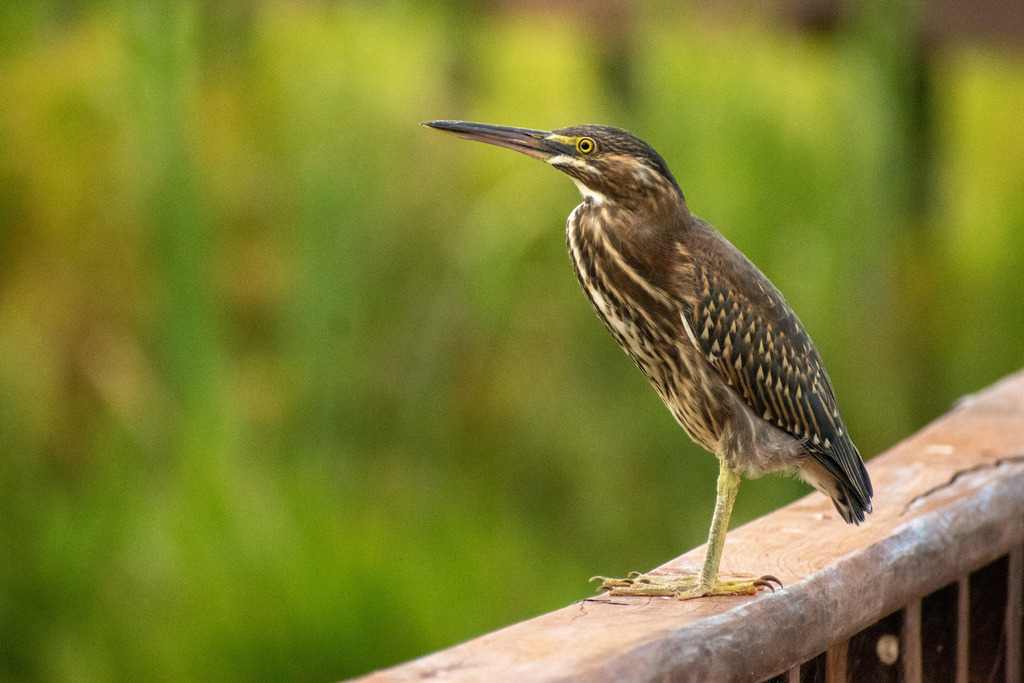
Striated Heron
Photo © Ezequiel Racker
Photo © Ezequiel Racker — CC BY 4.0 — Source: iNaturalist photo #353707189Identification
The striated heron is a small heron measuring 35–48 cm in length, with a wingspan of 52–60 cm. Adults are distinctive and relatively easy to identify in the field. They feature a blue-grey back and wings contrasting with white underparts, a black cap, and characteristic short yellow legs. A dark line extends from the bill to beneath the eye. The plumage below is variable, ranging from mid-grey to pinkish-purple or orangey tones, which can help distinguish individuals. The sexes are alike in appearance. Juveniles are noticeably different, appearing browner above with heavy streaking on the underparts, making them initially harder to identify.
Range & Habitat
The striated heron is widespread throughout tropical and warm temperate South America, ranging from central and southeastern Panama south to Río Negro Province in Argentina. It is primarily a lowland bird, though in Peru it can be found at altitudes up to 800 m, generally avoiding the Andes mountains. The species favours marshes, lakes, and river systems where water provides hunting opportunities.
In Trinidad and Tobago and central Panama, the striated heron's range overlaps with the closely related green heron, and the two species occasionally hybridise in these areas. Hybrids are generally much more purple-red below than typical striated herons, reflecting their intermediate status between the two species.
Behaviour & Diet
The striated heron is mostly sedentary and employs a characteristic hunting strategy: it stands motionless at the water's edge, waiting to ambush passing prey. Despite this patient approach, it is easier to observe than many other small heron species. Its diet consists mainly of small fish, frogs, and aquatic insects. Remarkably, this species sometimes uses bait, carefully dropping a feather or leaf onto the water surface and snapping up fish that investigate the disturbance.
The striated heron exhibits several interesting behavioural traits. Nests are built as platforms of sticks measuring 40–50 cm wide and 8–10 cm high, usually constructed in shrubs or trees but occasionally on sheltered ground near water. Clutches contain 2–5 pale blue eggs. One documented behaviour remains mysterious: an adult was observed on the nest making rapid back-and-forth head movements with a stick in its bill, resembling a sewing machine needle. The purpose of this behaviour is completely unknown. Young birds, when threatened, perform a defensive display by stretching their necks and pointing their bills skyward.
Best Time & Places to See It
The striated heron is widespread and generally common throughout its South American range, making it a reliable species for wildlife travellers visiting tropical wetland habitats. Look for it in marshes, lakes, and along rivers from Panama south through the Amazon basin to Argentina. The species is sedentary and can be encountered year-round, though the best viewing opportunities occur during the breeding season when birds are more tied to specific nest sites. Its preference for remaining still at the water's edge, combined with its relatively conspicuous appearance compared to other small herons, makes it moderately easy to locate in suitable habitat.
Photography Tips
Photograph the striated heron during early morning or late afternoon light when it is most active at the water's edge. The bird's habit of standing motionless allows for patient, composed shots—position yourself quietly downstream or downwind and wait for the heron to reveal its distinctive features. The contrasting blue-grey back and white underparts photograph well in natural light. Focus on capturing the characteristic dark eye-line and the striking yellow legs, which are diagnostic features. When photographing juveniles, note the browner plumage and heavy streaking, which differs markedly from adults. If you encounter breeding birds, exercise care to avoid disturbing nest sites, but the patient behaviour of nesting adults can reward photographers with intimate shots of this fascinating species.
Bwindi Impenetrable National Park
Kanha Tiger Reserve
Lake Mburo National Park
Mabamba Swamp
Minneriya National Park
Murchison Falls National Park
Queen Elizabeth National Park
Abijata-Shalla Lakes National Park
Addo Elephant National Park
Nothing matches these filters.
No community photos yet. Log in to add the first one.
No community observations of this species yet.