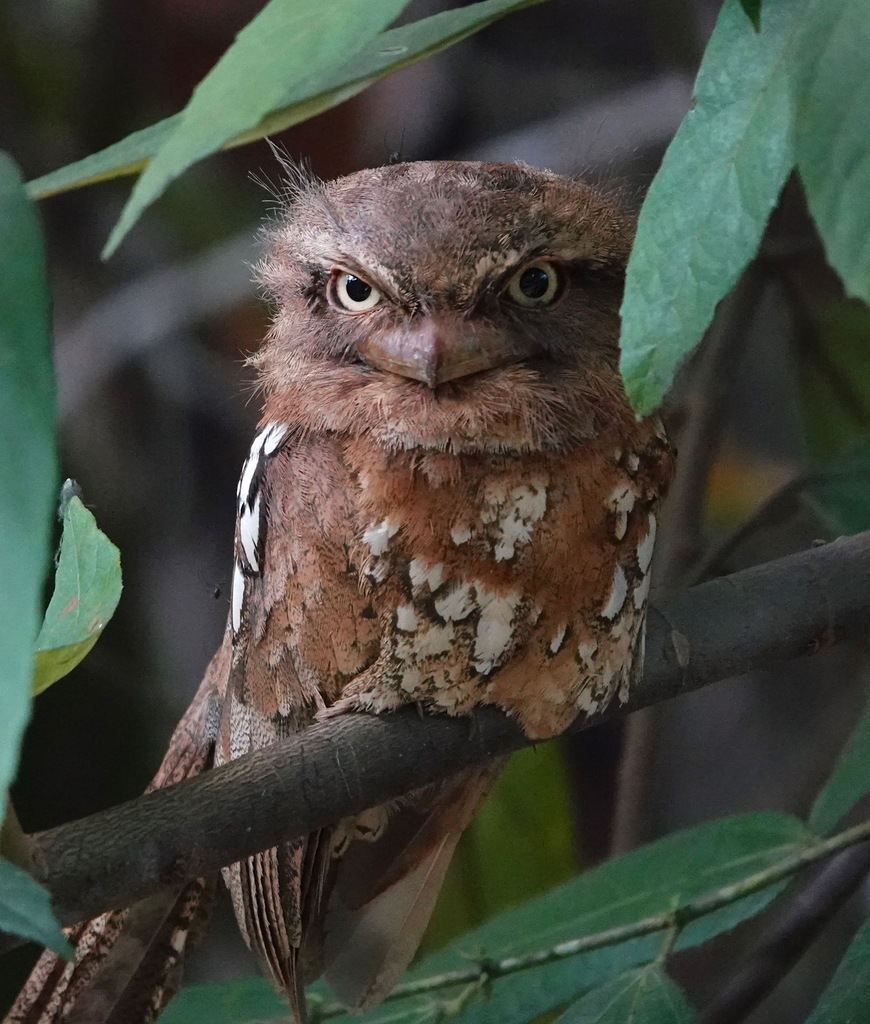
Sunda Frogmouth
Photo © desertnaturalist
Photo © desertnaturalist — CC BY 4.0 — Source: iNaturalist #133035524The Sunda frogmouth (Batrachostomus cornutus) is a medium-sized, old world species of bird within the order Podargiformes. It is also uncommonly referred to as the long-tailed frogmouth or the horned frogmouth. The term "Sunda" is based on the geographical range of the species to regions around the Sunda islands. The genus name, Batrachostomus, is a Greek translation to 'frogmouth', which comes from the wide shape of the bill and slight gape. The species name cornutus is a Latin word translated to "having horns", referring to the tufts of feathers on the head. == Taxonomy == The Sunda frogmouth is found within the clade Strisores, which refers to nightbirds. It was previously grouped with order Caprimulgiformes which has a long history of classifications under different taxa. Hartert in 1892 classified Caprimulgiformes with Picariae which at the time included hoopoes, hummingbirds and swifts. Frogmouths were then classified with Coraciiformes by Gadow in 1892 and Sharpe in 1900 which included owls, swifts, hummingbirds, trogons, and rolers. The most recent classification of Caprimulgiformes were within Strigiformes (owls) by Sibley and Ahlquist in 1990. In the early 2000s, Caprimulgiformes were separated from Strigiformes due to advancements in DNA sequencing. The phylogenetic analysis using N-acetyltransferase gene…
Kerinci Seblat National Park
Kerinci, Indonesia
+228 birds+16 mammals
Across nearly 67,000 square kilometres of Sumatra's spine, a mountainous realm of equatorial rainforest rises from steaming lowlands to volcanic peaks shrouded in cloud. Kerinci Seblat…
VIEW NATIONAL PARKWay Kambas National Park
Lampung Timur, Indonesia
+237 birds+20 mammals
Across the low swamplands of eastern Lampung, where freshwater wetlands merge into tidal mangrove forests along the Sunda Strait, sprawls one of Sumatra's most vital sanctuaries.…
VIEW NATIONAL PARKNo community photos yet. Log in to add the first one.
No community observations of this species yet.