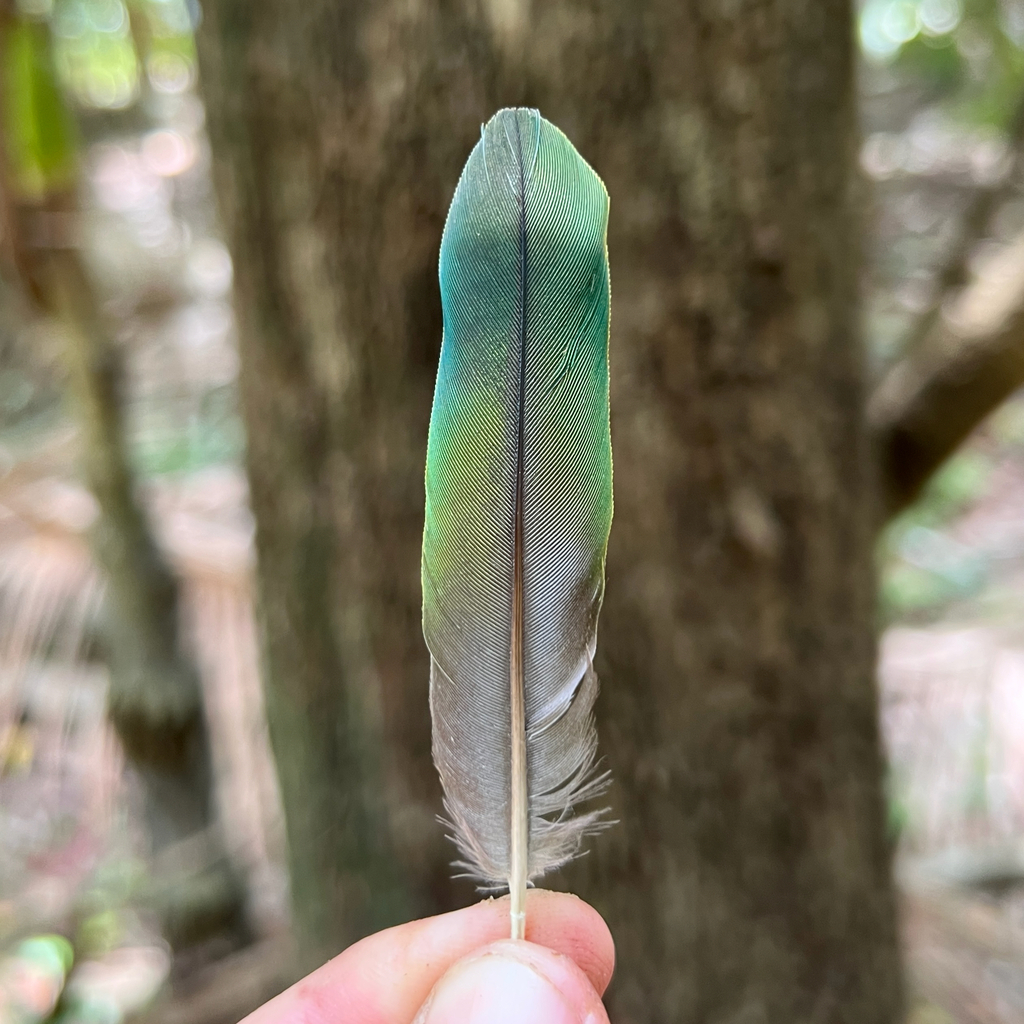
Superb Fruit Dove
Photo © James K. Douch
Photo © James K. Douch — CC BY-SA 4.0 — Source: iNaturalist #330580775Identification
The superb fruit dove is a medium-sized pigeon, measuring 22–24 cm in length, and displays striking sexual dimorphism. Males are superbly coloured with a fiery orange nape, green ears, and a distinctive purple crown. The breast is grey, separated from the abdomen by a wide, dark blue band, while the olive-green wings are covered with dark spots and the tail is tipped with white. Females are predominantly green with a white abdomen, blue wing tips, light blue breast, and a small dark blue spot on the back of the head. Both sexes share yellow eyes and prominent eye-rings. Despite this colourful plumage, the superb fruit dove remains remarkably well-camouflaged amongst rainforest foliage.
Range & Habitat
Native to Australasia, this fruit dove inhabits the rainforests of New Guinea, Australia, the Solomon Islands, the Philippines, and Sulawesi in Indonesia. In Australia, its range extends from southern New South Wales near Moruya northward, becoming increasingly common towards Cape York in Queensland. In stable rainforest environments such as New Guinea, the species is resident year-round. However, in more marginal or seasonally variable habitats, particularly in Australia, flocks are known to move nomadically in response to fruit availability.
Behaviour & Diet
The superb fruit dove is primarily frugivorous, feeding on a variety of fruits and berries. In the Port Moresby region, its diet consists mainly of figs (particularly Ficus albipila and Ficus benjamina), Canarium australianum drupes, and fruits from Archontophoenix, Calamus, and Livistona palms, supplemented by cinnamon trees, Litsea, Neolitsea, and Cryptocarya species. Smaller quantities of Ylang-ylang, Syzygium, and Vitex cofassus fruits are also consumed. Notably, this species eats smaller fruits than some other fruit doves, with a maximum recorded fruit volume of 2.5 cm³. In flight, the superb fruit dove produces distinctive whistling wing sounds, and its call is a steady, repetitive coo-coo-coo-coo. Breeding occurs from September to January, with females constructing a small twig platform 5–30 metres above ground. Each clutch consists of a single small white egg, which the female incubates at night while the male takes daytime turns.
Best Time & Places to See It
The breeding season from September to January offers excellent opportunities to observe this species, particularly in rainforest habitats where birds are more vocal and active. The species is fairly widespread and common throughout its large range across New Guinea, Australia, and the Indonesian and Philippine archipelagos. Rainforest regions offering the best viewing include Cape York in Queensland, the rainforests of New Guinea, and forested areas throughout the Solomon Islands and Sulawesi.
Photography Tips
Photographing the superb fruit dove presents both challenges and rewards. The species' excellent camouflage among rainforest foliage requires patience and careful observation—watch for movement in fruit-bearing trees and listen for the distinctive whistling of their wings in flight. Males, with their vibrant purple crowns, orange napes, and blue breast bands, offer the most striking photographic subjects, particularly during the breeding season when they are more active and vocal. Early morning hours often provide the best lighting and behaviour opportunities in rainforest canopies. A telephoto lens is essential given the bird's typically elevated perches and tendency to remain among dense vegetation.
Aketajawe Lolobata National Park
Bogani Nani Wartabone National Park
Daintree National Park
Dorrigo National Park
Endeavour River National Park
Girringun National Park
Great Sandy National Park
Herberton Range National Park
Ku-ring-gai Chase National Park
Nothing matches these filters.
No community photos yet. Log in to add the first one.
No community observations of this species yet.