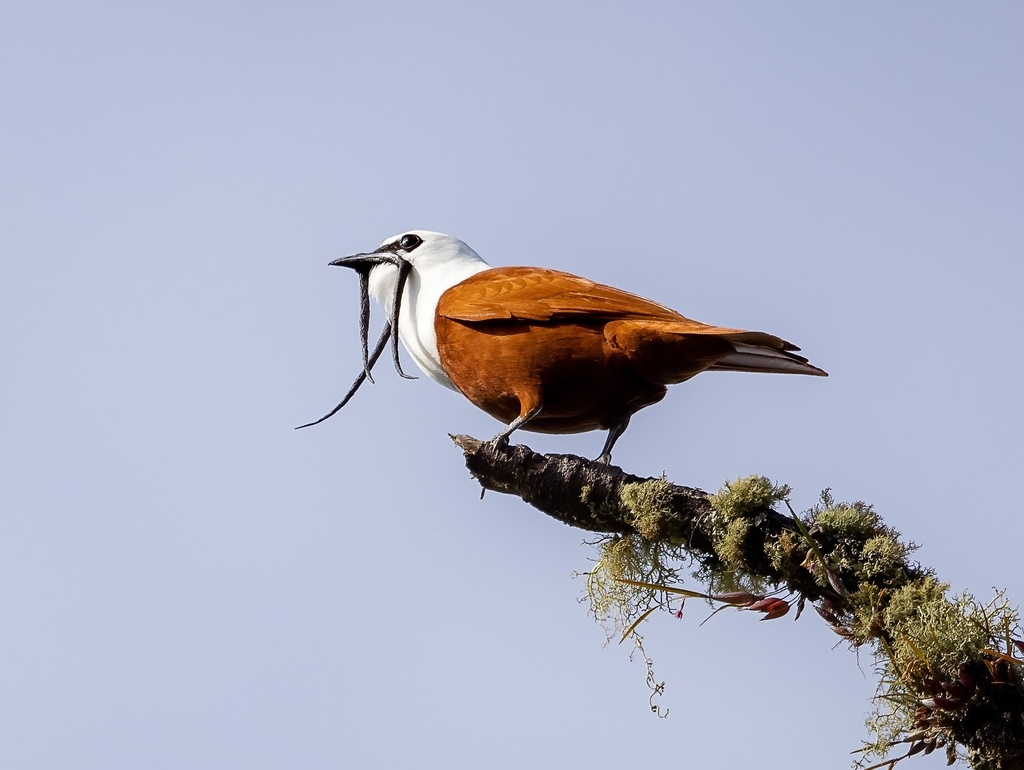
Three-wattled Bellbird
Photo © Derek Spencer
Photo © Derek Spencer — CC BY 4.0 — Source: iNaturalist photo #432329490Identification
The three-wattled bellbird is a striking cotinga measuring 25–30 cm in length. Males are unmistakable: brilliant white head, neck, and upper breast contrast sharply with uniformly chestnut-brown body, wings, and tail. A black eye-ring, eye-stripe, and bill complete the pattern. Most distinctive are the three long, worm-like black wattles dangling from the base of the bill—these can extend to 10 cm during display and remain flaccid rather than erectile, hanging straight downward without muscular control.
Females are far less conspicuous, with overall olive plumage, yellowish streaking on the underparts, and a pure yellow vent. They lack wattles entirely. Juvenile males resemble females and retain female-like plumage until reaching sexual maturity at age seven, gradually molting into the dramatic adult male pattern. Wattles begin growing at 1–2 years of age and continue developing throughout the bird's life.
Range & Habitat
This Central American endemic ranges from western Honduras south to eastern Panama. The species is highly migratory, breeding primarily in Costa Rican cloud-forest highlands from March to September, then descending to lower elevations in mangroves and other habitats during the interim months. The bird requires intact forest connectivity for its seasonal movements, making it vulnerable to habitat fragmentation.
Behaviour & Diet
The three-wattled bellbird is completely frugivorous, specializing in fruits from the Lauraceae family—including avocado relatives. By regurgitating indigestible seeds beneath song perches in forest gaps, bellbirds play a crucial role in seed dispersal, nearly doubling seedling survival rates in these locations. The species is notably secretive and shy, and males employ a remarkable courtship strategy: they sneak behind perched females and open their mouth to a full 180-degree angle while producing their explosive call, sometimes knocking the female from her branch. Females then depart alone to build concealed nests and raise chicks without male assistance.
Best Time & Places to See It
March through September offers the best opportunity to encounter bellbirds in Costa Rican highlands, where they breed in cloud forests. However, this species is more often heard than seen due to its shy, secretive nature. The distinctive vocalization—audible from over 0.5 km away—remains the most reliable way to locate birds. Monteverde and the Bellbird Biological Corridor in Costa Rica are prime locations. Patience and careful listening are essential; dawn hours often yield the most vocal activity.
Photography Tips
Photographing males rewards patient observers with extraordinary subjects—the contrasting white head and chestnut body, combined with the unusual wattles, make compelling images. Position yourself quietly in suitable habitat during breeding season and listen for the loud "bonk" call to pinpoint birds. Females are far more challenging, their olive plumage providing excellent camouflage in forest vegetation. Early morning light enhances the male's striking coloration. Given the bird's shyness, a longer lens and considerable patience are prerequisites for successful photography.

Birdwatching at Celeste Mountain Lodge 6.30am-11am
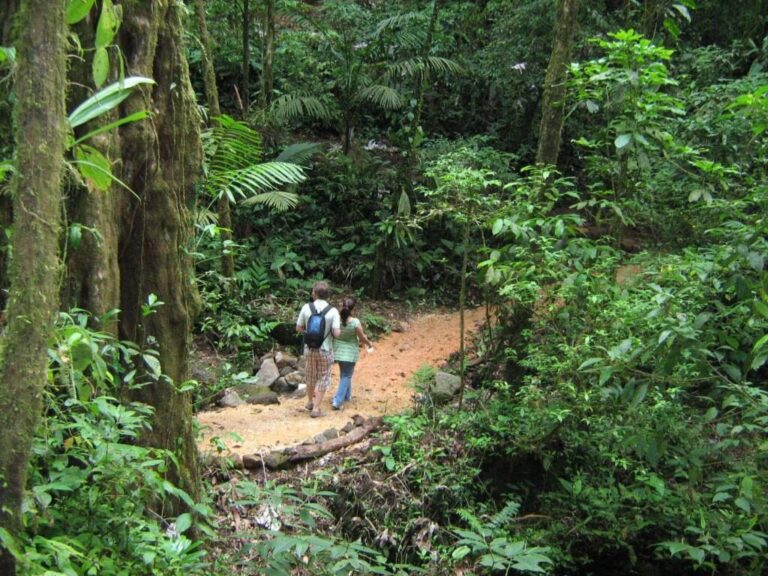
Birdwatching at Celeste Mountain Lodge 6.30am-4pm
Nothing matches these filters.
Nothing matches these filters.
Arenal Volcano National Park
Barra del Colorado National Wildlife Refuge
Baru Volcano National Park
Braulio Carrillo National Park
Caño Negro National Wildlife Refuge
Carara National Park
Chirripó National Park
Coiba National Park
Corcovado National Park
Nothing matches these filters.
No community photos yet. Log in to add the first one.
No community observations of this species yet.