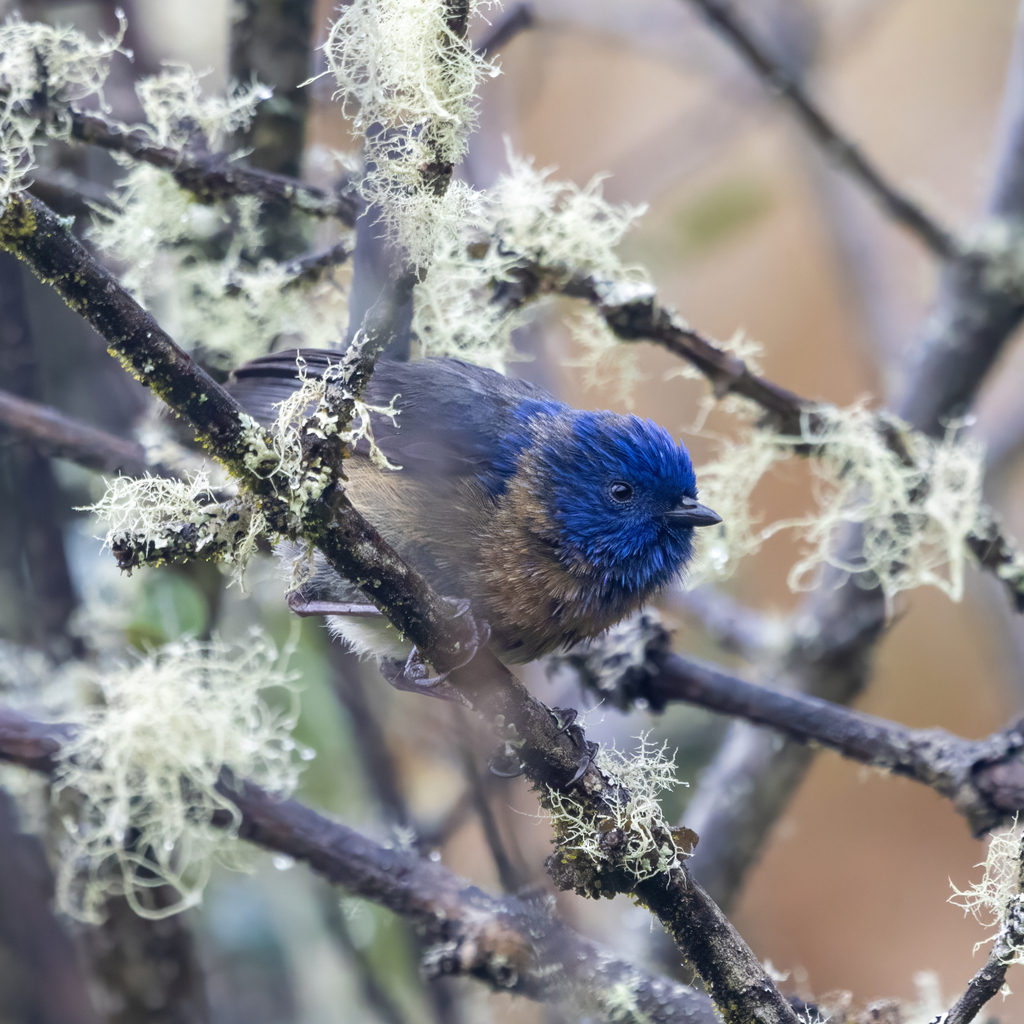
Tit-like Dacnis
Photo © Dan Vickers
Photo © Dan Vickers — CC BY 4.0 — Source: iNaturalist #309642209The tit-like dacnis (Xenodacnis parina) is a small neotropical passerine bird found in southern Ecuador and Peru. In Spanish, it is known as Azulito Altoandino. It is found in Andean montane scrub forests from 3000 m to 4600 m elevation. Adults reach 12.5 cm in length. Males are solid deep blue with dark eyes, bill, and feet. Females of all subspecies are duller, with rufous-brown underparts. == Taxonomy == The tit-like dacnis was formally described in 1873 by the German ornithologist Jean Cabanis from a specimen collected in the Andes of central Peru. Cabanis introduced the genus Xenodacnis and coined the binomial name Xenodacnis parina. The genus name combines the Ancient Greek xenos meaning "different" or "unusual" with the genus name Dacnis. The specific epithet parina is from Modern Latin and means "tit like". The tit-like dacnis is sister to a clade containing the four species now placed in the genus Idiopsar.
Sangay National Park
Cebadas, Ecuador
+320 birds+10 mammals
High in Ecuador's Andean spine, where the Western Cordillera rises to touch perpetual snow, a landscape of volcanic drama and ecological intensity unfolds across Sangay National…
VIEW NATIONAL PARKCajas National Park
Cuenca, Ecuador
+190 birds+7 mammals
High in the Andes above Cuenca, where elevation ranges from 3,100 to 4,200 metres, the páramo landscape dominates—a windswept realm of cushion plants, alpine grasses, and…
VIEW NATIONAL PARKManu National Park
Manu, Peru
+892 birds+26 mammals
Across the eastern slopes of the Peruvian Andes, tropical rainforest descends into the Amazon basin with a complexity that few terrestrial ecosystems match. Manu National Park…
VIEW NATIONAL PARKHuascarán National Park
Independencia, Peru
+201 birds+5 mammals
Where granite peaks pierce the Andean sky above 6,000 metres, Huascarán National Park sprawls across more than 11,500 square kilometres of Peru's Cordillera Blanca, a landscape…
VIEW NATIONAL PARKNo community photos yet. Log in to add the first one.
No community observations of this species yet.