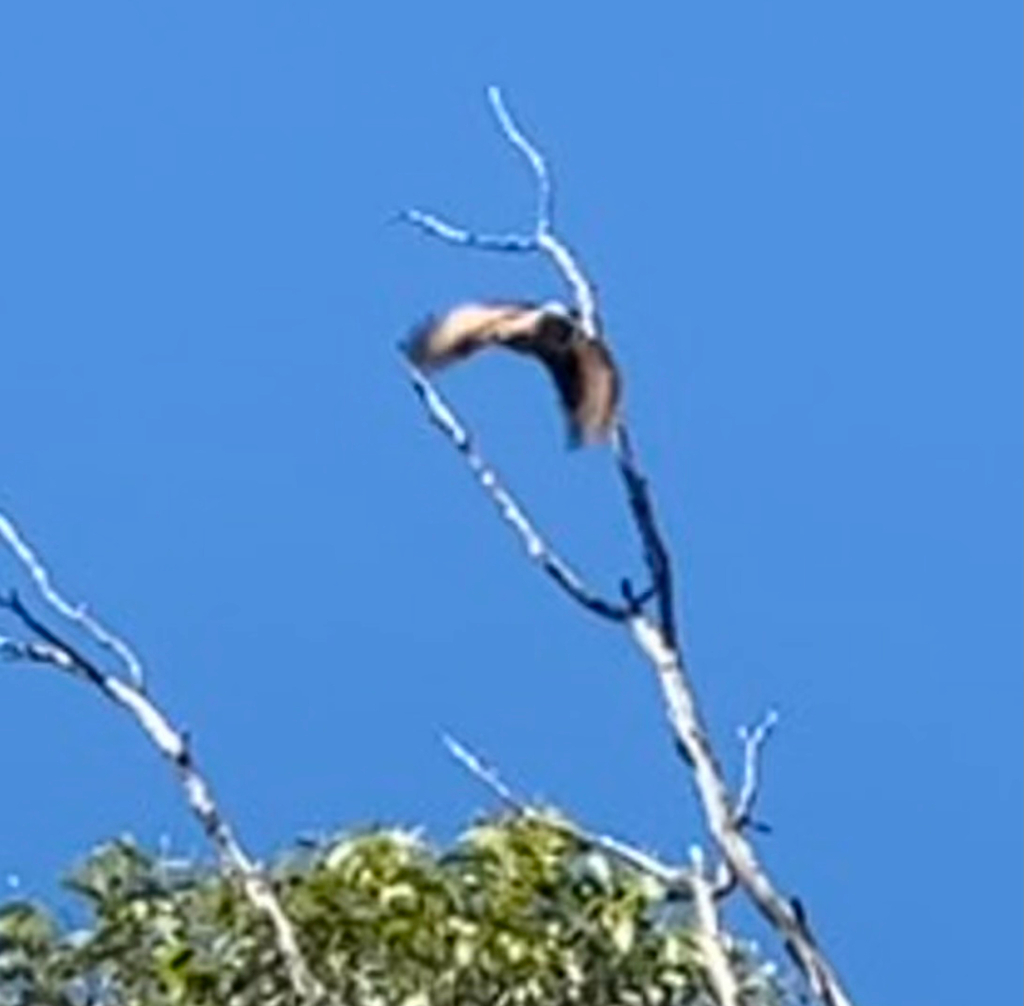
Varied Sittella
Photo © prossington
Photo © prossington — CC BY 4.0 — Source: iNaturalist #335869216Identification
The varied sittella is a small Australian songbird measuring 10–11 cm in length. Its most distinctive features are its dark orange iris and orange-yellow eye-ring, legs, and feet, contrasting with an orange bill tipped in black. The species exhibits remarkable plumage variation across its range, with five subspecies showing different head and body colorations. The crown and head may be white, grey, or black, while the body ranges from whitish to grey, often streaked with black. All subspecies share black wings marked with a broad bar of either white or cinnamon, making the wings conspicuous in flight.
Range & Habitat
Native exclusively to Australia, the varied sittella is distributed across the continent with five geographically distinct subspecies. The white-winged sittella inhabits the northwest to north-central regions; the streaked sittella occupies the northeast; the white-headed sittella is found in eastern Australia; the orange-winged sittella ranges through the southeast; and the black-capped sittella inhabits the southwest, west-central, central, and south. The species forages in trees of all heights throughout its range, utilizing both open and wooded environments.
Behaviour & Diet
Varied sitellas are highly social, moving through trees in flocks that forage at all heights. They are acrobatic foragers, descending erratically down tree trunks in a nuthatch-like manner while searching for food. Their diet consists primarily of spiders and insects, which they skillfully prize from beneath the bark using their pointed bills. These birds maintain constant contact with one another through characteristic vocalizations—a thin, high-pitched "chwit" that develops into a louder, metallic "tchweit-tchweit-tchweit" as multiple birds engage in call-and-response exchanges while moving between trees.
Best Time & Places to See It
Varied sitellas can be observed year-round throughout their Australian range, but breeding season (August to October in the north; September to December in the south) offers the best viewing opportunities. During this period, larger flocks break into smaller breeding groups, making individual birds more conspicuous. Look for them in any habitat with scattered trees, watching for their characteristic erratic descent along trunks and listening for their distinctive metallic calls. Patient observation of tree canopies, particularly where spiders' webs are visible, increases chances of spotting these active, social birds.
Photography Tips
Capturing varied sitellas requires patience and quick reflexes, as they rarely remain stationary for long. Position yourself where you can observe tree trunks and lower branches backlit by soft morning light to highlight their wing patterns and the white or cinnamon wing bars. The orange facial features—particularly the bright eye-ring and iris—photograph well with careful exposure metering. Anticipate their movement along trunks rather than waiting for them to settle; continuous shooting mode will improve your success rate. Flocking behavior provides opportunities for dynamic compositions showing multiple birds in interaction, particularly during breeding season when smaller groups are more concentrated.
Barrington Tops National Park
Belair National Park
Ben Boyd National Park
Blue Mountains National Park
Boodjamulla National Park
Bouddi National Park
Bribie Island National Park
Budj Bim National Park
Bunya Mountains National Park
Nothing matches these filters.
No community photos yet. Log in to add the first one.
No community observations of this species yet.