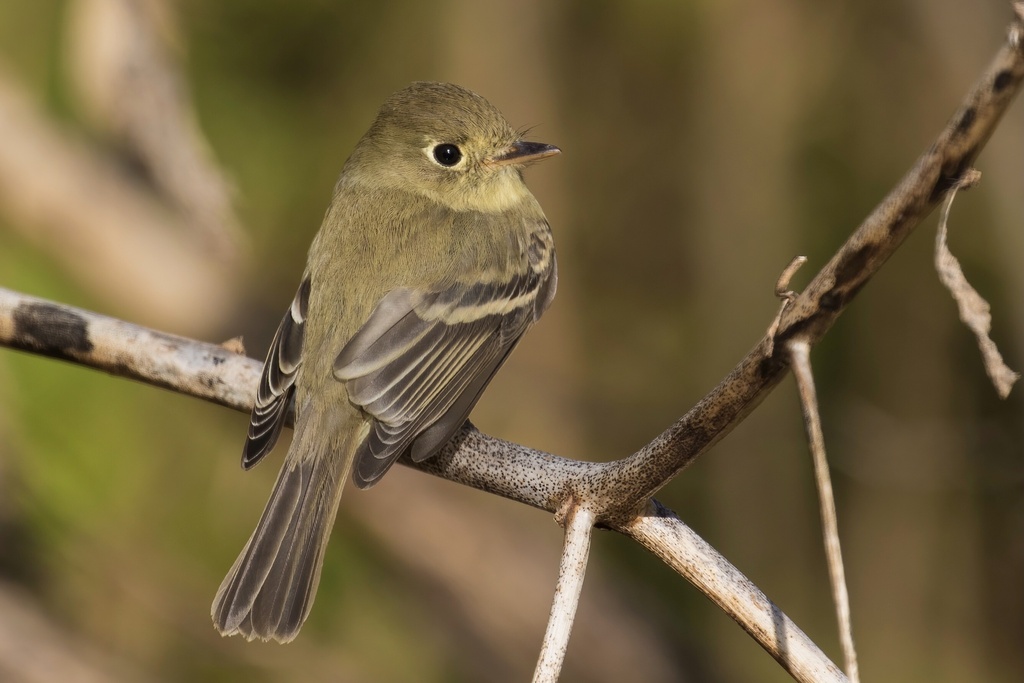
Western Flycatcher
Photo © Matt Felperin
Photo © Matt Felperin — CC BY 4.0 — Source: iNaturalist photo #353507343Identification
The western flycatcher is a small insectivorous bird with olive-gray upperparts, darker on the wings and tail, and yellowish underparts. Its most distinctive feature is a conspicuous teardrop-shaped white eye ring, which contrasts with its small bill and short tail. White wing bars are also present. Adults are notoriously difficult to distinguish from other Empidonax flycatchers in North America, but voice, breeding habitat, and range provide the most reliable identification clues. A 2014 DNA study confirmed that buffy edging on the secondaries can reliably distinguish this species from yellow-bellied flycatchers. The song includes notes of pseet, ptsick, and seet sung rapidly together. In Pacific birds, the ptsick or ptik note has the first syllable higher-pitched than the second. The male's typical position call is a loud and distinctive pit pete or tse-seet, with some individuals giving a rising tsweep or slurred tseeweep.
Range & Habitat
The western flycatcher is native to western North America, where it breeds in the Rocky Mountains and Pacific Coast forests and mountain ranges from California to Alaska and south to central Mexico. Northern populations migrate south to Mexico for the winter, while Mexican central-southern birds are resident year-round. These birds inhabit coniferous or deciduous forests across their range, including mixed woods, Douglas fir forests, redwood forests, pine-oak forests, and riparian woodlands. The preferred breeding habitat is typically located near running water, where pairs construct cup nests on forks in trees, usually positioned low on horizontal branches. Females typically lay two to five eggs per clutch.
Behaviour & Diet
As its name suggests, the western flycatcher is an expert insect hunter. It employs two primary foraging techniques: hawking, where it waits on a perch and flies out to catch insects in mid-air, and gleaning, where it plucks insects from foliage while hovering. The species also enters swarms of gnats or mosquitoes to feed. These birds fulfill an important ecological role in controlling insect populations, particularly mosquitoes, and they also consume caterpillars and spiders. Their dietary habits make them valuable allies in natural pest control within forest ecosystems.
Best Time & Places to See It
Western flycatchers are present in their breeding range during the warmer months, with timing varying by latitude. They can be found in forested areas along the Pacific coast and throughout the Rocky Mountains from California to Alaska, extending south to central Mexico. Migrants depart northern regions in fall to winter in Mexico, returning in spring. Look for these birds in riparian woodlands and near running water within their preferred forest habitats. The best locations to observe them are in mixed coniferous-deciduous forests, particularly Douglas fir and redwood forests, where they are most active during daylight hours.
Photography Tips
The western flycatcher's small size and habit of perching to scan for insects make it a rewarding subject for patient photographers. Position yourself near streams or water sources in forested habitat, as the species strongly prefers these areas. Early morning typically offers the best light and activity levels. The bird's distinctive white eye ring and teardrop marking are key features to capture, along with the white wing bars. Longer lenses (400mm or greater) are recommended given the species' small size. Since the bird often forages by hawking insects in flight, anticipate its movements and be ready to follow action in open canopy gaps. The diagnostic call notes also help locate birds, allowing you to find subjects before attempting to photograph them.
Tombstone Territorial Park
Alaska Maritime National Wildlife Refuge
Arches National Park
Badlands National Park
Banff National Park
Bear River Migratory Bird Refuge
Big Bend National Park
Bitter Lake National Wildlife Refuge
Black Canyon of the Gunnison National Park
Nothing matches these filters.
No community photos yet. Log in to add the first one.
No community observations of this species yet.