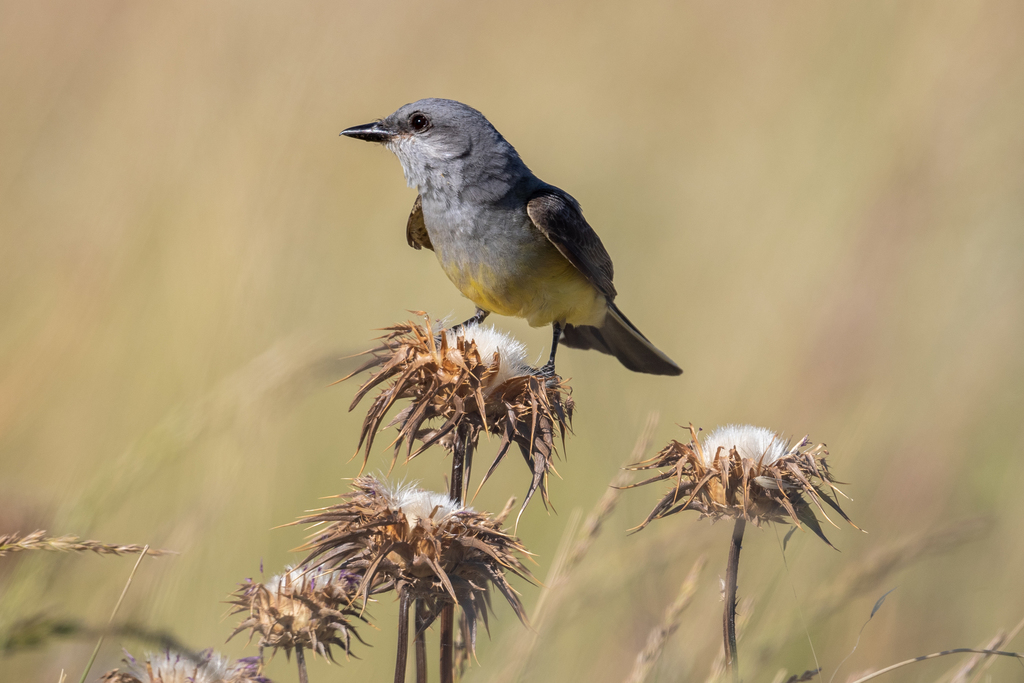
Western Kingbird
Photo © Jonathan Eisen
Photo © Jonathan Eisen — CC BY 4.0 — Source: iNaturalist photo #205021618Identification
The western kingbird is a striking medium-sized tyrant flycatcher with distinctive plumage that combines gray upperparts and bright yellow underparts. Adults display a characteristic black tail with white edges—a key field mark that separates this species from similar kingbirds like Cassin's, Couch's, and the tropical kingbird. Hidden beneath the visible feathers are brilliant crimson plumes that become visible during courtship displays or territorial disputes, adding a flash of color when the bird is most animated.
Range & Habitat
Western kingbirds are found throughout western North America, ranging as far south as Mexico. They favor open areas for breeding, and their range has expanded significantly over the past century as fire suppression and deliberate tree planting increased woodland cover across the Great Plains. This habitat transformation has allowed the species to colonize new territories, and western kingbirds now increasingly overlap with the range of the closely related eastern kingbird, with occasional hybridization documented between the two species.
Behaviour & Diet
True to their name, kingbirds are aggressive defenders of their territories, fearlessly harassing much larger birds such as ravens and hawks that venture too close to their nests. They construct sturdy cup nests in trees, shrubs, or on man-made structures, laying three to five eggs that hatch after 12 to 14 days of incubation. The tiny nest often leads to tragedy—many chicks are crowded out and fall before fledging.
Western kingbirds are agile flycatchers, waiting on open perches before darting out to snatch insects mid-air, including bees, robber flies, winged ants, grasshoppers, and spiders. They supplement their diet with berries and seeds from buckthorn, sumac, and poison ivy. These birds migrate in flocks to winter grounds in Florida and along the Pacific coast of southern Mexico and Central America.
Best Time & Places to See It
Look for western kingbirds in open habitats across the western United States and Mexico during the breeding season. They are most conspicuous when perched on exposed branches, fences, or power lines where they hunt. Their loud, accented calls and squeaky vocalizations help locate them even before you spot their bold plumage.
Photography Tips
Position yourself to capture the bird's distinctive white-edged black tail and bright yellow underparts. The contrasting gray and yellow plumage photographs best in morning light. Wait for moments when the bird leaves its perch to snatch insects—these active sequences reveal the kingbird's aerial prowess. If fortunate enough to witness courtship or territorial displays, you may capture the flash of hidden crimson feathers that make this species truly spectacular.
Acadia National Park
Alaska Maritime National Wildlife Refuge
Alligator River National Wildlife Refuge
Arches National Park
Arenal Volcano National Park
Badlands National Park
Banff National Park
Bear River Migratory Bird Refuge
Big Bend National Park
Nothing matches these filters.
No community photos yet. Log in to add the first one.
No community observations of this species yet.