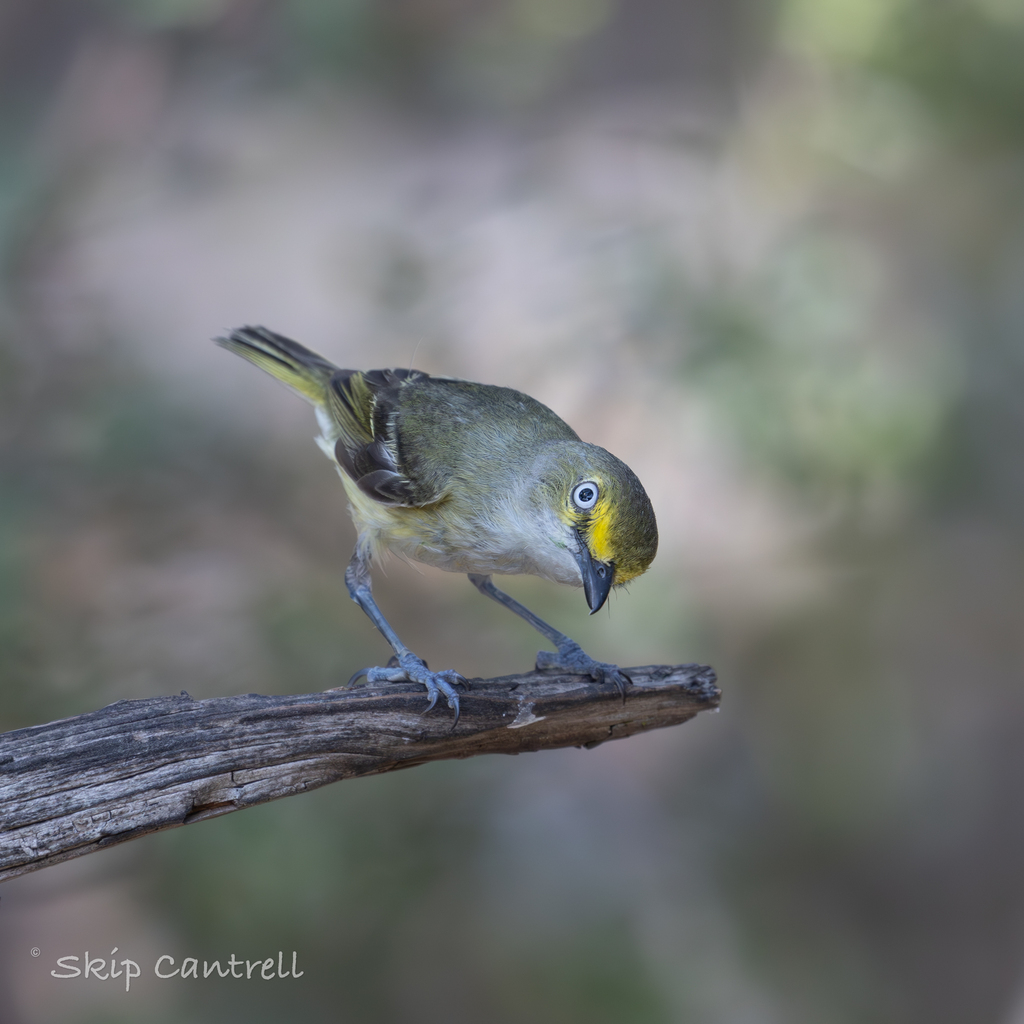
White-eyed Vireo
Photo © tcantrell52
Photo © tcantrell52 — CC BY 4.0 — Source: iNaturalist #221448012Identification
The White-eyed Vireo is a small songbird, measuring 4.3–5.1 inches (11–13 cm) in length with a wingspan of 6.7 inches (17 cm) and weighing just 0.3–0.5 ounces (10–14 g). Its most distinctive feature is its striking eye: white irises surrounded by bright yellow spectacles that give the bird an alert, intelligent expression. The head and back are greyish olive, contrasting with white underparts and yellow flanks. Dark wings and tail are marked by two white wing bars on each wing. Males and females are similar in plumage.
Range & Habitat
This vireo breeds across the eastern United States, from New England west to northern Missouri and south to Texas and Florida, with populations also found in eastern Mexico, northern Central America, Cuba, and the Bahamas. Resident populations occupy the US Gulf Coast and southern regions year-round, while most North American birds migrate southward in winter. The species favors bushy, shrubby habitats in abandoned cultivations and overgrown pastures, preferring areas with dense, tangled vegetation.
Behaviour & Diet
White-eyed Vireos nest near the ground in tangled thickets, constructing neat cup-shaped nests from weeds, leaves, grass, bark, and trash, lined with grass and secured to tree branch forks with spider webs. Females lay 3–5 dark-spotted white eggs, which both parents incubate for 12–16 days; young fledge 9–11 days after hatching. The bird's highly variable song consists of rapid note series bookended by sharp 'chip' calls. During breeding season, the diet consists almost exclusively of insects—primarily caterpillars and stink bugs, along with beetles, flies, wasps, and occasionally snails. In autumn and winter, the diet is supplemented with berries.
Best Time & Places to See It
Migratory northern populations are best observed during breeding season in their eastern United States range. Resident populations on the Gulf Coast and in Florida, the Keys, and other southern locations can be found year-round. Early morning birding in overgrown pastures and scrubby abandoned fields offers the best opportunities for encounters, as the species tends to remain in dense vegetation where it can be challenging to spot.
Photography Tips
The White-eyed Vireo's small size and preference for dense shrubby cover present photographic challenges. Patient positioning near known occupied thickets during dawn hours increases encounter chances. The distinctive yellow spectacles and white eye are key diagnostic features worth capturing. Early breeding season, when birds are more active and vocal, offers better opportunities to locate and photograph this engaging songbird.
Acadia National Park
Alligator River National Wildlife Refuge
Arrecifes de Cozumel National Park
Big Bend National Park
Biscayne National Park
Bitter Lake National Wildlife Refuge
Blackwater National Wildlife Refuge
Bombay Hook National Wildlife Refuge
Bosque del Apache National Wildlife Refuge
Nothing matches these filters.
No community photos yet. Log in to add the first one.
No community observations of this species yet.