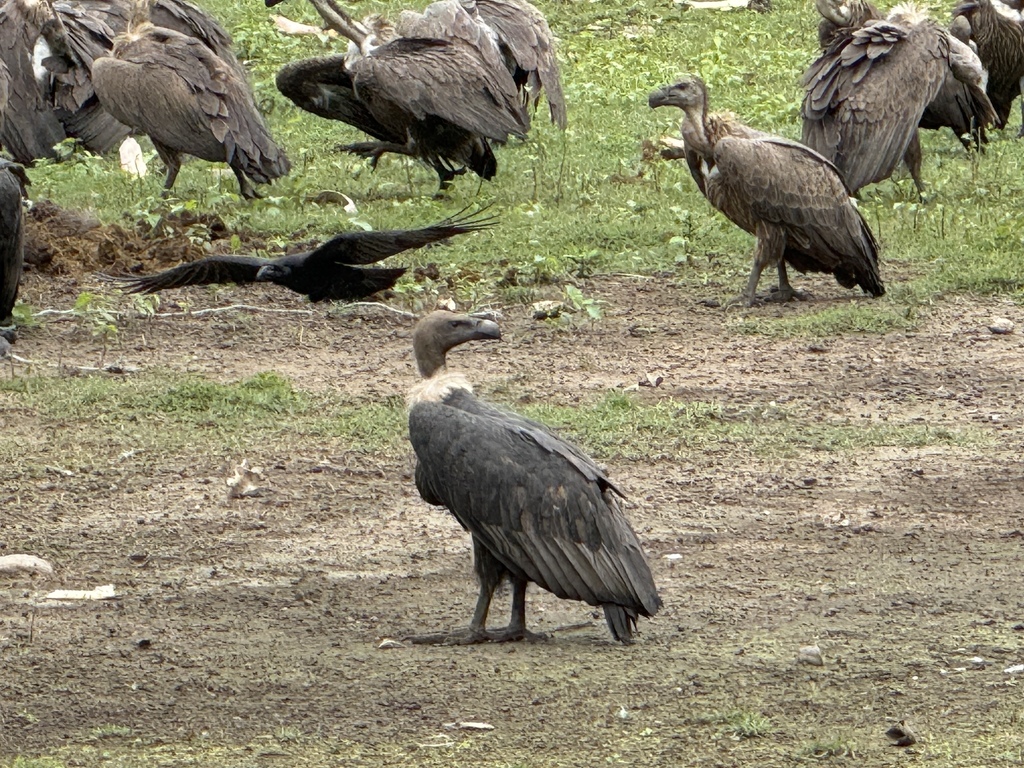
White-rumped Vulture
Photo © Dr. Alexey Yakovlev
Photo © Dr. Alexey Yakovlev — CC BY 4.0 — Source: iNaturalist photo #577159038Identification
The white-rumped vulture is the smallest of the Gyps vultures, yet still a very large bird, weighing 3.5–7.5 kg and measuring 75–93 cm in length with a wingspan of 1.92–2.6 m. It is immediately recognizable by its unfeathered head and neck tinged in pink, very broad wings, and short tail feathers. The most distinctive feature is the white neck ruff and contrasting whitish back, rump, and underwing coverts against otherwise dark plumage. Adults display a black body with silvery grey secondaries, a silvery bill with dark ceres, and slit-like nostril openings. In flight, they show a distinctive dark leading edge of the wing and white wing-lining on the underside, with black undertail coverts. Juveniles are largely dark and require about four or five years to acquire the striking adult plumage.
Range & Habitat
The white-rumped vulture is native to South and Southeast Asia, with populations historically concentrated in northern and central India, Pakistan, Nepal, Bangladesh, and southeast Asia. The species builds its nests on tall trees, often near human habitations. Preferred nesting trees include banyan, peepul, arjun, and neem species. They are mostly resident birds that form roost colonies, and were once so abundant that they were visible in large numbers above cities like Calcutta.
Behaviour & Diet
Like all vultures, the white-rumped vulture is a scavenger that feeds primarily on animal carcasses discovered while soaring high in thermals and spotting other feeding birds. These vultures usually become active as morning sun warms the air sufficiently to create thermals for soaring. When they locate a carcass, they descend rapidly and feed voraciously, often in large flocks. They are known to feed not only during daylight but sometimes also after dark. Historical accounts suggest they may possess a degree of olfactory ability to locate carrion. At kill sites they are typically dominated by red-headed vultures. In forests, their soaring often indicated a tiger kill, and they will swallow pieces of old, dry bones from small mammals. Where water is available, they bathe regularly and drink daily.
Best Time & Places to See It
The main nesting period runs from November to March, with eggs laid primarily in January and hatchlings appearing from the first to second week of January. Historically, the species was most visible above open areas and near human habitations during the warmer months when thermal activity supports soaring flight. Unfortunately, this once-abundant vulture has undergone catastrophic decline; the global population was estimated at several million individuals during the 1980s but had fallen to fewer than 6,000 mature individuals by 2021, reflecting its current status as Critically Endangered.
Photography Tips
Photographing white-rumped vultures requires patience and positioning in open areas where thermals are active, typically during mid-morning hours when thermal activity is strongest. Look for birds soaring in flocks over open country, forests, and near villages. The distinctive white rump and back provide excellent contrast against dark plumage for identification in flight. The pale underside with dark leading wing edges creates a striking silhouette when backlit. Given their critically endangered status and severely reduced populations, dedicated vulture reserves and protected areas offer the best opportunities for observation and photography.
Indravati National Park
Ranthambhore National Park
Kanha Tiger Reserve
Bandhavgarh National Park
Panna National Park
Kaziranga National Park
Keoladeo National Park
Bandipur National Park
Nagarahole Tiger Reserve
No community photos yet. Log in to add the first one.
No community observations of this species yet.