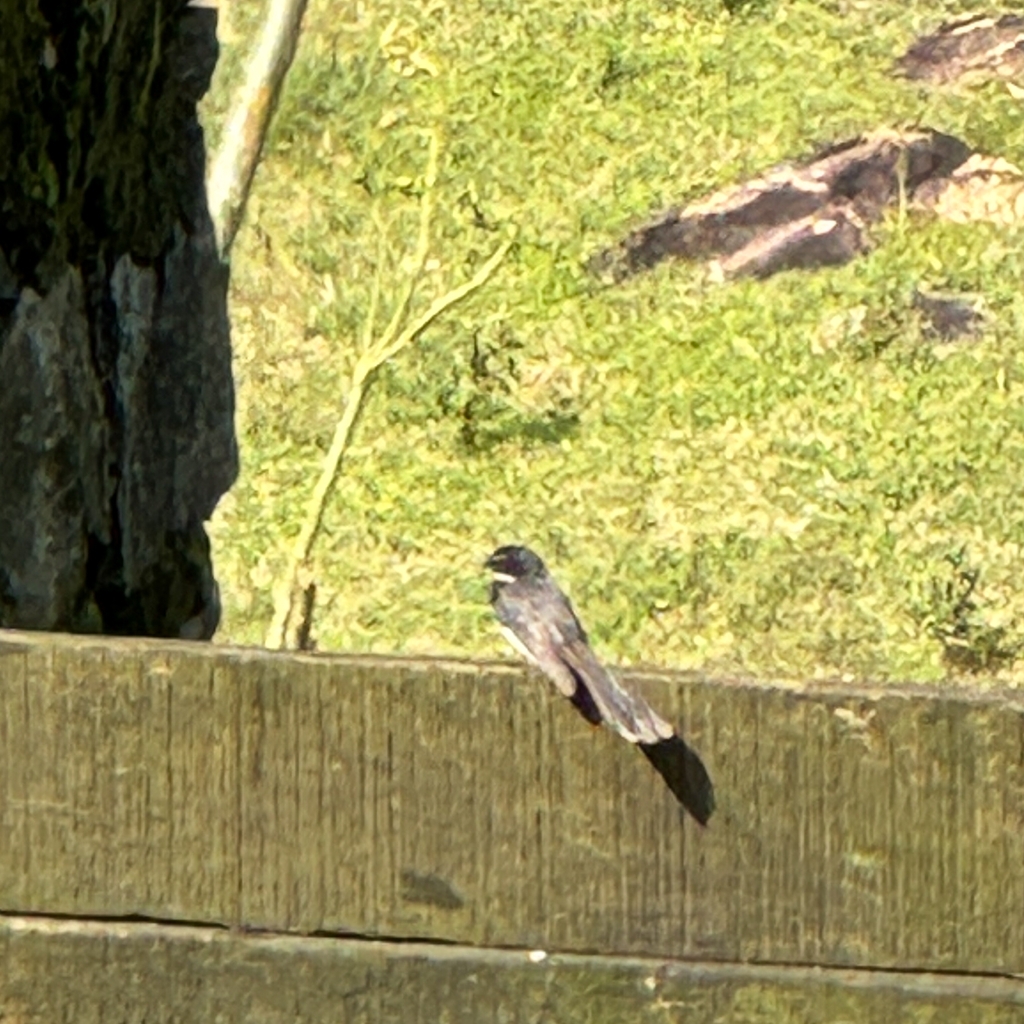
White-spotted Fantail
Photo © Siya ul haque
Photo © Siya ul haque — CC BY 4.0 — Source: iNaturalist #242214212Identification
The white-spotted fantail is a small passerine measuring about 19 cm (7.5 inches) in length. This bird is readily identified by its striking plumage pattern: slate-grey upperparts contrast with a distinctive black eye mask, while a prominent white supercilium (eyebrow stripe) and white throat are equally conspicuous. The most characteristic feature is the dark, fan-shaped tail edged in white, which gives the species its common name. The underparts are whitish, with a notable grey breast band that is spotted with white—a feature that earned it the alternative name of spot-breasted fantail.
Range & Habitat
The white-spotted fantail is endemic to the Indian subcontinent, found in southern and central India. Two subspecies are recognised: R. a. albogularis inhabits peninsular India, while R. a. vernayi is restricted to southeast India. The species favours forest, scrub, and cultivation habitats, making it adaptable to semi-open woodlands and human-modified landscapes across its range.
Behaviour & Diet
This is an insectivorous species that actively hunts for prey as it moves through undergrowth, frequently fanning its distinctive tail as it forages. The white-spotted fantail is a breeding resident that lays three eggs in a small cup nest constructed in a tree.
While not renowned as a songster overall, the male possesses a loud, fixed, and highly unmistakable call pattern that is invaluable for field identification. The call is characteristically structured in two stanzas: the first consists of 5–6 trilling notes that rise and fall, followed by 4–5 notes that rise progressively up the scale, culminating in the highest note. Remarkably, males use the same basic song year after year, but with progressively small changes accumulated over time. This results in the song sounding markedly different after 4–5 years, despite the underlying pattern remaining recognizable to those familiar with the species.
Best Time & Places to See It
The white-spotted fantail can be encountered year-round throughout its range in southern and central India. Look for this species in forested areas, scrubby woodland, and cultivated regions where suitable habitat exists. The bird's active, tail-fanning behaviour and preference for moving through undergrowth make it visually detectable, though patience is often required. Its loud and distinctive call is an excellent aid to locating birds, particularly during breeding season.
Photography Tips
Photographers should focus on capturing the bird's characteristic features: the fan-shaped white-edged tail, black eye mask, and white throat and supercilium are key identifying marks. The bird's active foraging behaviour and frequent tail-fanning movements offer dynamic shooting opportunities. Early morning hours typically provide the best light and often coincide with increased vocal activity, making this an ideal time for both photography and audio recording of its distinctive call pattern.
Kanha Tiger Reserve
Kanha Kisli F.V., India
+321 birds+23 mammals
Where sal forests give way to emerald meadows and crystalline streams carve through ancient valleys, one of India's finest wilderness reserves unfolds across the Maikal Range.…
VIEW NATIONAL PARKTadoba National Park
Palasgaon Singru, India
+270 birds+20 mammals
Where sal forests meet open grasslands and rocky outcrops rise from red laterite soil, central India's landscape unfolds in raw, untamed beauty. Ancient teak woodlands and…
VIEW NATIONAL PARKBandhavgarh National Park
Garhpuri, India
+285 birds+17 mammals
Where granite ridges rise dramatically above sal and bamboo forests, one of India's most pristine tiger reserves unfolds across the Vindhyan plateau. Ancient rock formations tower…
VIEW NATIONAL PARKBandipur National Park
Hirehalli, India
+302 birds+19 mammals
Where the Western Ghats descend into the Deccan plateau, ancient deciduous forests blanket a landscape carved by the Nugu River. Bandipur unfolds across 880 square kilometres…
VIEW NATIONAL PARKNagarahole Tiger Reserve
Nalkeri Forest, India
+323 birds+23 mammals
Where granite escarpments rise above dense deciduous forests and the Kabini River carves through pristine wilderness, one of India's most biodiverse landscapes unfolds across the Western…
VIEW NATIONAL PARKNo community photos yet. Log in to add the first one.
No community observations of this species yet.