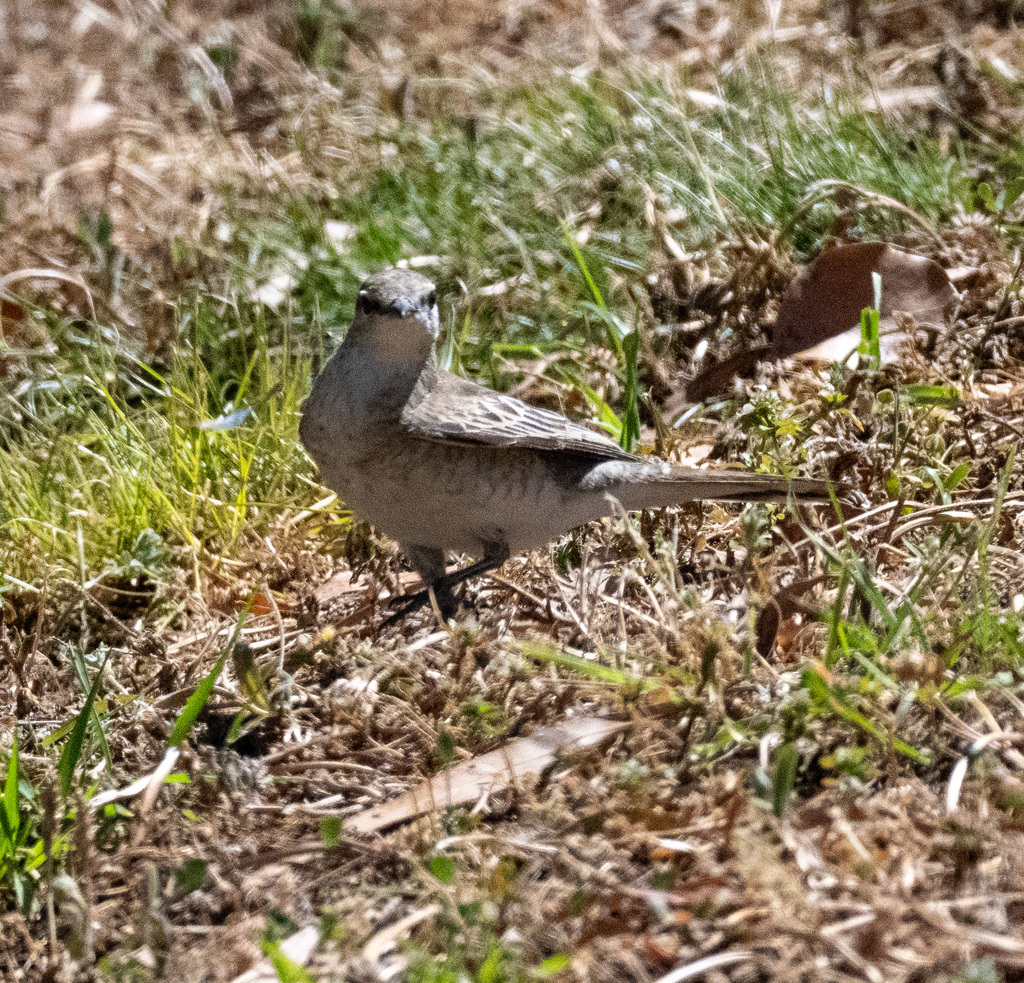
White-winged Triller
Photo © Jonno Downes
Photo © Jonno Downes — CC BY 4.0 — Source: iNaturalist #324275580Identification
The white-winged triller is one of the smaller members of the cuckooshrike family, typically 16 to 18 cm long. The male in breeding plumage is striking and unmistakable: black above with white below, creating a bold contrast that makes him one of the most conspicuous birds in his range. The female is similarly patterned but in much duller fawns and white, making her considerably less obvious in the field. During the non-breeding season, males lose much of their distinctive appearance, retaining blackish feathers only on the wings and tail and resembling females—a transformation that can make off-season identification challenging for the less experienced observer.
Range & Habitat
This species is found throughout mainland Australia and possibly on islands to the north, including New Guinea and eastern Indonesia. Its distribution reflects a split lifestyle: it is resident or nomadic over the warmer parts of its range, particularly inland Australia and areas further north, but becomes a summer breeding migrant to the cooler southern parts of Australia. White-winged trillers are fairly common in woodland and open scrub across most of their range, and they also inhabit areas close to riverbeds in the central arid zone, showing a flexibility in habitat preferences that contributes to their broad distribution.
Behaviour & Diet
The male white-winged triller is highly vocal and conspicuous during the breeding season, which runs from mid-spring to early summer. He trills cheerfully through much of the day, and his song is often accompanied by dramatic fluttering wing displays as he rises in song flight—behaviour that makes him easy to locate by ear and sight. The species is insectivorous, feeding on a variety of insects taken from multiple foraging zones: off the ground, from foliage, and in the air, demonstrating the adaptability typical of successful small passerines.
Best Time & Places to See It
The best opportunity to observe white-winged trillers is during the breeding season from mid-spring to early summer, when males are most vocal and conspicuous. In the southern parts of Australia, look for them during their summer arrival; in inland Australia and further north, they are present year-round or nomadically. Search open woodland and scrub habitats, paying particular attention to areas near riverbeds in arid zones. The male's loud trill and energetic song flights make him relatively easy to locate during daylight hours in suitable habitat.
Photography Tips
The breeding male's striking black-and-white plumage and active behaviour make him an engaging photographic subject. Position yourself in open woodland or scrub where light is good, and wait for males to perform their characteristic song flights with fluttering wings—these provide dynamic compositional opportunities. The female and non-breeding male are more subdued and require patience, but their subtler plumage tones can photograph beautifully in soft, diffused light. Early morning when birds are most vocal is ideal for locating and photographing these species.
Ben Boyd National Park
Blue Mountains National Park
Boodjamulla National Park
Bribie Island National Park
Cape Range National Park
Carnarvon National Park
Chiltern-Mt Pilot National Park
Cleland National Park
Coffin Bay National Park
Nothing matches these filters.
No community photos yet. Log in to add the first one.
No community observations of this species yet.