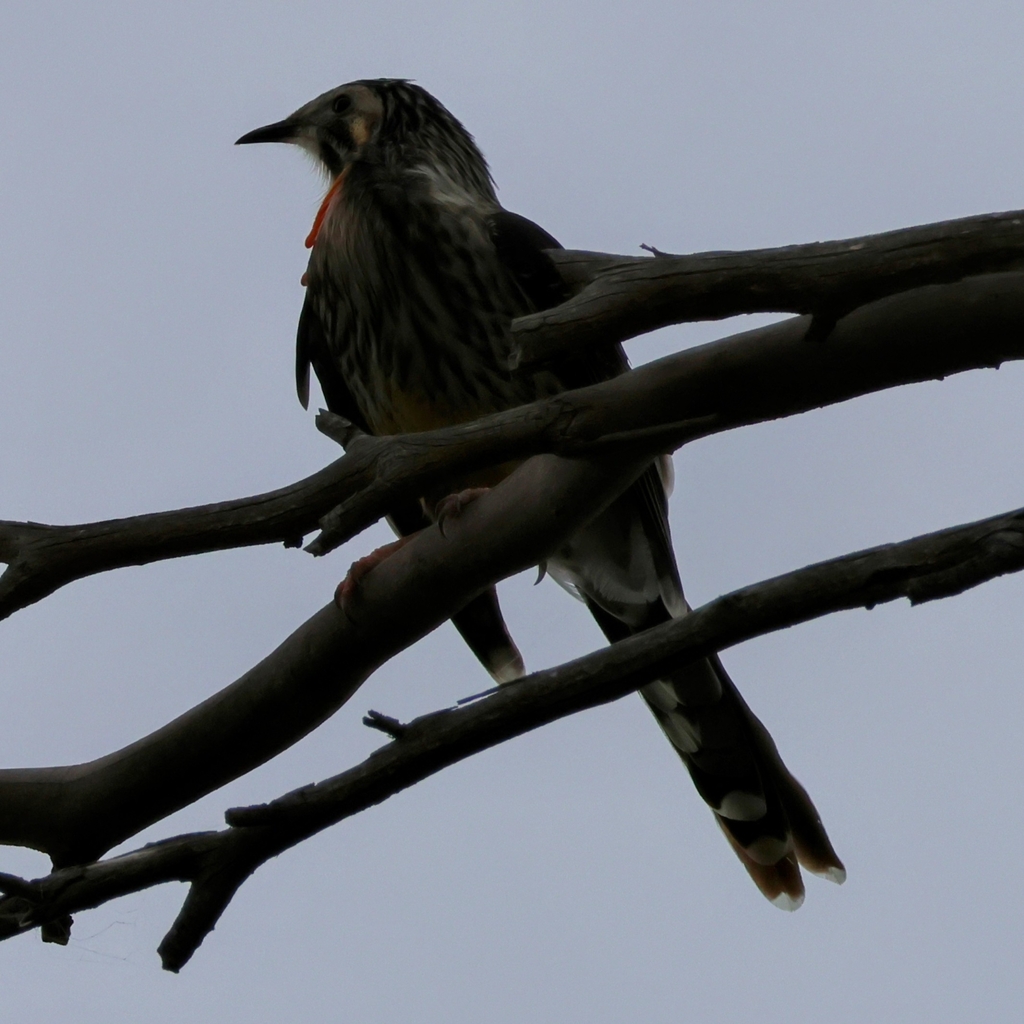
Yellow Wattlebird
Photo © Peter Shanks
Photo © Peter Shanks — CC0 1.0 — Source: iNaturalist #265358898The yellow wattlebird (Anthochaera paradoxa) is a species of bird in the honeyeater family Meliphagidae. == Taxonomy == The yellow wattlebird was described by French zoologist François Marie Daudin as Corvus paradoxus in 1800. The generic name Anthochaera derives from the Ancient Greek anthos 'flower, bloom' and khairō 'enjoy'. The specific epithet paradoxa derives from the Ancient Greek paradoxos meaning 'strange, extraordinary'. "Yellow wattlebird" has been designated as the official common name for the species by the International Ornithologists' Union (IOC). Other common names include the "long wattlebird" or "Tasmanian wattlebird". == Description == The yellow wattlebird is the largest of the honeyeaters, and is endemic to Tasmania. They are usually 37.5–45 centimetres (14.8–17.7 in) long. Body mass in males averages 168 g (5.9 oz) and in females averages 123 g (4.3 oz), with the largest males weighing up to 260 g (9.2 oz). They are named for the wattles hanging from the cheeks. Yellow wattlebirds are slim birds with a short, strong bill. They have a white face and black-streaked crown. They also have a long, pendulous yellow-orange wattle. The wattle becomes brighter during the breeding season. They have dark wings and a yellow belly, whereas the upperparts are…
No community photos yet. Log in to add the first one.
No community observations of this species yet.