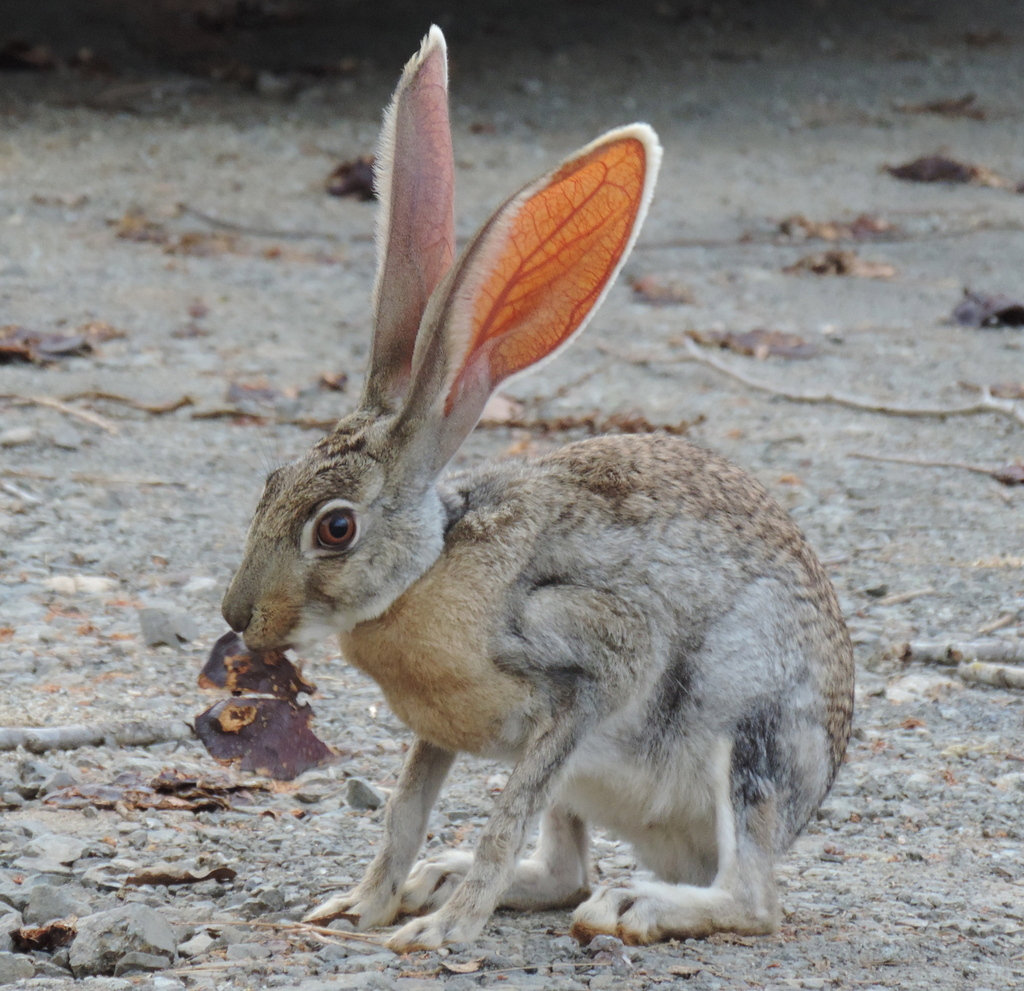
Antelope Jackrabbit
Photo © Francisco Farriols Sarabia
Photo © Francisco Farriols Sarabia — CC BY 4.0 — Source: iNaturalist #398801The antelope jackrabbit (Lepus alleni), also known as Allen's hare, is a species of North American hare in the family Leporidae found in southern Arizona and northwestern Mexico. Considered the "handsomest" of the hares, it occupies dry desert areas and was one of the last of the North American mammals to be formally described. == Taxonomy, etymology, and phylogeny == === Taxonomy and etymology === The antelope jackrabbit was first described in 1890 by American naturalist Edgar Alexander Mearns, who named it "Allen's hare" (Lepus alleni) after Joel Asaph Allen, curator of mammals and birds at the American Museum of Natural History and the originator of Allen's rule. === Evolutionary history and phylogeny === Fossil evidence places the genus Lepus as having first appeared in North America approximately 2.5 million years ago. A now extinct jackrabbit species, Lepus giganteus, was thought to exist in North America during this time. This species shared similar physical traits with the antelope jackrabbit, making it difficult to differentiate fossils of the two species. In a 2014 study, researchers hypothesized that L. giganteus served as a common ancestor to the antelope jackrabbit and black-tailed jackrabbit (L. californicus). The black-tailed jackrabbit coexists with the antelope jackrabbit…
No community photos yet. Log in to add the first one.
No community observations of this species yet.