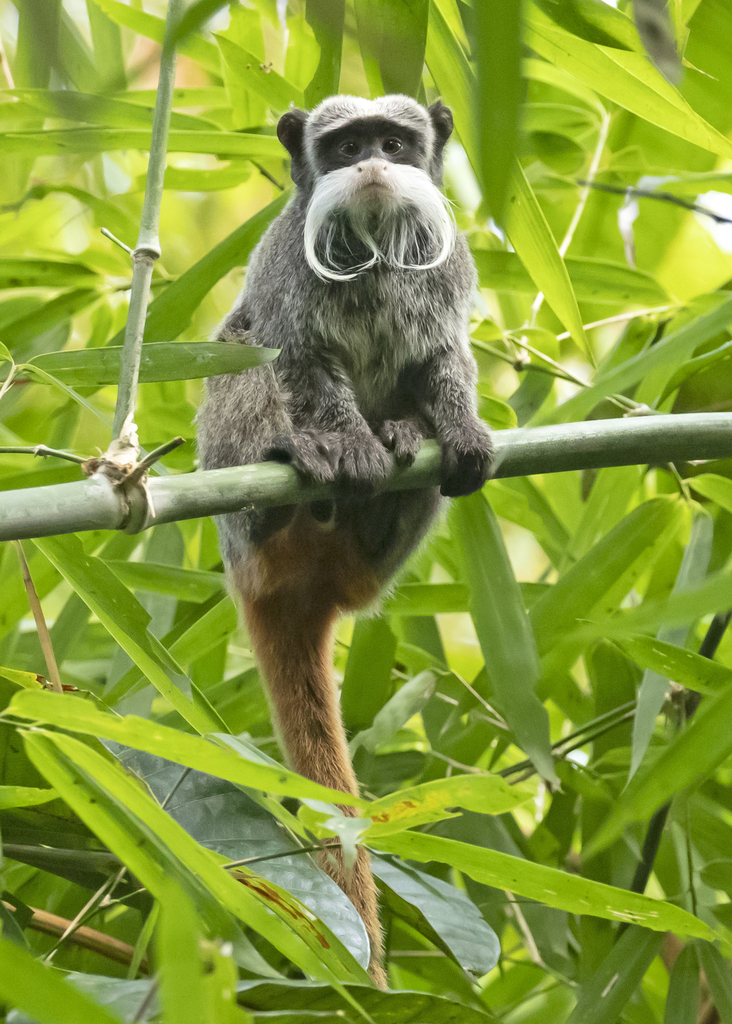
Bearded Emperor Tamarin
Photo © Steven Whitebread
Photo © Steven Whitebread — CC BY 4.0 — Source: iNaturalist photo #168960405The bearded emperor tamarin (Saguinus imperator subgrisescens) is one of the two subspecies of the emperor tamarin. It is mostly found in the tropical forests of southwestern Brazil and eastern Peru. This omnivorous member of the Callitrichidae family is usually found in groups of 4 and shares social relations with other callitrichids. They communicate vocally, as well as with olfactory signals. Males tend to be primary caregivers for their young. It is considered as a species of Least Concern by the IUCN, despite threats from increased habitat loss. == Behavior == === Diet and feeding habits === This subspecies of tamarin is omnivorous, and feeds on fruit, nectar, tree sap, flowers, and fungi, as well as small animals like insects, snails and frogs. It especially enjoys tree sap (or gum) in the late dry season and early wet season. To access this resource, the bearded emperor tamarin uses existing or healing holes made by other tamarin species, rather than digging its own. === Social behavior === Bearded emperor tamarin social groups average 4 individuals that sleep in close quarters under the cover of isolated vine-covered trees. However, they also share territory and social relations to other species of callitrichids, such…
Distribution map not available.
No community photos yet. Log in to add the first one.
No community observations of this species yet.