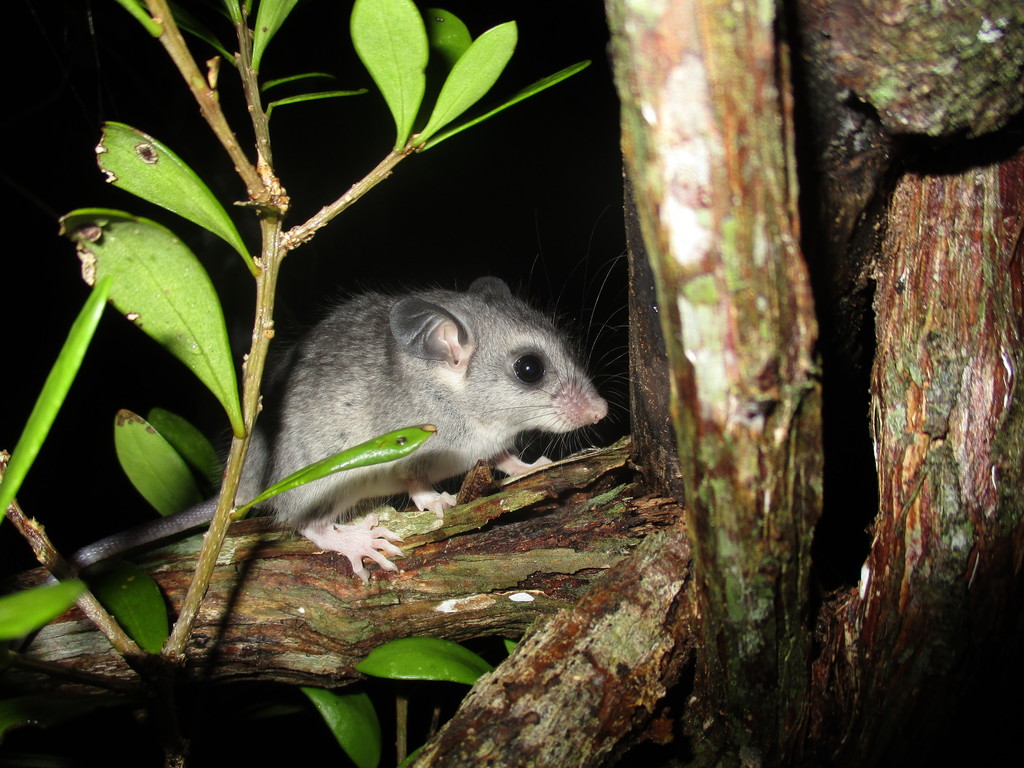
Big-eared Climbing Rat
Photo © Jorge Armín Escalante-Pasos
Photo © Jorge Armín Escalante-Pasos — CC BY 4.0 — Source: iNaturalist photo #4662667The big-eared climbing rat (Ototylomys phyllotis) is a species of rodent in the family Cricetidae. It is found in Central America from Mexico to Costa Rica. == Description == The big-eared climbing rat is in the order Rodentia and in the family Cricetidae and is most widely distributed species in the genus Ototylomys. A second species of the genus was described in 2017 from the Mexican state of Chiapas. The genus dates back 3.35 Mya, prior to the Great American Biotic Interchange and Its initial occurrence was near Honduras and El Salvador. Ototylomys is Greek for otus (ear), tylos (knob, knot, swelling), and mus (mouse), which describes the animals large ears and shelf-like skull. The big-eared climbing rat is a slender rat with two colors; dark on top of its body and light below. Its eyes and ears are large. It has large naked ears and a long naked tail with scales. Its size and color varies depending on where it lives geographically but most populations have a creamy white underbelly except for those in Mexico and Guatemala, which have a slate-colored underbelly. The skull is flat on top and has a prominent interparietal bone and supraorbital ridges There is…
Santa Rosa National Park
Santa Elena, Costa Rica
+359 birds+30 mammals
Where Pacific-facing slopes descend from volcanic uplands toward the Guanacaste lowlands, Santa Rosa National Park unfolds across a mosaic of tropical dry forest, gallery woodland, and…
VIEW NATIONAL PARKPalo Verde National Park
Bagaces, Costa Rica
+318 birds+24 mammals
Dry forest spreads across Palo Verde's low-lying terrain in northwestern Guanacaste, where seasonal rivers and lagoons etch through deciduous woodland that sheds its canopy each winter.…
VIEW NATIONAL PARKRincón de la Vieja National Park
Liberia, Costa Rica
+451 birds+30 mammals
Where volcanic slopes rise abruptly from the Guanacaste lowlands, Rincón de la Vieja National Park sprawls across a landscape shaped by geothermal drama and seasonal extremes.…
VIEW NATIONAL PARKNo community photos yet. Log in to add the first one.
No community observations of this species yet.