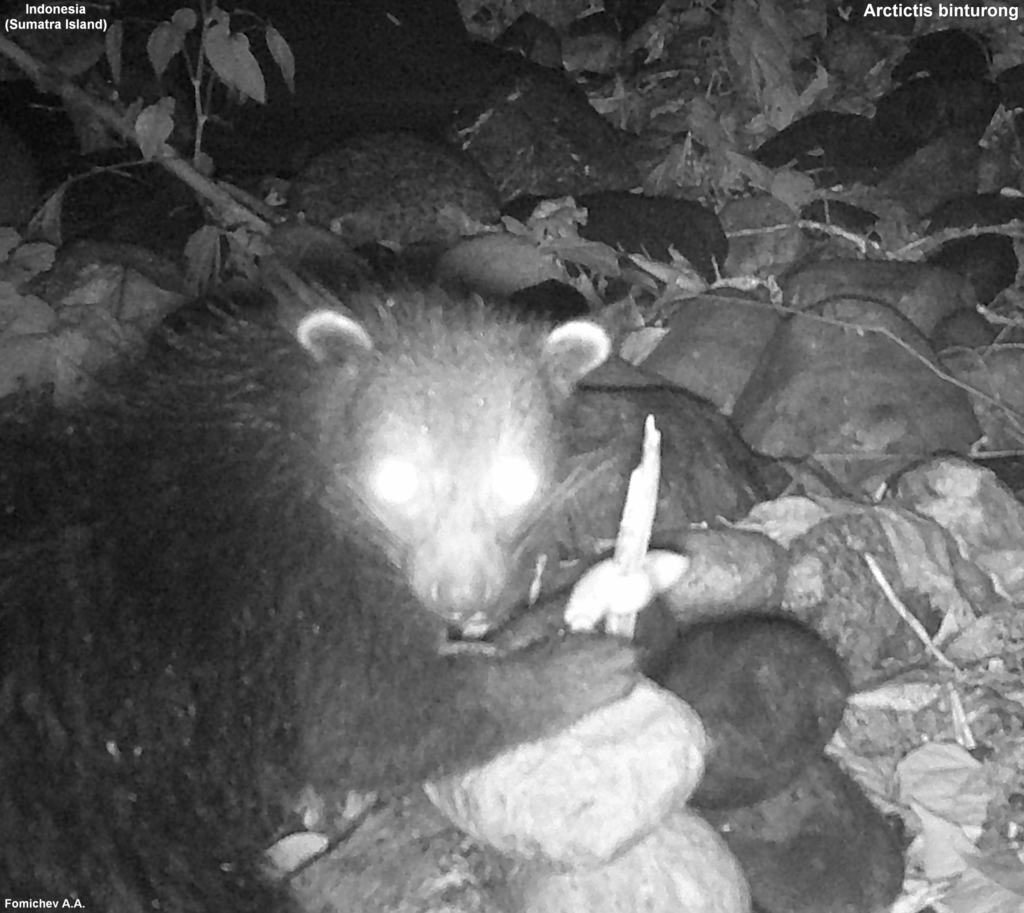
Binturong
Photo © Alexander A. Fomichev
Photo © Alexander A. Fomichev — CC BY 4.0 — Source: iNaturalist #164194597The binturong (Arctictis binturong) (; bin-TURE-ong, BIN-ture-ong), also known as the bearcat, is an arboreal viverrid native to South and Southeast Asia. It is the only species in the genus Arctictis, which is further divided into nine subspecies. It has long, thick hair, and is primarily dark in appearance, but can also have a whitish speckled pelage. It is unique in morphology with its popcorn-scented musk glands, and its long, bushy, prehensile tail. The binturong is an omnivore, feeding on plants, insects, and smaller animals. It is primarily nocturnal, but also exhibits crepuscular behaviour. Females are able to enact delayed implantation, where a fertilized egg is not attached to the uterine walls until external conditions are ideal. The major threats to the binturong include habitat loss and forest degradation, as well as illegal hunting and trading. It has been assessed as Vulnerable on the IUCN Red List. == Etymology == The scientific name Arctictis means 'bear-weasel', from the Greek arkt- "bear" + iktis "weasel". The name "binturong" is derived from the words běnturong and těnturun in the dialect used by those living in Riau, Indonesia. In the Western Malayo-Polynesian languages spoken in Borneo, the name could be attributed to two…
No community photos yet. Log in to add the first one.
No community observations of this species yet.