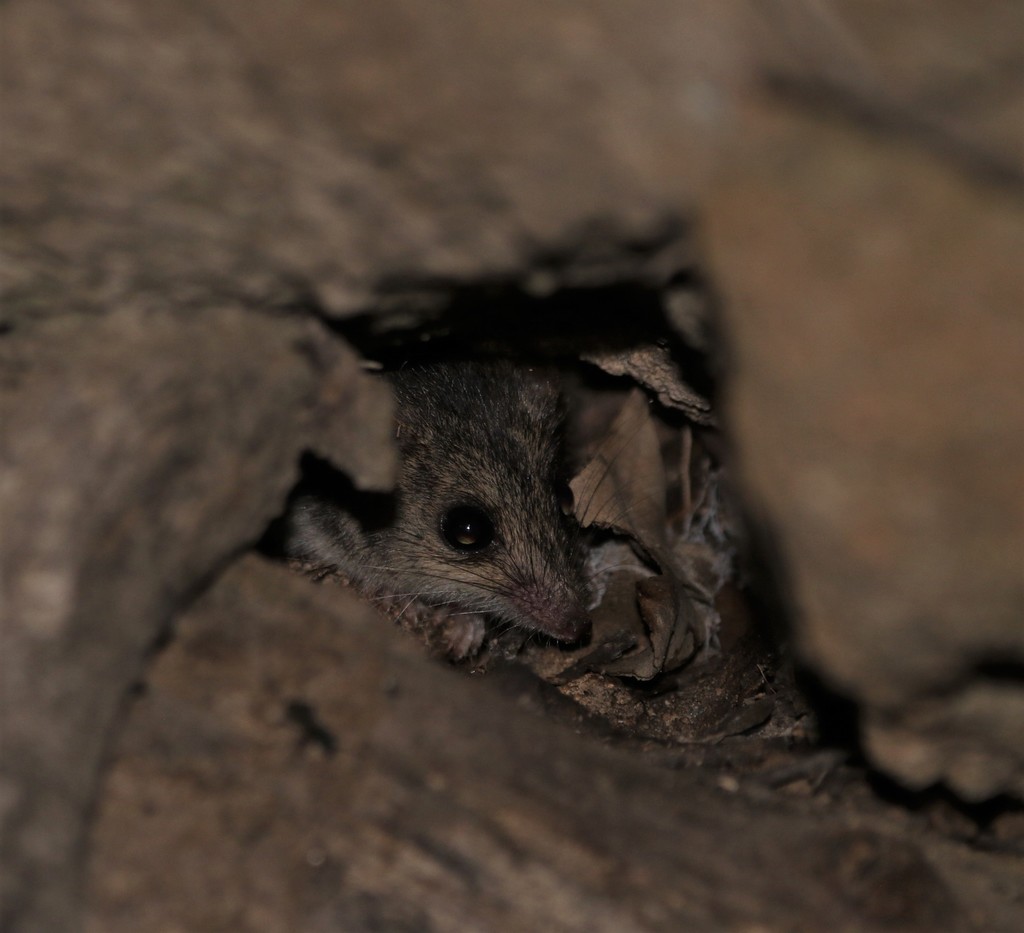
Common Dunnart
Photo © Greg Tasney
Photo © Greg Tasney — CC BY-SA 4.0 — Source: iNaturalist #104338274Identification
The common dunnart is a diminutive marsupial with a slender build that matches its alternative name, the slender-tailed dunnart. Body length ranges from 7 to 12 centimetres, with an equally distinctive tail measuring 5.5 to 13 centimetres. Males are noticeably larger than females, weighing 25–40.8 grams compared to females at 16.5–25.4 grams. Despite their tiny size, these dasyurids are efficient nocturnal predators with sharp features adapted for hunting small prey in the dark.
Range & Habitat
This species is endemic to Australia's east and south-east coast and interior, ranging from Cape York Peninsula to the Port Lincoln area of South Australia. Two subspecies exist: S. m. murina throughout the range, and S. m. tatei between Townsville and Cairns in Queensland. Common dunnarts favour altitudes between 60–360 metres in regions receiving 30–85 centimetres annual rainfall. They inhabit diverse environments including Mallee scrub, dry forests and woodlands, dry heath with sparse ground cover but dense leaf and bark litter, and rainforest edges and swamps in Queensland's wetter regions.
Behaviour & Diet
Strictly nocturnal, the common dunnart is an opportunistic arthropod feeder showing a marked preference for beetles and moths, though it takes other prey as available. Breeding season in New South Wales runs from September to March, with females capable of producing two litters annually by breeding again after weaning their first offspring. Gestation is remarkably brief at just 12.5 days, with weaning occurring at 60–65 days and typical litter sizes of 8–10 joeys. Males generally perish after mating, while females may survive to breed a second year. In harsh conditions, individuals may enter torpor to conserve energy and food reserves, though this behaviour is documented only in areas of extreme environmental stress.
Best Time & Places to See It
September to March offers the best viewing window during the breeding season in New South Wales, when increased activity may make encounters more likely. Observers should focus on suitable habitats: Mallee scrub and dry woodlands in southern regions, or rainforest edges and swamp margins in Queensland. Since the species is entirely nocturnal, night-time searches using torchlight through dense leaf litter and under bark crevices where they shelter during the day offer the most promising opportunities to locate this elusive marsupial.
Photography Tips
Photographing common dunnarts demands patience and specialized night equipment. Use a red headlamp or filtered light to minimize disturbance to this nocturnal species. Focus on capturing the distinctive slender tail and tiny proportions that define the species. Search methodically through leaf litter and around fallen logs where prey insects congregate, as dunnarts will concentrate their foraging in these productive microhabitats. A macro lens is essential to do justice to the fine details of this diminutive marsupial, and patience during the warmer months of the breeding season will yield the best results.
Great Sandy National Park
Ku-ring-gai Chase National Park
Lamington National Park
Morton National Park
Nerang National Park
Warrumbungle National Park
Nothing matches these filters.
No community photos yet. Log in to add the first one.
No community observations of this species yet.