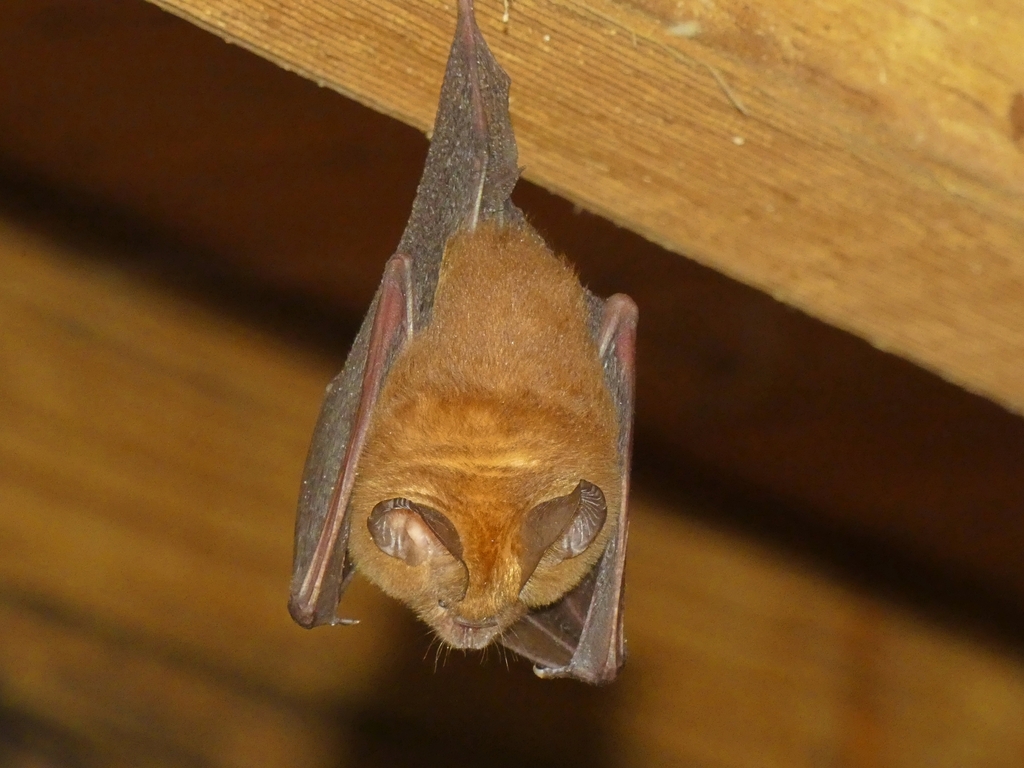
Common Dusky Roundleaf Bat
Photo © Kai Squires
Photo © Kai Squires — CC BY 4.0 — Source: iNaturalist #185719496The dusky leaf-nosed bat (Hipposideros ater) is a bat from the genus Hipposideros whose habitat extends from India and Sri Lanka to the Philippines, New Guinea and Northern Australia. This species is counted in the H. bicolor species group and was formerly classified within that species. The genus name Hipposideros comes from the Greek words for "horse" (ἴππος) and "iron" (σίδηρος) and means "horseshoe"; a reference to the complex nose that species in this genus are known for. The generic designation ater is Latin for "black" and notes the relative dark color of this species's coat. == Habitat and behavior == In the Philippines this species is found in rainforests at sea level up to elevations of 1200 m. The animal rests in caves in both forests and agricultural areas. In Australia the species lives in both mangroves and rainforests in as well as in dry, open areas. Like most bats, H. ater is active at night. In Australia it sleeps in the daytime in caves, mines and sometimes tree holes, preferably in dark, warm and moist places. The animal eats small, flying insects. This bat flies slowly, but is manoeuvrable. The mating season is in April; the young are…
Kakadu National Park
Kakadu, Australia
+273 birds+46 mammals
Kakadu National Park is Australia’s largest national park and one of the world’s most remarkable protected areas, covering nearly 20,000 square kilometres in the tropical north…
VIEW NATIONAL PARKDaintree National Park
Dedin, Australia
+362 birds+37 mammals
Daintree National Park is one of the world’s oldest and most biologically diverse tropical rainforests, protecting an extraordinary landscape where ancient forests meet the Great Barrier…
VIEW NATIONAL PARKKomodo National Park
Komodo, Indonesia
+155 birds+14 mammals
Where volcanic peaks rise dramatically from turquoise waters, a primordial landscape unfolds across three main islands and countless smaller ones scattered throughout the Lesser Sunda archipelago.…
VIEW NATIONAL PARKNo community photos yet. Log in to add the first one.
No community observations of this species yet.