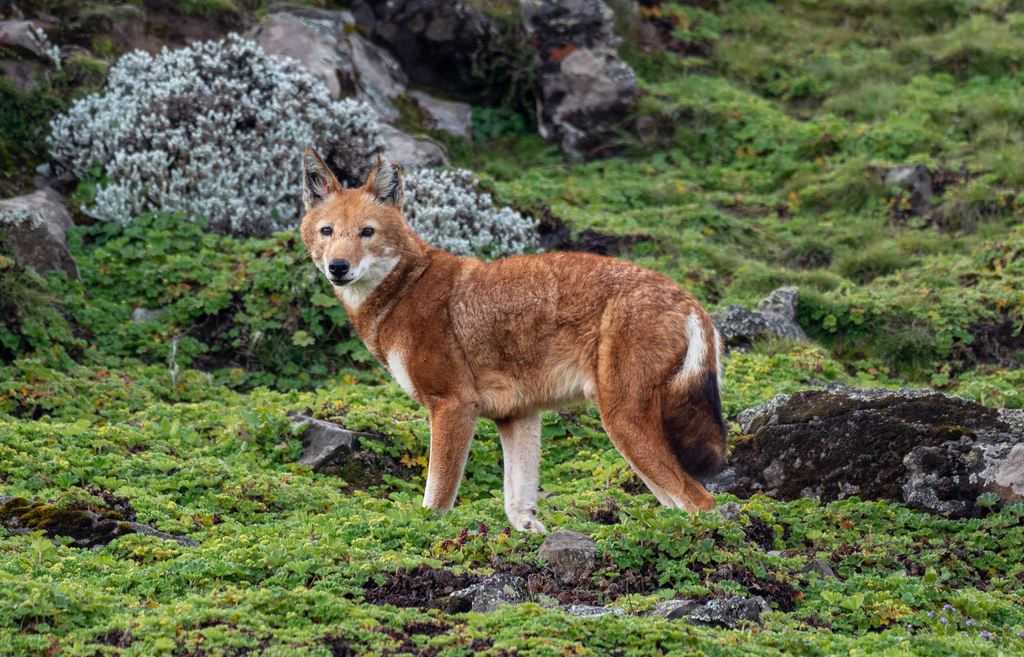
Ethiopian Wolf
Photo © Forest Botial-Jarvis
Photo © Forest Botial-Jarvis — CC BY 4.0 — Source: iNaturalist photo #50013188Identification
The Ethiopian wolf is a striking and distinctive canine, similar in size and build to a coyote. It is most easily recognised by its long and narrow skull, and its characteristic red and white fur. Also called the red jackal, the Simien jackal, or Simien fox, this remarkable animal stands apart from most large canids due to its highly specialised appearance and behaviour.
Range & Habitat
The Ethiopian wolf is found exclusively in the Ethiopian Highlands, including the Simien Mountains and six other isolated mountain ranges. Its current range is restricted to seven isolated mountain massifs at altitudes between 3,000 and 4,500 metres, with more than half of the world's remaining population concentrated in the Bale Mountains. The Afroalpine habitat that these wolves depend upon is fragmented and increasingly threatened by human pressure.
This species represents Africa's most endangered carnivore, with an estimated global population of only 360–440 adults as of 2011. The fragmented distribution across isolated highland ranges makes the Ethiopian wolf extremely vulnerable to further habitat loss and local extinction.
Behaviour & Diet
Unlike most large canids, which are generalist feeders with broad dietary ranges, the Ethiopian wolf is a highly specialised hunter with very specific habitat requirements. It feeds almost exclusively on Afroalpine rodents, exploiting the high density of small prey available in its highland home. This extreme dietary specialisation is reflected in the wolf's unique skull morphology—its elongated head, long jaw, and widely spaced teeth are all adaptations for hunting small rodents.
Best Time & Places to See It
The Bale Mountains offer the best opportunity to encounter Ethiopian wolves, as they support more than half of the remaining global population. Other surviving populations inhabit the Central Highlands and additional isolated mountain ranges of the Ethiopian plateau. However, travellers should be aware that this is an exceptionally rare species, and sightings cannot be guaranteed. A visit during the dry season may offer improved accessibility to the remote highland regions where these wolves live.
Photography Tips
The Ethiopian wolf's striking red and white coat and distinctive narrow skull make it a compelling photographic subject. The high altitude Afroalpine environment provides dramatic backdrops for wildlife photography. However, given the species' critically low population and shy nature, patience and a good telephoto lens are essential. Work with local guides from the Ethiopian Wolf Conservation Programme, who can advise on the best locations and ethical approaches to observing and photographing these remarkable animals without causing disturbance.
Bale Mountains National Park
Ethiopia
+397 birds+20 mammals
Where the Ethiopian highlands rise above 4,000 metres, the Bale Mountains create a landscape of stunning ecological extremes—from afroalpine grasslands swept by wind and mist to…
VIEW NATIONAL PARKSimien Mountains National Park
Debark, Ethiopia
+120 birds+9 mammals
Where granite escarpments plunge thousands of metres into misty valleys, the Ethiopian highlands reveal a landscape of almost mythical drama. These volcanic plateaus, carved by ancient…
VIEW NATIONAL PARKNo community photos yet. Log in to add the first one.
No community observations of this species yet.