Finlayson’s Squirrel
Photo © Attila Oláh
Photo © Attila Oláh — CC BY 4.0 — Source: iNaturalist #29553847Identification
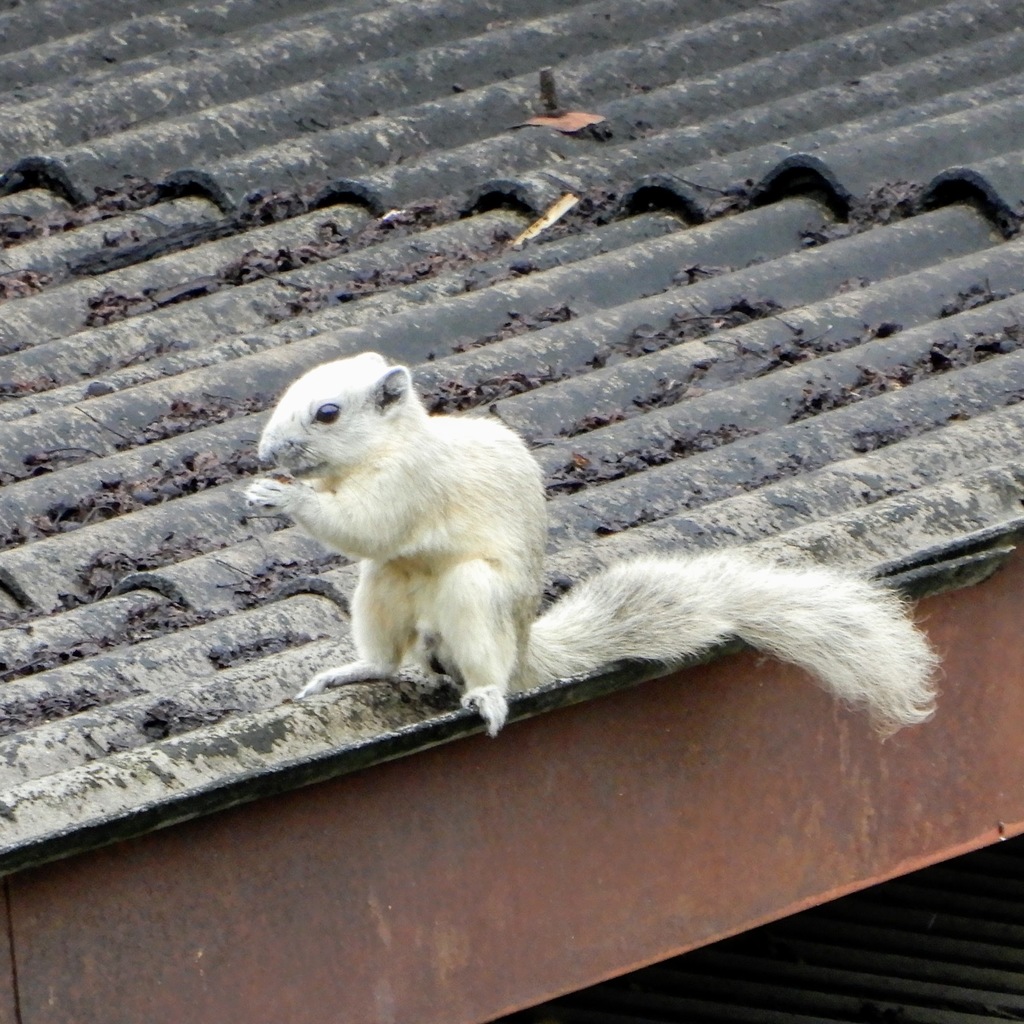
Finlayson's squirrel, also known as the variable squirrel, is a small rodent with a head-and-body length of about 21–22 cm and a tail measuring approximately 22–24 cm. The most striking characteristic of this species is its remarkable colour variability. With 16 currently recognised subspecies—and possibly more—Finlayson's squirrel displays an extraordinary range of pelage colours that often define the subspecies themselves. Some populations are overall whitish, while others are predominantly blackish, rufous, reddish-brown, or even shiny black with contrasting red markings. Many subspecies show distinctive features such as white tail-tips, grizzled upperparts, or orange-red underparts. Even within described subspecies, individual variations occur, making this squirrel a genuinely variable species in appearance.
Range & Habitat
Finlayson's squirrel is found across Southeast Asia, with its range encompassing Cambodia, Laos, Myanmar, Thailand, and Vietnam. The species thrives in a wide range of wooded habitats and has proven remarkably adaptable, occurring not only in forests but also in gardens and parks within urban areas, including cities like Bangkok. This flexibility in habitat use has contributed to the species' success across its native range.
Behaviour & Diet
Like other members of the genus Callosciurus—commonly known as the "beautiful squirrels"—Finlayson's squirrel is primarily a canopy-dweller, spending much of its time in the trees. The species feeds mainly on fruit, and field evidence suggests it possesses dichromatic colour vision, similar to many other mammals. This adaptation likely allows it to discriminate between ripe and unripe fruits, enhancing its foraging efficiency as it moves through the canopy.
Best Time & Places to See It
Travellers seeking Finlayson's squirrel should focus on wooded areas throughout Thailand, Cambodia, Laos, Myanmar, and Vietnam. The species' adaptability to urban environments means that sightings are possible in parks and gardens of major cities, making it accessible even to those not venturing into remote forests. The best opportunities likely occur during fruit-bearing seasons when squirrels are most actively foraging in the canopy, though specific timing depends on local phenology and habitat conditions.
Photography Tips
Photographers should position themselves with a clear view of the canopy where this arboreal squirrel spends most of its time. Early morning hours often provide the best light and squirrel activity. Given the species' colour variability, patience will be rewarded—different individuals and subspecies offer distinct photographic subjects. A telephoto lens is essential for capturing details of canopy-dwelling squirrels without disturbing them. Look for distinctive markings such as tail patterns and underpart coloration, which can vary dramatically between individuals and help document the remarkable variation within this species.
Khao Yai National Park
Prachantakham District, Thailand
+377 birds+46 mammals
Evergreen dipterocarp forest blankets the rolling terrain of this national park in eastern Thailand, where limestone hills rise abruptly from the forest floor and seasonal streams…
VIEW NATIONAL PARKKhao Laem Ya-Mu Ko Samet National Park
Mueang Rayong District, Thailand
+159 birds+3 mammals
Where limestone hills meet the Gulf of Thailand, Khao Laem Ya–Mu Ko Samet National Park stitches together a mosaic of terrestrial and marine worlds that few…
VIEW NATIONAL PARKCilento, Vallo di Diano and Alburni National Park
Campora, Italy
+145 birds+12 mammals
Where the southern Apennines descend toward the Tyrrhenian coast, the landscape transforms into a mosaic of limestone plateaus, deep ravines, and Mediterranean scrubland that defines Cilento,…
VIEW NATIONAL PARKNo community photos yet. Log in to add the first one.
No community observations of this species yet.