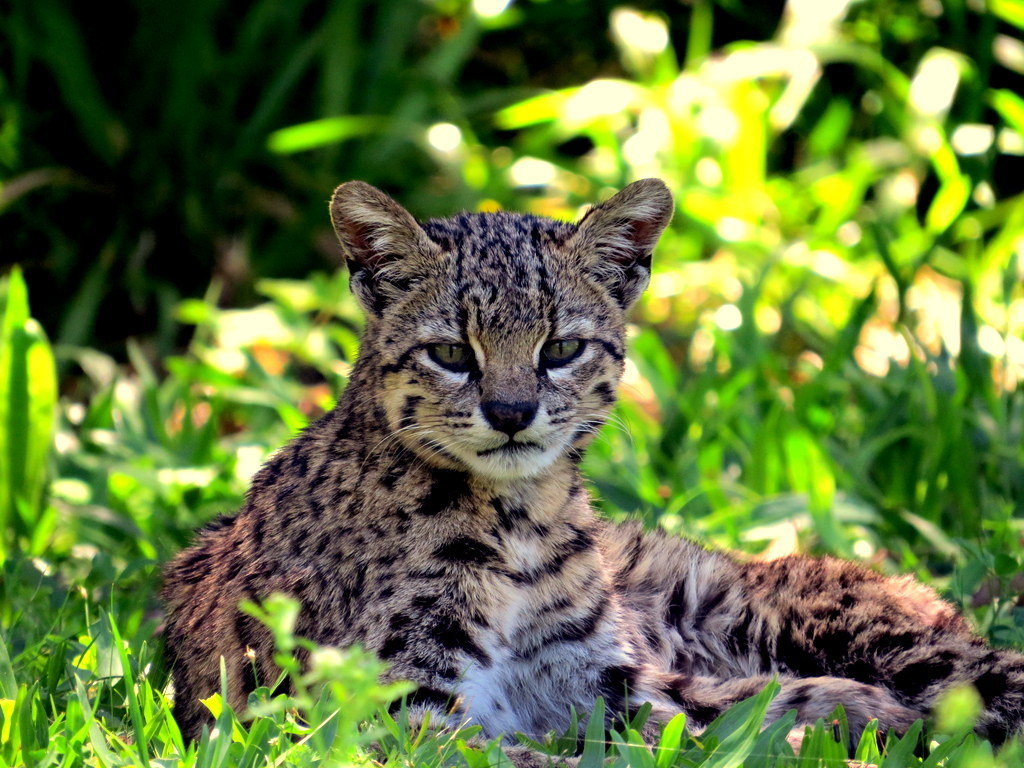
Geoffroy’s Cat
Photo © Diego Carús
Photo © Diego Carús — CC0 1.0 — Source: iNaturalist photo #26456463Geoffroy's cat (Leopardus geoffroyi) is a small wild cat native to the southern and central regions of South America. It is around the size of a domestic cat. It is listed as Least Concern on the IUCN Red List due to it being widespread and abundant over its range. == Taxonomy == Geoffroy's cat is named after the 19th century French zoologist Étienne Geoffroy Saint-Hilaire (1772–1844). It was identified as Felis geoffroyi in 1844 by French naturalists Alcide d'Orbigny and Paul Gervais on the basis of three specimens that d'Orbigny had collected on the banks of the Rio Negro in Patagonia during his travels in South America between 1826 and 1833. Five subspecies have been described based on geographic dispersement: L. g. geoffroyi: Central Argentina L. g. euxantha: Northern Argentina, Western Bolivia L. g. leucobapta: Patagonia L. g. paraguae: Paraguay, Southeastern Brazil, Uruguay, Northern Argentina L. g. salinarum: Northwestern and Central Argentina Since 2017, Geoffroy's cat is considered a monotypic species. Genetic studies have shown that Geoffroy's cat is most closely related to the kodkod. == Characteristics == The Geoffroy's cat is about the size of a domestic cat, but has numerous black spots and dark bands on the cheeks…
No community photos yet. Log in to add the first one.
No community observations of this species yet.