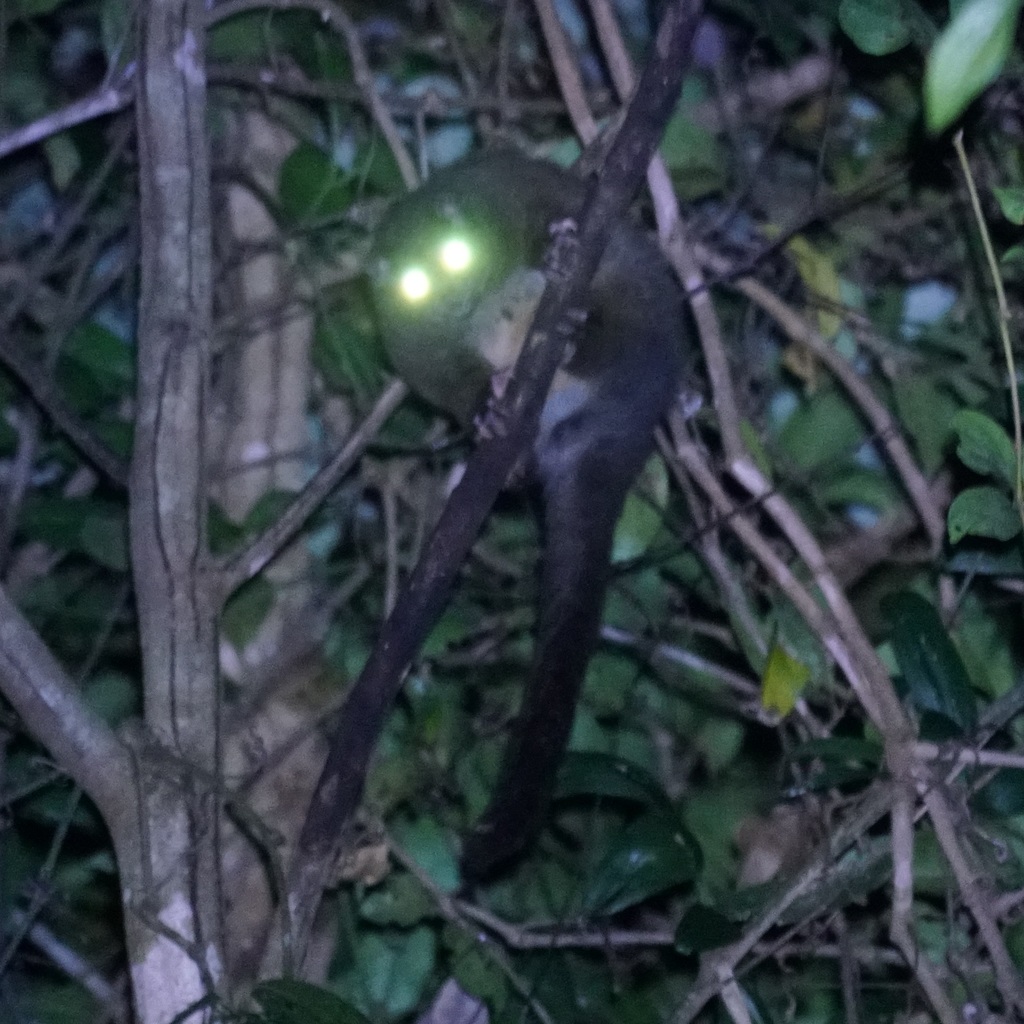
Lemuroid Ring-tailed Possum
Photo © Tim
Photo © Tim — CC BY 4.0 — Source: iNaturalist #95031039The lemuroid ringtail possum (Hemibelideus lemuroides), also known as the lemur-like ringtail possum or the brushy-tailed ringtail, is a truly singular member of the ringtail possum group. It was once thought that they were greater gliders (Petauroides volans); Hemibelideus literally translates as "half-glider" (belideus being a diminutive form of Petaurus, meaning "glider"). Named for their facial characteristics visually similar to the unrelated primate lemurs, with short snouts, large, forward-facing eyes and small ears, they are similar to other gliding possums in their musculo-skeletal adaptations to accommodate a leaping lifestyle. Their long, prehensile tail is a further adaptation to their arboreal habitat. It has a bushier tail when compared to other ringtails, and can be distinguished from the greater glider by its lack of gliding membrane and much shorter, hairless ears. It is a social possum, and is found in two main colour forms: the more common brownish-gray form, with a yellowish underbelly, and a rare white form, which occurred in the Daintree Rainforest and was last seen in 2005 in Mount Lewis National Park, and in 2008 believed to have been nearly extinct. This possum is found in a small area of only about 300,000 hectares in total, between Ingham…
Herberton Range National Park
Australia
+115 birds+10 mammals
Rainforest-clad ridges and rocky outcrops define this 324-square-kilometre reserve in far north Queensland, where the mountainous terrain of the Herberton Range rises through layered eucalypt woodland…
VIEW NATIONAL PARKDaintree National Park
Dedin, Australia
+362 birds+37 mammals
Daintree National Park is one of the world’s oldest and most biologically diverse tropical rainforests, protecting an extraordinary landscape where ancient forests meet the Great Barrier…
VIEW NATIONAL PARKWooroonooran National Park
Australia
+240 birds+28 mammals
Where the Great Dividing Range rises sharply inland from Queensland's tropical coast, Wooroonooran National Park encompasses a landscape of steep, forested gorges and cascading waterways carved…
VIEW NATIONAL PARKNo community photos yet. Log in to add the first one.
No community observations of this species yet.