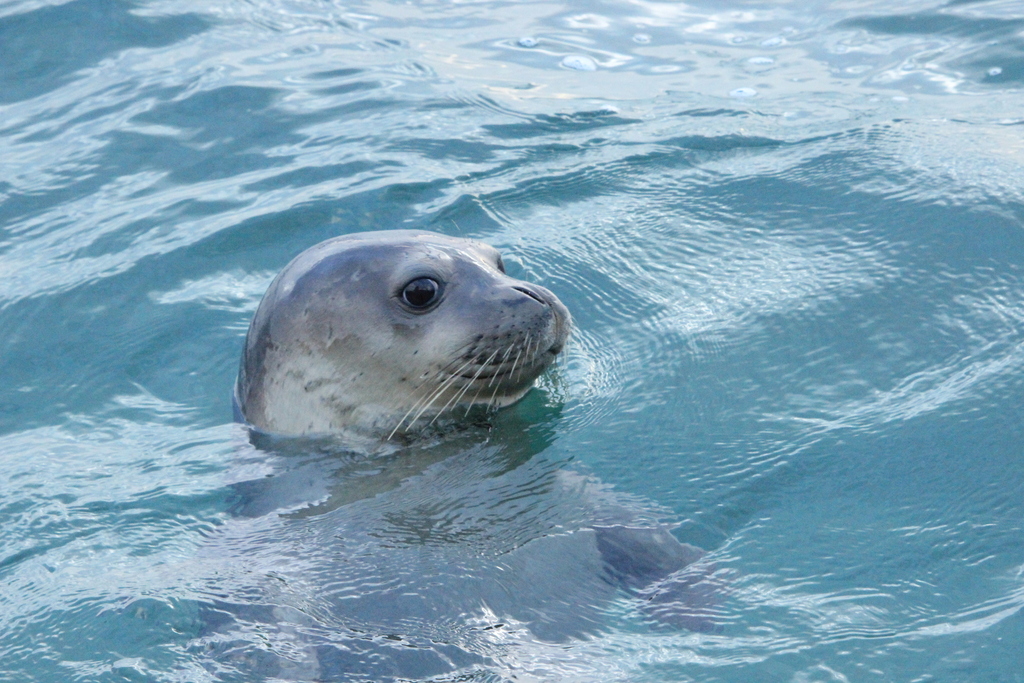
Mediterranean Monk Seal
Photo © Jason Graham
Photo © Jason Graham — CC0 1.0 — Source: iNaturalist photo #598720071Identification
The Mediterranean monk seal is a large pinniped, with adults averaging 2.4 metres in length. Males are slightly larger than females, weighing around 320 kilograms compared to females at 300 kilograms. The species has the shortest hair of any pinniped, with males displaying black fur and females brown to dark grey, both with paler bellies. Their most distinctive features are the short, broad, flat snout with pronounced upward-facing nostrils, and relatively short flippers with small slender claws. Newborn pups are approximately 1 metre long, covered in dark brown to black hair, and identifiable by a white stripe on their belly—rectangular in females, butterfly-shaped in males.
Range & Habitat
As of 2026, between 800 and 1,000 individuals survive in isolated subpopulations, making this the world's rarest pinniped species. The primary populations inhabit the Aegean Sea, the Madeira archipelago, and the Cabo Blanco region spanning the Mauritania–Western Sahara border in the northeastern Atlantic. Historically, monk seals inhabited open beaches, but over the past century they have adapted to use remote sea caves, many with underwater entrances, positioned along rugged coastlines. This shift reflects their sensitivity to human disturbance and the loss of traditional beach habitat due to increased coastal development, tourism, and industry.
Behaviour & Diet
Mediterranean monk seals are diurnal hunters feeding on fish, crustaceans, and mollusks, consuming up to 3 kilograms daily. Their diet consists primarily of octopus, squid, lobsters, mullets, flatfish, tuna, sardines, and eels. They forage in shallow coastal waters but are capable of diving to depths of 250 metres, and are known to lift rocks while bottom-feeding. Births occur year-round with peaks in September through November; females care for pups in underwater caves or on beaches, nursing them for approximately 18 weeks. Pups first contact water at two weeks old. Males are highly territorial and polygynous, with reproductive maturity reached at four years in females and six in males. The species can live up to 45 years, with an average lifespan of 20–25 years.
Best Time & Places to See It
Viewing opportunities are extremely limited due to the species' rarity and preference for inaccessible cave habitats. The highest concentration of individuals occurs in the Aegean Sea, followed by populations around Madeira and Cabo Blanco. The peak breeding season from September through November offers the best chance of observation in protected areas, though access is restricted and sightings remain rare. Local conservation organizations and marine protected areas in these regions offer the most legitimate opportunities for responsible wildlife tourism and research participation.
Photography Tips
Photography of Mediterranean monk seals presents significant challenges given their rarity, isolation, and protected status. Any photographic attempts must prioritize the animals' welfare and comply with strict conservation regulations. Underwater cave environments require specialized diving equipment and expertise. If opportunities arise through authorized research or conservation programs, fast film speeds will be necessary for the low-light conditions of cave interiors. The distinctive white belly stripe and facial features are key identifying characteristics worth capturing when documentation is permitted. Always work with local marine authorities and follow all protection guidelines.
Nothing matches these filters.
No community photos yet. Log in to add the first one.
No community observations of this species yet.