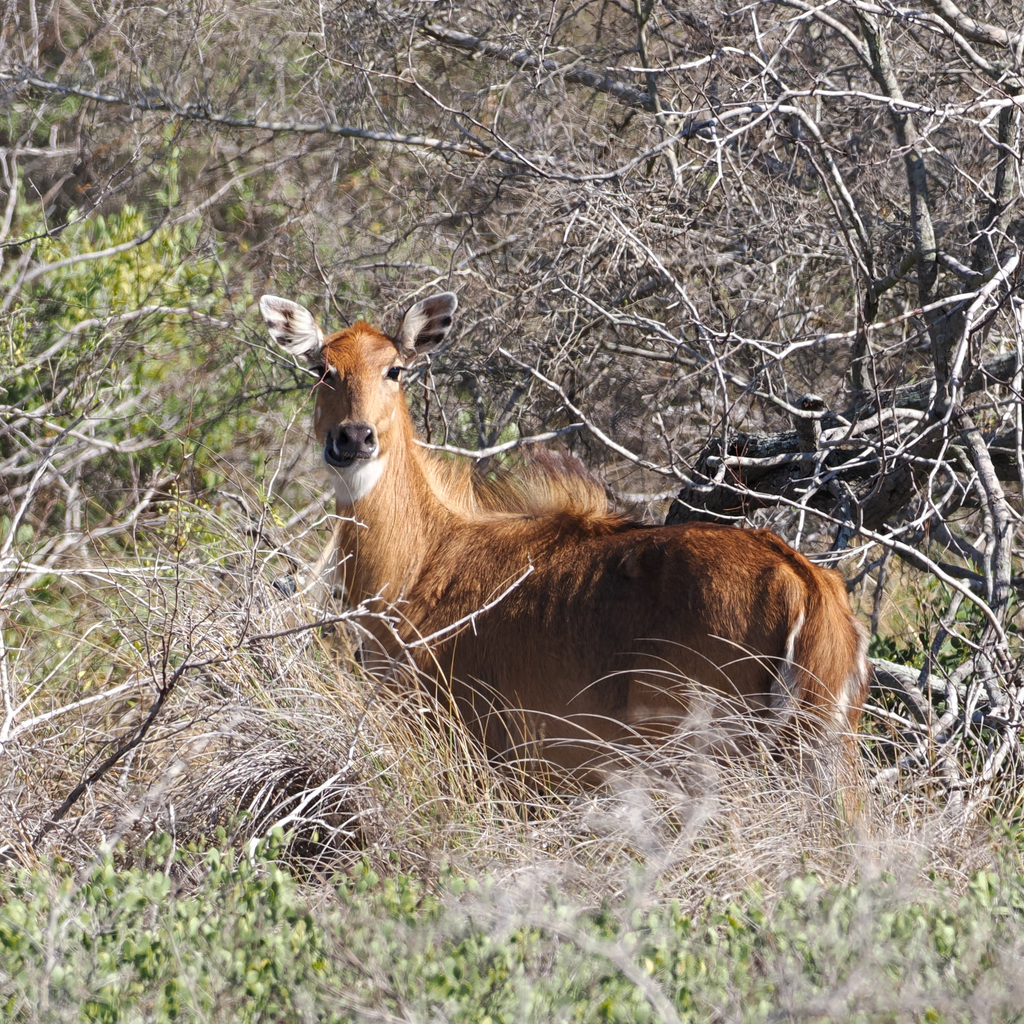
Nilgai
Photo © steve b
Photo © steve b — CC0 1.0 — Source: iNaturalist #340524571The nilgai (Boselaphus tragocamelus) (, literally meaning "blue cow") is the largest antelope in Asia. It is ubiquitous across the northern Indian subcontinent. It is the sole member of the genus Boselaphus, which was first scientifically described by Peter Simon Pallas in 1766. It is a sturdy, thin-legged antelope with a sloping back, a deep neck with a white patch on the throat, a short crest of hair along the neck terminating in a tuft, and white facial spots. A column of pendant, coarse hair hangs from the dewlap ridge below the white patch. It stands 100–150 cm (39–59 in) at the shoulder; males weigh 109–288 kg (240–635 lb), and the lighter females 100–213 kg (220–470 lb). Sexual dimorphism is prominent; while females and juveniles are orange to tawny, adult males have a bluish-grey coat. Only males have horns, which are 15–24 cm (5.9–9.4 in) long. Major nilgai populations occur in the Indian and Nepal Terai. The diurnal nilgai prefers areas with short bushes and scattered trees in scrub forests and grassy plains. It commonly occurs on agricultural land and rarely in dense forests. Its diet encompasses grasses and herbs, though it also eats woody plants in the dry tropical…
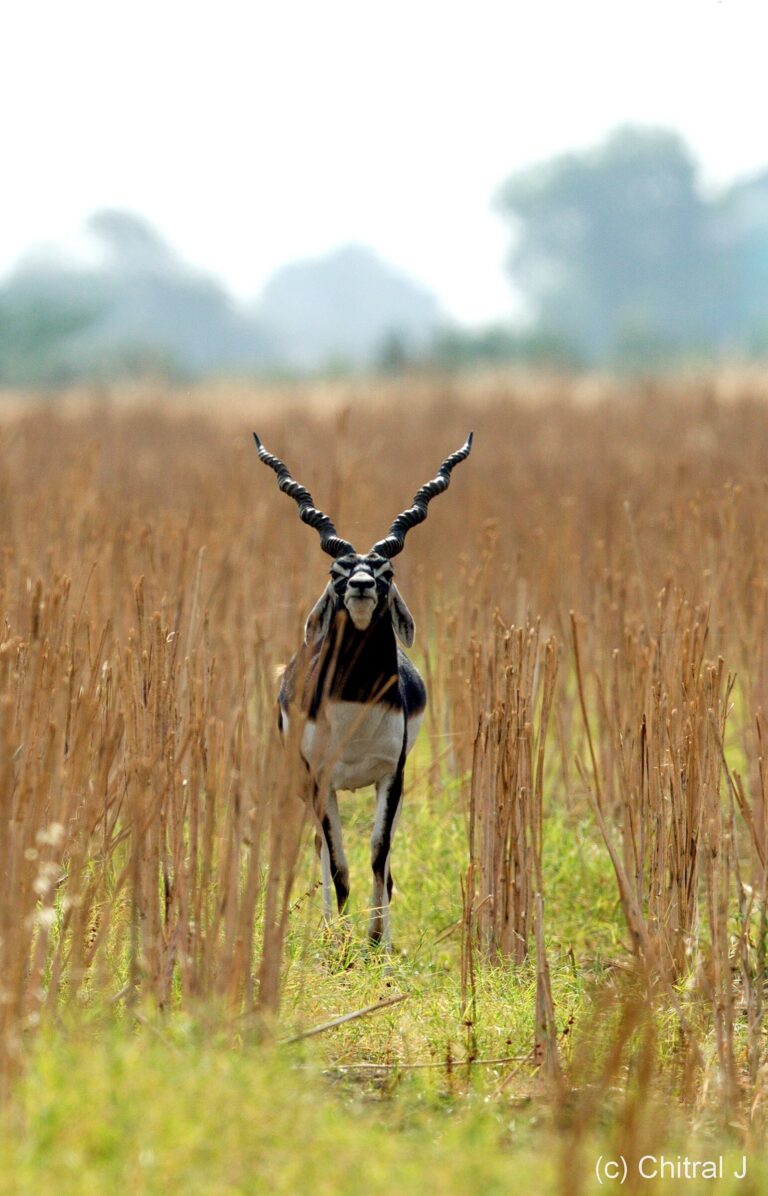
Blackbuck Jeep Safari
Nothing matches these filters.
Kanha Tiger Reserve
Bandhavgarh National Park
Banke National Park
Bardiya National Park
Gir National Park
Keoladeo National Park
Laguna Atascosa National Wildlife Refuge
Lower Rio Grande Valley National Wildlife Refuge
National Chambal Sanctuary
Nothing matches these filters.
No community photos yet. Log in to add the first one.
No community observations of this species yet.