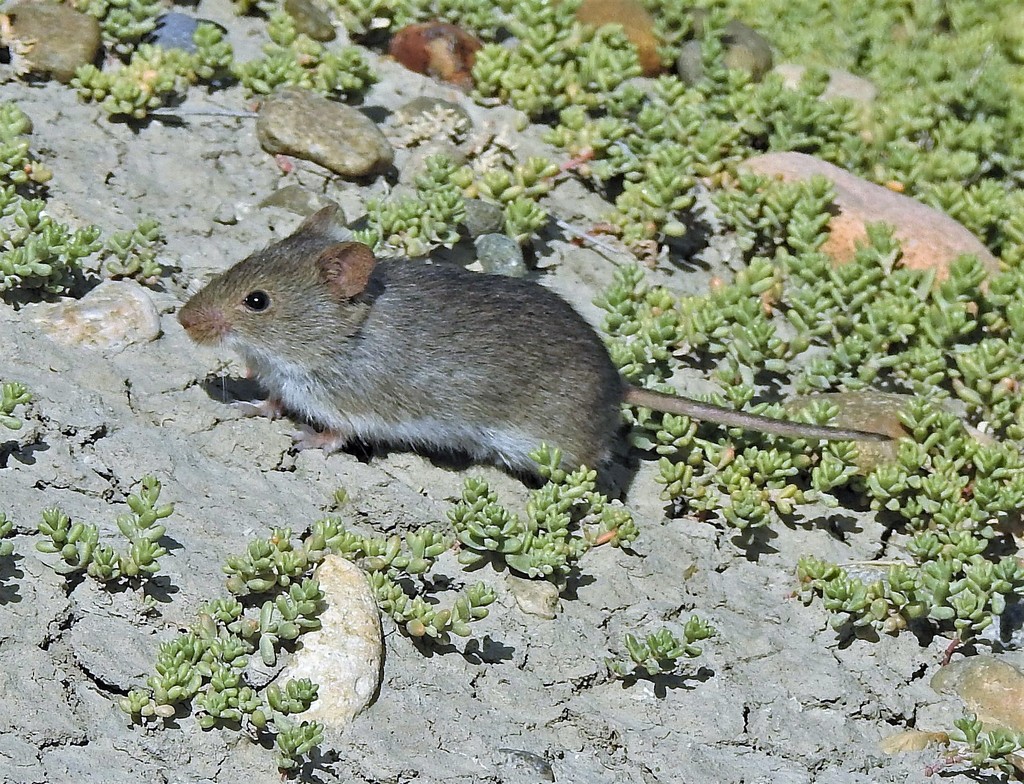
Olive Soft-haired Mouse
Photo © Hugo Hulsberg
Photo © Hugo Hulsberg — CC0 1.0 — Source: iNaturalist #62134452Identification
The olive soft-haired mouse is a small rodent with a total length of about 17 cm (6.7 inches). Its most distinctive features are its greyish-brown upper parts, which sometimes show a slightly yellowish tint around the snout, contrasting with pale to mid-grey underparts. Despite its diminutive size, this mouse is an important part of southern South American ecosystems and can be distinguished from related species by its characteristic coloration and soft fur.
Range & Habitat
This species has an impressive southerly distribution, occurring from northern Chile through to southern Chile and Argentina, including Patagonia and the islands of Tierra del Fuego. Remarkably, it inhabits Hornos Island, making it the southernmost land mammal in the world. The olive soft-haired mouse is highly adaptable to diverse environments, reflecting its wide range across different climatic zones.
Habitat preferences vary considerably by region. In Patagonia, it inhabits arid bushy steppes, while further north it favours the forests of Nothofagus, Saxegothaea and bamboo. Elsewhere, it occupies tussocky grassland, marshes and wet meadows, demonstrating remarkable ecological flexibility that contributes to its conservation success.
Behaviour & Diet
The olive soft-haired mouse is mostly diurnal, making it more observable than many rodent species. In grassy habitats, it creates distinctive runways and constructs nests of grasses in tussocks, among roots, or under rocks. Despite its small size, it is an accomplished climber and can also dig effectively. In Chile, it sometimes occupies burrows previously made by other mammals such as the coruro.
Its diet is omnivorous and seasonally variable, including berries, seeds, shoots, leaves, fungi and small invertebrates. The species breeds during spring and summer, with average litter sizes of five young. Population dynamics are dramatic: under favourable conditions, particularly during El Niño years, populations can increase dramatically. Predators include barn owls, lesser horned owls, various other bird species, and foxes.
Best Time & Places to See It
Spring and summer offer the best opportunities to observe this species, when it is most active during breeding season. Given its wide distribution across protected areas throughout Chile and Argentina, from Patagonian steppes to Nothofagus forests and southward to Tierra del Fuego, wildlife travellers have multiple accessible locations to search for it. The species is common with a presumed large population and shows tolerance of habitat degradation, making sightings reasonably likely in appropriate habitats.
Photography Tips
Photographers should focus on early morning hours to capture this mostly diurnal species at peak activity. Patience is essential when observing the distinctive runways and tussock nests where this mouse shelters. Its small size—just 6.7 inches in length—requires careful approach and potentially macro or telephoto techniques to avoid disturbance. The contrast between its greyish-brown upperparts and pale underparts creates good photographic subjects, particularly when captured against the diverse habitats it occupies, from windswept steppes to bamboo forests.
No community photos yet. Log in to add the first one.
No community observations of this species yet.