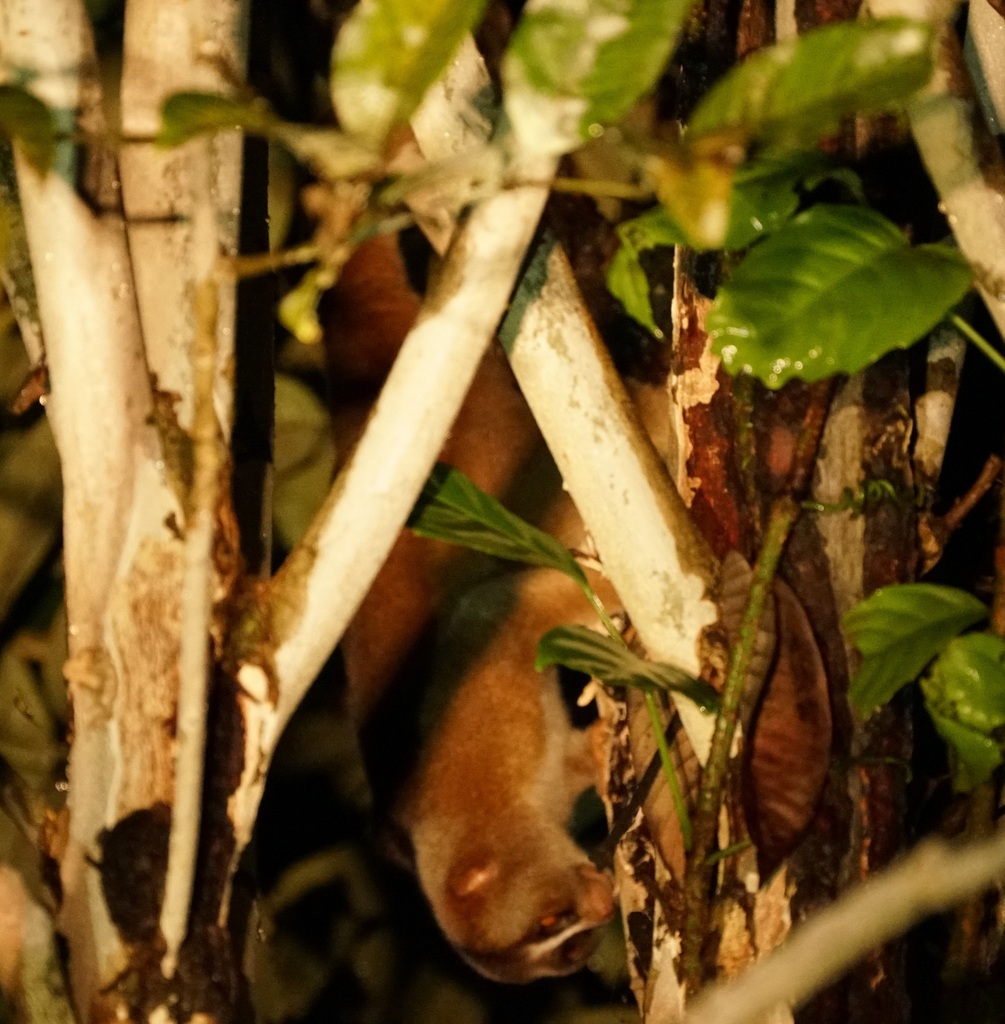
Philippine Slow Loris
Photo © Tim
Photo © Tim — CC BY 4.0 — Source: iNaturalist #133052420The Philippine slow loris (Nycticebus menagensis) is a strepsirrhine primate and a species of slow loris that is native to the north and east coastal areas of the island of Borneo, as well as the Sulu Archipelago in the Philippines. The species was first named as the Bornean slow loris in 1892, but lumped into the widespread Sunda slow loris (N. coucang) in 1952. However, it was promoted to full species status – again as the Bornean slow loris – based on molecular analysis in 2006. In 2013, two former subspecies of the Bornean slow loris were elevated to species status, and a new species—N. kayan—was recognized among the Bornean population. Weighing 265–300 grams (9.3–10.6 oz), it is one of the smallest of the slow lorises, and can be distinguished from other slow lorises by its pale golden to red fur, the lack of markings on its head, and consistent absence of a second upper incisor. Like other slow lorises, it has a vestigial tail, round head, short ears, a curved grooming claw for grooming, and a gland that produces an oily toxin that the animal uses for defense. The Philippine slow loris is arboreal, nocturnal, and occurs in low…
No community photos yet. Log in to add the first one.
No community observations of this species yet.