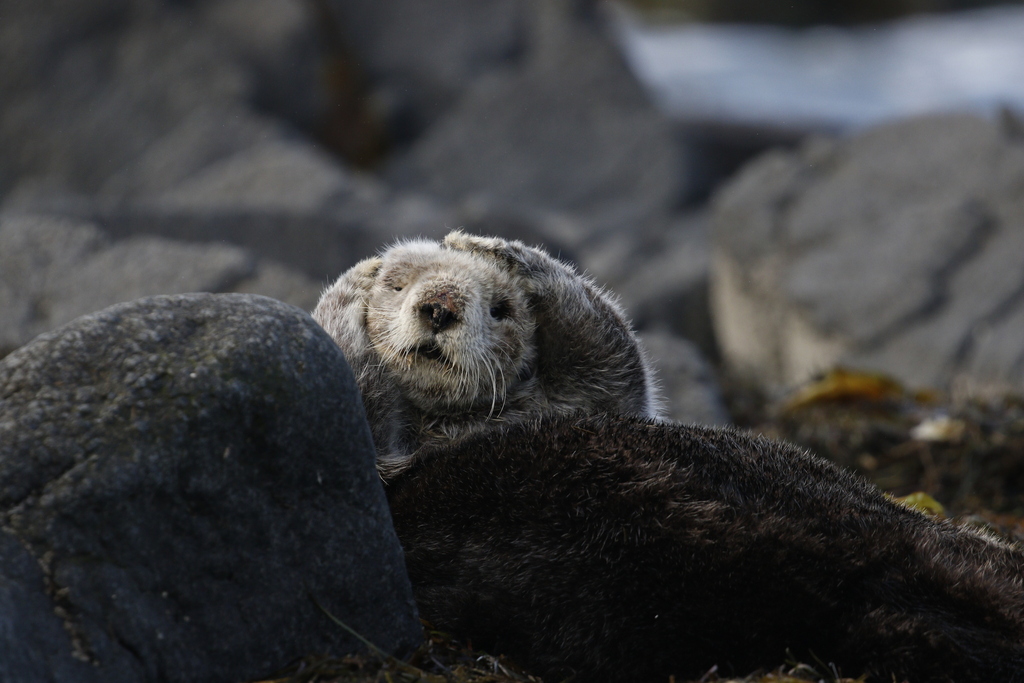
Sea Otter
Photo © Mickey Wu
Photo © Mickey Wu — CC BY 4.0 — Source: iNaturalist photo #557545081Identification
The sea otter is a striking marine mammal and the heaviest member of the weasel family, typically weighing between 14 and 45 kg. What makes it instantly recognizable is its exceptionally thick fur coat—the densest in the animal kingdom—which provides its primary insulation in cold ocean waters. Unlike most marine mammals that rely on blubber, the sea otter's luxuriously dense fur is its lifeline to survival in the northern and eastern North Pacific.
Range & Habitat
Sea otters inhabit the nearshore environments of the northern and eastern North Pacific Ocean, favoring shallow coastal waters where they can dive to the sea floor. Historically ranging across a vast area, the species currently occupies about two-thirds of its former range following recovery from near extinction. Populations are found in Alaska, the Aleutian Islands, the North American coast, California, Russia, and Japan, though some populations in these regions remain small or have recently declined.
Behaviour & Diet
Sea otters are remarkable foragers that dive to the sea floor to hunt, feeding primarily on marine invertebrates including sea urchins, mollusks, crustaceans, and some fish species. Most notably, they are one of the few mammal species to use tools—they employ rocks to dislodge prey and crack open shells. This behaviour is ecologically vital: in most of their range, sea otters act as keystone species, controlling sea urchin populations that would otherwise devastate kelp forests. However, their appetite for commercially valuable shellfish sometimes creates conflict with fisheries.
Best Time & Places to See It
Sea otters are most active during daylight hours when foraging is optimal. Look for them in shallow, kelp-rich coastal waters where they spend most of their time in the water. Calm weather provides better viewing conditions. The best locations coincide with healthy populations: parts of Alaska, the Aleutian Islands, and the California coast, though local population status should be checked before visiting.
Photography Tips
Capture the otter's distinctive thick fur and characteristic posture—they often float on their backs or rest on rocks. Patience is essential; observe from a distance without disturbing the animals. Early morning or late afternoon light enhances the texture of their fur. Photograph them while foraging to capture their fascinating tool-use behaviour. A telephoto lens is recommended to maintain safe distance while achieving detailed shots of this charismatic marine mammal.
Alaska Maritime National Wildlife Refuge
Glacier Bay National Park
Katmai National Park
Kenai Fjords National Park
Kenai National Wildlife Refuge
Kodiak National Wildlife Refuge
Olympic National Park
Wrangell-Saint Elias National Park
Nothing matches these filters.
No community photos yet. Log in to add the first one.
No community observations of this species yet.