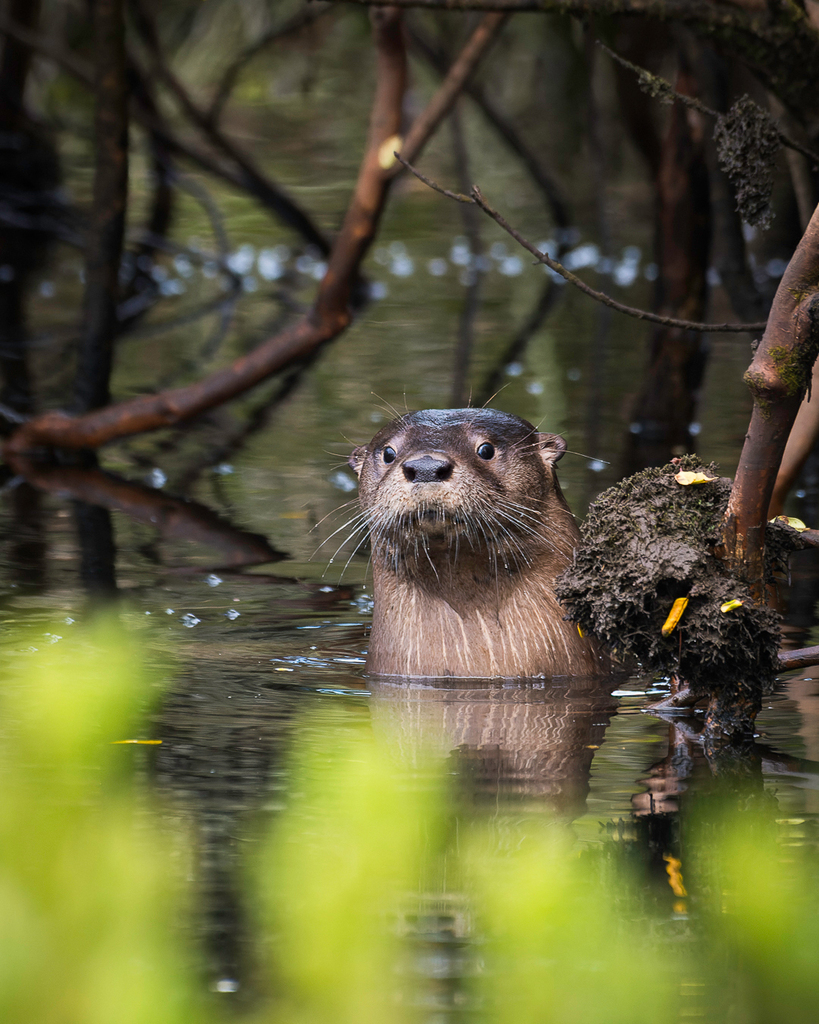
Southern River Otter
Photo © felipejarafer
Photo © felipejarafer — CC BY 4.0 — Source: iNaturalist photo #475535820The southern river otter (Lontra provocax), or South American river otter, is an otter species that lives in much of Patagonia. It is listed by the International Union for Conservation of Nature as an endangered species. == Description == A medium-sized otter, the southern river otter's body can grow up to 70 cm (28 in) long, with the tail adding about 40 cm (16 in). Body weight averages about 5–10 kg (11–22 lb). Its fur is dark brown on the upper parts and a lighter cinnamon color or can be almost white on the underside. == Behavior == Family groups usually consist only of a female and her young, as males are usually solitary except for the breeding season. Litter sizes average one to two pups, but up to four can be born at a time. They are piscivorous, and their natural prey includes many types of fish, crustaceans, mollusks, and occasionally birds or their eggs, particularly of ground-nesting species found near water. Occasional reptiles or amphibians may be hunted as well, including frogs, smaller turtles, lizards and even some snakes. == Habitat == The southern river otter can be found in marine, freshwater, and terrestrial habitats, but are mostly…
Chiloé National Park
Dalcahue, Chile
+122 birds+6 mammals
Temperate rainforest cloaks the Chiloé archipelago's northwestern reaches, where granite ridges thrust through dense, moisture-laden canopy and freshwater streams carve ravines toward the Pacific. Across approximately…
VIEW NATIONAL PARKVicente Pérez Rosales National Park
Puerto Varas, Chile
+109 birds+8 mammals
Where the Andes descend toward the temperate rainforests of Chile's Lake District, nearly 4,641 square kilometers of pristine wilderness unfolds across Vicente Pérez Rosales National Park.…
VIEW NATIONAL PARKNahuel Huapi National Park
Argentina
+124 birds+11 mammals
Where the Andes descend toward Patagonia, vast glacial lakes cut through a landscape of southern beech forest and granite peaks, creating one of South America's most…
VIEW NATIONAL PARKNo community photos yet. Log in to add the first one.
No community observations of this species yet.