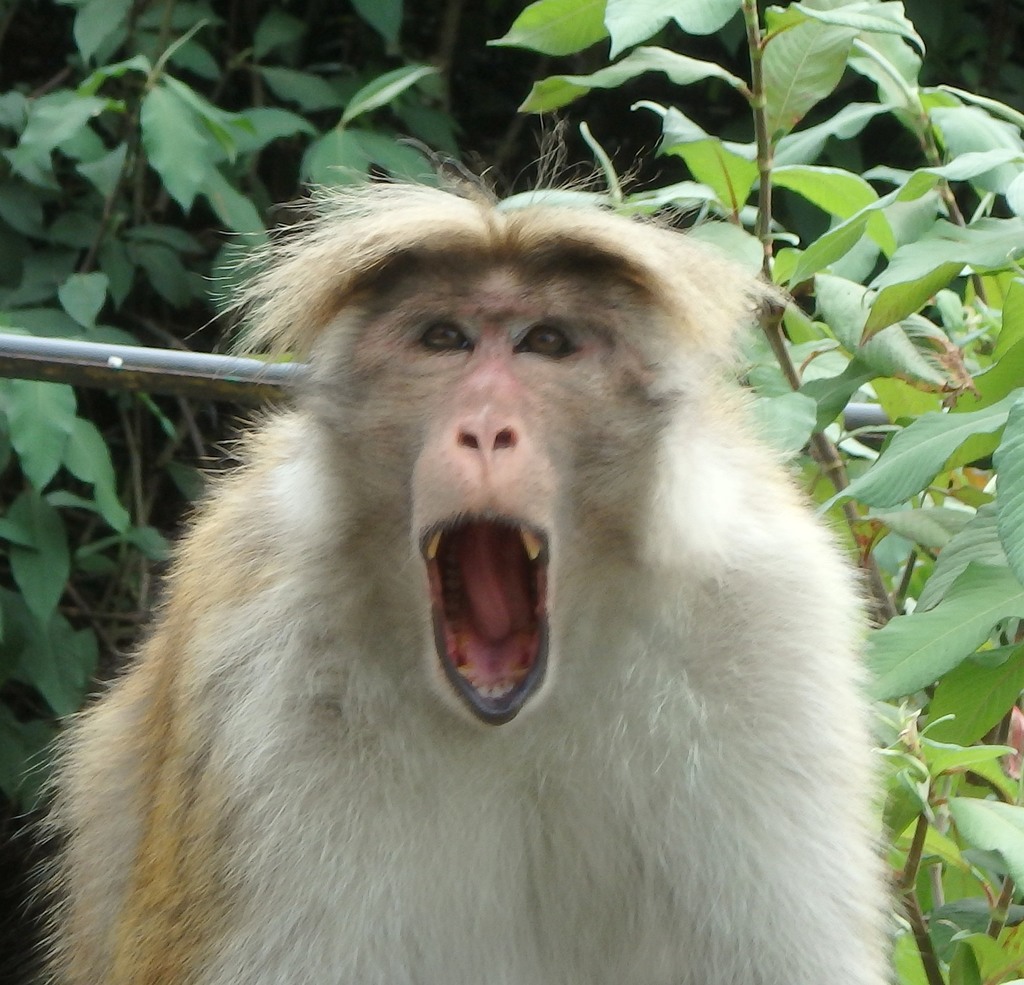
Toque Macaque
Photo © Pieter Prins
Photo © Pieter Prins — CC BY-SA 4.0 — Source: iNaturalist #35829173Identification
The toque macaque is a reddish-brown Old World monkey endemic to Sri Lanka, instantly recognizable by the distinctive whorl of hair at the crown of its head, which resembles a brimless toque cap—hence its name. Three subspecies occur across the island, each identifiable by different head colour patterns. The dry zone toque macaque (M. s. sinica) and wet zone toque macaque (M. s. aurifrons) are the most commonly encountered, while the highland toque macaque (M. s. opisthomelas) features longer fur with contrasting golden coloration in the anterior part of its brown cap. As females age, their faces gradually turn slightly pink, a feature particularly prominent in the dry zone subspecies.
Range & Habitat
The toque macaque is found exclusively in Sri Lanka across three distinct zones. The dry zone subspecies inhabits lowland regions from Vavuniya and Mannar through the arid zones of Anuradhapura, Polonnaruwa, Puttalam, Kurunegala, Monaragala, and Hambantota districts. The wet zone subspecies occurs in intermediate regions of Kegalle and parts of Kurunegala, as well as south-western areas near Galle and Matara districts along the Kalu Ganga. The highland subspecies occupies the south-western montane forests of Ratnapura and Nuwara Eliya districts, including patches around Hakgala Botanical Garden and other cold-climate forest remnants.
Behaviour & Diet
Toque macaques live in highly structured troops of eight to forty individuals, with clearly defined dominance hierarchies among both males and females. When troops exceed optimal size, social tension increases and individuals, particularly adult females, leave the group. Young males are forced to abandon their natal troop around 6–8 years of age to prevent inbreeding, making departure the only pathway for males to potentially achieve alpha status through superior social skills and strength. Social standing is largely inherited; offspring of the alpha female receive better nutrition and shelter than their peers.
These monkeys are primarily frugivorous, with studies showing their diet comprises 77% fruits, 14% flowers, 5% mushrooms, and 4% prey items. Preferred fruits include various Ficus species, Schleichera oleosa, and other native trees. Cheek pouches allow rapid food consumption and storage. In the dry zone, they feed on drupes and ripe fruits; mushrooms become particularly important during wet seasons. They occasionally hunt small animals, from insects to mammals such as Indian palm squirrels and climbing mice. Leopards and Indian rock pythons are their primary predators, with various eagle and kite species posing additional threats.
Best Time & Places to See It
The toque macaque's year-round presence in Sri Lanka makes any season viable for viewing, though the wet season may offer particularly rewarding sightseeing as mushroom availability attracts larger feeding aggregations. The dry zone subspecies is accessible through lowland reserves in Anuradhapura, Polonnaruwa, and Kurunegala districts. The wet zone subspecies can be encountered in south-western regions near Galle and Matara. For the distinctive highland subspecies, visit montane forest patches in Ratnapura and Nuwara Eliya districts, particularly around Hakgala Botanical Garden, where the cooler climate and specific habitat conditions support this specialized population.
Photography Tips
The toque macaque's characteristic toque-like head crown provides excellent compositional focus—frame the animal's head to highlight this distinctive feature. The facial coloration variations between subspecies and the age-related facial pinking of females offer rich photographic subjects; use natural light to capture these subtle color shifts. When females are in estrous, visible perineal swelling and reddening provide documentary opportunities. Photograph troops in their natural behavior: foraging, establishing hierarchy interactions, or mothers with infants clinging for the first two months postpartum. The highland subspecies' longer fur and golden cap coloration creates striking contrast in montane forest light. Be patient during feeding sessions, as cheek pouch distension creates memorable behavioral shots.
Lunugamvehera National Park
Sri Lanka
+204 birds+14 mammals
Dry scrubland and shallow wetlands converge in Sri Lanka's southeastern lowlands, where Lunugamvehera National Park anchors one of the island's most ecologically vital landscapes. The park's…
VIEW NATIONAL PARKMinneriya National Park
Sri Lanka
+158 birds+9 mammals
Across the dry zone of Sri Lanka's North Central Province spreads a landscape of shallow tanks, grassland margins, and scattered dry forest—a mosaic of water and…
VIEW NATIONAL PARKWasgamuwa National Park
Sri Lanka
+156 birds+8 mammals
Dry deciduous forest and open grassland sweep across the North Central lowlands where Wasgamuwa National Park protects one of Sri Lanka's largest remaining tracts of this…
VIEW NATIONAL PARKAngamedilla National Park
Polonnaruwa, Sri Lanka
+40 birds+2 mammals
Ancient tanks and sal forests define this water-rich sanctuary in Sri Lanka's North Central heartland, where seasonal wetlands and dry deciduous woodland create a mosaic of…
VIEW NATIONAL PARKNo community photos yet. Log in to add the first one.