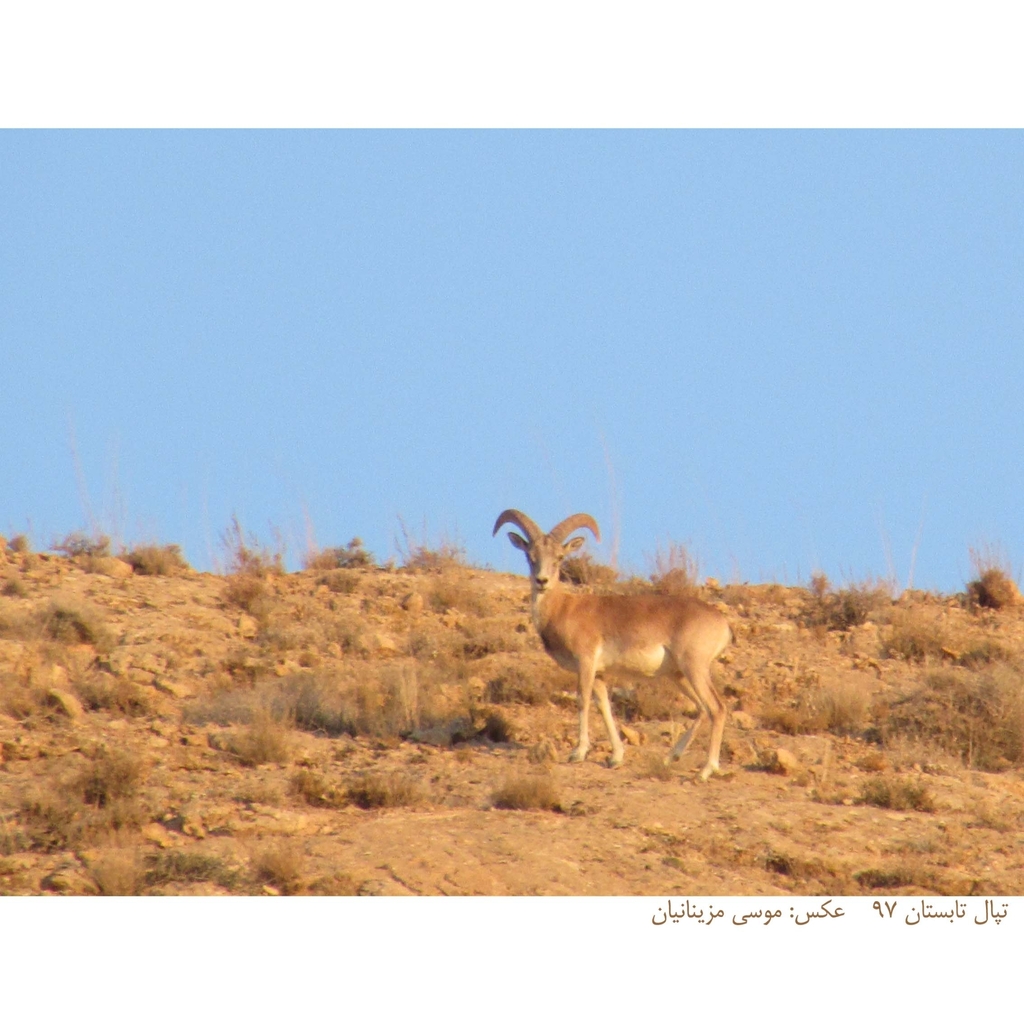
Urial
Photo © موسی مزینانیان Mousa Mazinanian
Photo © موسی مزینانیان Mousa Mazinanian — CC BY 4.0 — Source: iNaturalist #147970002The urial ( OOR-ee-əl; Ovis vignei), also known as arkars, shapo, or shapu, is a wild sheep native to Central and South Asia. It is listed as Vulnerable on the IUCN Red List. == Taxonomy == Ovis vignei was the scientific name proposed by Edward Blyth in 1841 for wild sheep in the Sulaiman Mountains. The specific name honours Godfrey Vigne (1801–1863). The vignei subspecies group consists of six individual subspecies: Ladakh urial (Ovis vignei vignei): northern India (Ladakh), northern Pakistan (Gilgit-Baltistan) Transcaspian urial (Ovis vignei arkal): Ustjurt-Plateau (Turkmenistan, Uzbekistan, northern Iran) and western Kazakhstan Blanford's urial or Baluchistan urial (Ovis vignei blanfordi): Pakistan (Balochistan) Bukhara urial (Ovis vignei bochariensis): Uzbekistan, Tajikistan, Turkmenistan, Afghanistan Afghan urial or Turkmenian sheep (Ovis vignei cycloceros): southern Turkmenistan, eastern Iran, Afghanistan, Pakistan (north Balochistan) Punjab urial (Ovis vignei punjabiensis): Pakistan (Punjab) == Characteristics == Urial males have large horns, curling outwards from the top of the head turning in to end somewhere behind the head; females have shorter, compressed horns. The horns of the males are up to 100 cm (39 in) long. The shoulder height of an adult male urial is between 80 and 90 cm (31 and 35 in). == Distribution and…
No community photos yet. Log in to add the first one.
No community observations of this species yet.