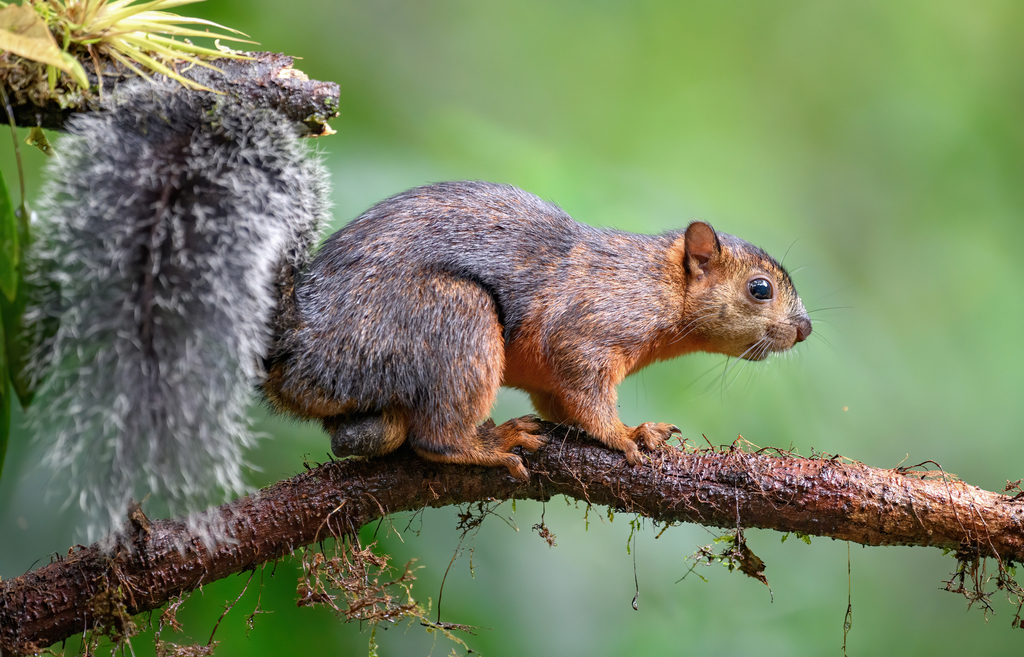
Variegated Squirrel
Photo © Morten Ross
Photo © Morten Ross — CC BY 4.0 — Source: iNaturalist photo #110613789Identification
The variegated squirrel is a medium-sized tree squirrel with a head-and-body length of about 260 mm (10.2 inches) and a tail of similar length, weighing approximately 500 g (18 oz). Its most distinctive feature is the considerable variation in coloration both between subspecies and among individuals within the same population. Dorsal coloration ranges from dark brown to yellowish grey, with the neck typically darker than other body parts and often a paler patch visible behind the ears. The underparts are usually cinnamon-colored, while the long, densely bushy tail is notably black in Mexican populations—sometimes with white-tipped hairs giving a frosted appearance—whereas some individuals in Nicaragua and Costa Rica display pale underparts and tails.
Range & Habitat
This native Central American squirrel occurs from southern Mexico southward through Guatemala, Honduras, El Salvador, Nicaragua, Costa Rica, and Panama. The species shows impressive habitat flexibility, inhabiting both dry deciduous and evergreen forests, secondary growth areas, and agricultural plantations where it can become a crop pest. It is primarily a lowland species, typically ranging up to 1,800 meters (5,910 feet) in altitude, though it reaches somewhat higher elevations in Costa Rica.
Behaviour & Diet
The variegated squirrel is strictly diurnal and arboreal, seldom descending to the ground. It constructs distinctive sleeping nests, either in tree cavities or more commonly from leaves built into branch forks close to the trunk. The species is primarily a seed-eater with a preference for softer seeds, though it also consumes acorns, fruits, insects, and occasionally nestlings. Unlike squirrels in colder climates, it does not cache food, meaning it plays little role in seed dispersal.
Best Time & Places to See It
The variegated squirrel is common throughout its range and can be observed year-round during daylight hours in forested areas, secondary growth, and even agricultural lands. Watch for it in the canopy and mid-story levels of both wet and dry forests across Central America, from Mexico through Panama. Its common status and lack of particular conservation threats make it a reliable species for nature travelers to encounter.
Photography Tips
Photograph this species during morning and late afternoon hours when light is optimal and squirrel activity peaks. Position yourself beneath tall trees with good canopy visibility to capture individuals moving through branches. The variable coloration between individuals and subspecies makes photographing multiple specimens worthwhile to document this diversity. The distinctive bushy tail and contrasting neck coloration are key features to highlight in your images. Patient waiting in productive habitat with good photographic sightlines will reward you with excellent opportunities to capture this charismatic arboreal rodent.
Arenal Volcano National Park
Barra del Colorado National Wildlife Refuge
Braulio Carrillo National Park
Cahuita National Park
Carara National Park
Chagres National Park
Curú National Wildlife Refuge
Gandoca-Manzanillo National Wildlife Refuge
Guanacaste National Park
Nothing matches these filters.
No community photos yet. Log in to add the first one.
No community observations of this species yet.