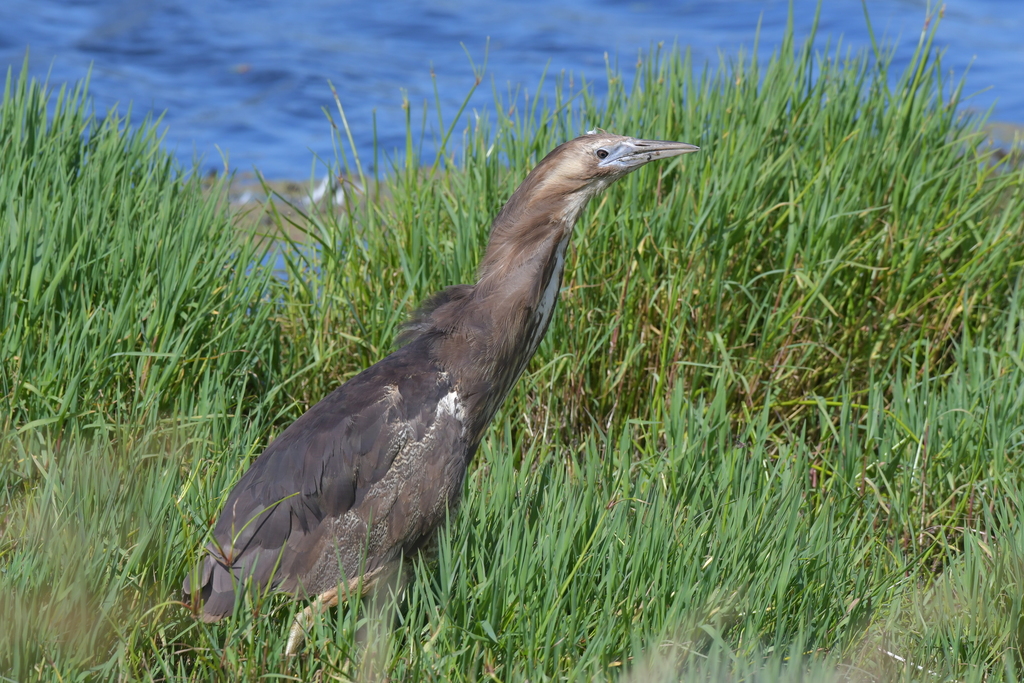
Australasian Bittern
Photo © Christopher Stephens
Photo © Christopher Stephens — CC BY-SA 4.0 — Source: iNaturalist photo #109284574Identification
The Australasian bittern is a stocky, relatively large heron standing 66–76 cm tall with a wingspan around one metre. Males weigh up to 1.4 kg; females are noticeably smaller at around 0.9 kg. The species is best identified by its cryptic plumage: streaky, beige, and mottled feathers that provide exceptional camouflage among wetland vegetation. Look for a long yellow beak, broad neck, and short legs. Juveniles show lighter outer wing mottling and yellowish irises, which darken with age. Males are best located by sound: their distinctive booming call carries long distances and resembles the mythical Australian Bunyip, earning the bird the colloquial name "Bunyip Bird."
Range & Habitat
This elusive species inhabits freshwater wetlands across Australia (particularly south-eastern, south-western, and southern regions), New Zealand, and New Caledonia. In Australia, over half the remaining population resides in New South Wales, with the Riverina region's rice fields supporting the largest known breeding population of 500–1,000 individuals. The bittern shows strong preference for densely vegetated habitats rich in rushes, reeds, and sedges, thriving in both temperate and subtropical climates. These birds undertake seasonal long-distance flights of up to 600 km to exploit coastal wetlands. In New Zealand, Whangamarino represents the most significant habitat. The species' reliance on specific wetland conditions—stable water levels and abundant food—makes it an important indicator of wetland health.
Behaviour & Diet
The Australasian bittern is renowned for its cryptic nature and hunting strategy: it stalks quietly through shallow waters or remains motionless before ambushing prey. Its diverse, opportunistic diet comprises primarily fish, frogs, and eels, supplemented by insects and small mammals such as mice. Research shows bitterns hunt for larger prey items, and their adaptability to fluctuating food availability demonstrates resilience. However, recent studies reveal increased nutritional stress, with irregular access to high-quality food sources negatively impacting growth, reproductive success, and fat reserves. These dietary pressures are linked to climate change, habitat destruction, and ecosystem alterations.
Best Time & Places to See It
Locating this cryptic bird requires patience and listening skills. The breeding season in the Riverina region of New South Wales offers the best chance of encountering significant numbers, particularly around rice fields. Listen for the distinctive booming call of males, which carries across wetlands during breeding periods. Whangamarino in New Zealand remains a prime location, though fewer booming males have been recorded there in recent years. Early morning and dusk are optimal for observations, as the bittern is most active during these periods. Expect to spend considerable time in suitable wetland habitats—sightings remain rare despite the bird's presence.
Photography Tips
Photographing the Australasian bittern demands stealth and patience. Approach slowly and quietly through wetland vegetation, keeping low to avoid alarming the bird. The bird's streaked plumage blends remarkably with reeds and rushes, so scan reed beds carefully and use binoculars first to locate individuals before attempting photography. Early morning light is ideal, illuminating the intricate mottled patterns that define this species. Position yourself downwind to avoid detection, and remain motionless for extended periods—the bittern's ambush hunting strategy means it may freeze in place, offering photographic opportunities if you remain patient and still.
Barrington Tops National Park
Ben Boyd National Park
Bribie Island National Park
Budj Bim National Park
Fiordland National Park
Grampians National Park
Great Otway National Park
Lower Glenelg National Park
Morton National Park
Nothing matches these filters.
No community photos yet. Log in to add the first one.
No community observations of this species yet.